November 23, 2026
Apartment Turnover Cleaning: A NYC Landlord’s Must-Read Guide
Efficiently prepare your NYC rental for new tenants with expert apartment turnover cleaning. Ensure a spotless, move-in ready unit to attract quality tenants quickly.


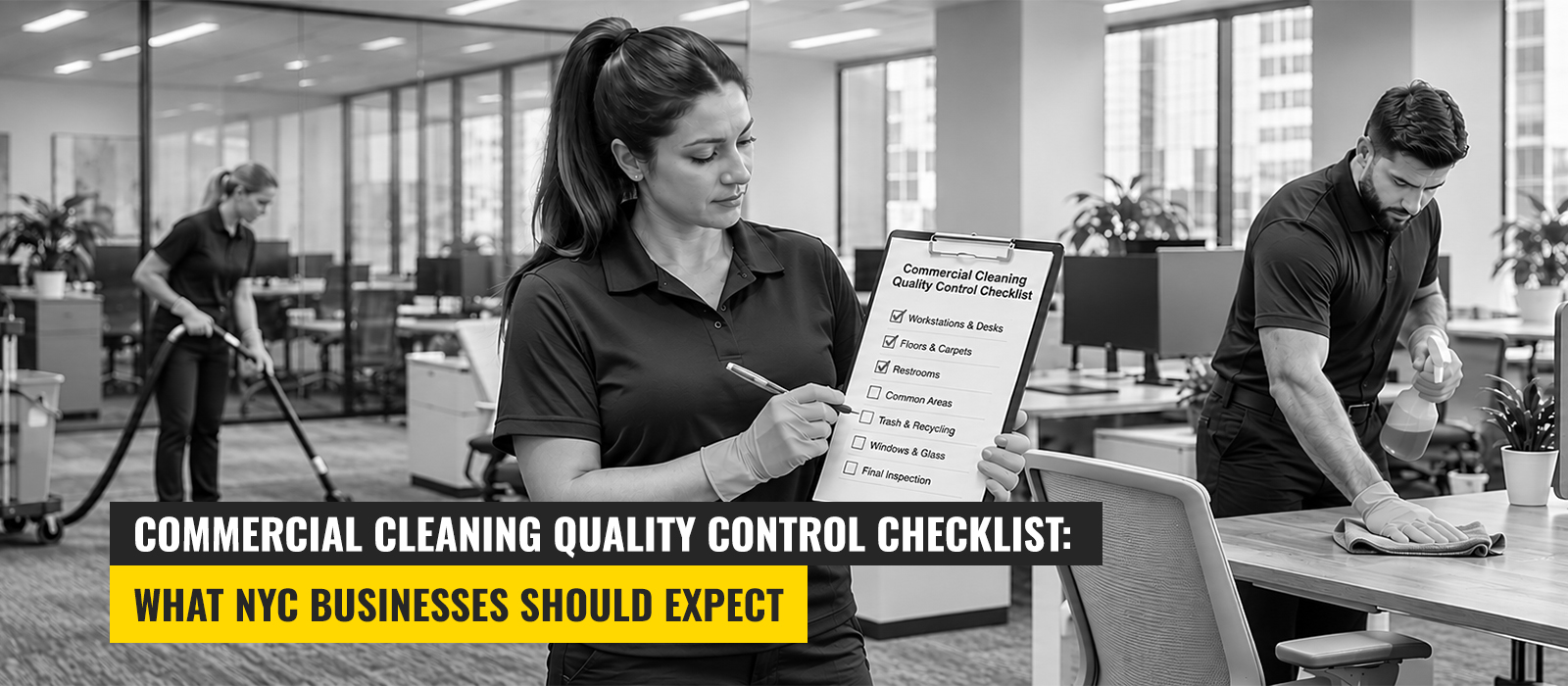


Keeping commercial spaces clean across New York City is more than just a daily cleaning schedule. High foot traffic, shared facilities, demanding operating hours, and different building requirements can affect how well cleaning tasks are completed.
Without documented inspections, missed tasks and recurring service deficiencies may go unnoticed, making it difficult for businesses to hold cleaning vendors accountable.
A commercial cleaning quality control checklist gives NYC facility managers a structured way to inspect completed work against agreed service requirements.
It helps document cleaning results, identify recurring problems, assess vendor performance, and establish clear expectations for corrective action.
This guide covers the essential inspection criteria, industry quality standards, performance evaluation methods, and audit reporting practices businesses can use to maintain reliable cleaning services across their facilities.
A commercial cleaning quality control checklist helps NYC businesses verify that cleaning tasks meet agreed standards and that vendors address service gaps consistently.
In this blog, you will learn how to:
Commercial cleaning quality control means checking whether the cleaning crew has completed its work to the agreed standard. NYC businesses use these inspections to catch missed tasks, address complaints, and keep cleaning vendors accountable.
It works alongside commercial cleaning quality assurance, which focuses on preventing problems through staff training, clear cleaning procedures, and regular supervision. Quality control checks the results. Quality assurance helps maintain them.
Together, these practices help facility managers monitor service quality and address problems before they become recurring issues.
It examines specific conditions, such as:
An office cleaning inspection checklist helps NYC businesses confirm that cleaning vendors meet agreed standards across every area of their property.
It gives facility managers a consistent way to check completed work, document problems, and address gaps before they affect building operations.
Busy lobbies, shared restrooms, elevators, and breakrooms can easily be overlooked during routine cleaning. A janitorial inspection checklist in NYC helps managers verify that each assigned area receives attention.
Different shifts and cleaning teams can produce uneven results. Standard inspection points help managers check whether every crew follows the same cleaning requirements.
Inspections help confirm that staff use wet-floor signs, store chemicals correctly, keep exits clear, and follow building access rules. These assessments are crucial as cleaners work around employees, tenants, visitors, and sensitive areas.
A record of failed cleaning supervisor inspection points allows managers to identify pain points in operations — for instance, restrooms out of compliance, dusty surfaces, or floors missed. They should bring the vendor's attention to the issue and prevent problem recurrence.
Documented inspection results give businesses a clear basis for reviewing vendor performance. Managers can compare completed work against the service agreement.
A commercial cleaning audit checklist should cover every area included in the cleaning contract. It must prioritize cleaning the essential areas, from office workstations and restrooms to floors, shared surfaces, and waste disposal points.
NYC facility managers can use these inspection points to check completed work, identify missed tasks, and confirm that cleaning teams follow the agreed procedures.
Workstations, meeting rooms, reception areas, and corridors need regular attention. An office cleaning inspection should cover furniture, floors, glass surfaces, and shared spaces. The inspection should reflect the tasks included in the professional office cleaning services agreed for the property.
Restrooms need close attention because missed cleaning tasks can quickly affect hygiene. Check fixtures, dispensers, floors, and areas around sinks and toilets.
Different flooring materials require specific cleaning methods. Inspect hard floors, carpets, and entrance mats for visible soil, stains, and signs of improper maintenance.
Elevator buttons, door handles, switches, and handrails receive frequent contact throughout the day. Inspect these surfaces to confirm that cleaning and disinfection tasks have been completed properly.
Check waste containers and disposal areas for missed collections, spills, and residue. The inspection should also account for the property's waste-handling procedures.
Cleaning work should not create hazards or interfere with building security. Include these checks in the site-specific inspection.
A janitorial quality control checklist should provide a clear record of completed tasks and outstanding deficiencies. The inspection record should include:
A professional cleaning vendor must meet defined requirements for cleaning methods, staff training, chemical handling, equipment use, and inspection. These commercial cleaning quality standards should be documented in the service agreement.
This helps facility managers assess whether the work meets the property's hygiene, safety, and maintenance requirements.
A written commercial cleaning SOP establishes the correct procedure for each task, including the equipment, cleaning agents, and method staff must use.
What if a facility manager finds the lobby spotless during a morning walkthrough but discovers overflowing restroom bins or dirty elevator tracks later in the day?
These gaps show why vendor reviews should rely on documented inspections, not occasional visual checks.
A cleaning vendor performance evaluation should measure task completion, cleaning results, response times, and recurring deficiencies against the service agreement.
Here's how you should check your commercial cleaning service provider's work:
Walk through the property and compare the actual cleaning results with the vendor's schedule. Check different areas rather than relying on the condition of the entrance or reception area alone.
A Cleaning performance scorecard helps managers track results consistently across inspection periods. Use the same criteria each time so changes in performance are easy to identify.
Cleaning methods should protect the property's surfaces, fixtures, and shared facilities. Assess whether the vendor follows established Building maintenance standards when handling routine cleaning and floor care.
A vendor's response to failed inspections is an important measure of service reliability. Review the quality assurance process to understand how inspection findings are documented and followed through.
A busy Manhattan office with shared restrooms and several hundred daily occupants needs closer cleaning oversight. This requirement will be quite different from a small office with limited foot traffic.
Inspection frequency should reflect building occupancy, cleaning schedules, hygiene risks, and the number of areas maintained.
A commercial janitorial inspection should include routine checks of completed work, with more detailed reviews to identify recurring service gaps.
The cleaning service inspection schedule can follow this practical framework:
A commercial cleaning quality audit report should provide a clear record of inspection findings, missed tasks, and corrective work.
Facility managers need enough detail to identify where cleaning standards were not met, who is responsible for resolving the issue, and whether the correction was completed.
A cleaning deficiency report should include:
A failed cleaning inspection requires a documented response from the vendor. If a restroom fails inspection because fixtures remain soiled or dispensers are empty, the vendor should correct the specific issues within the agreed timeframe.
A corrective cleaning action should address the immediate deficiency and prevent the same problem from appearing in subsequent inspections.
When a vendor fails to meet the agreed cleaning requirements, facility managers should:
Cleaning inspections must reflect how each facility is used. A Manhattan office needs consistent workstation and restroom checks, while a medical facility requires closer attention to sanitation procedures and high-touch surfaces.
A facility maintenance checklist should account for the building's occupancy, daily activities, surface materials, and hygiene risks. Applying the same inspection criteria to every property can leave important cleaning requirements unchecked.
For areas that need more intensive attention than routine cleaning provides, facility managers can include scheduled commercial deep cleaning services in their maintenance plan.
Before hiring a cleaning vendor, NYC businesses should check how the company manages its daily operations. Who supervises the cleaning staff? How are missed tasks reported and corrected? Are inspection records available for review?
Clear answers to these questions help facility managers assess a vendor's ability to meet the property's requirements.
A Cleaning quality assurance program should be part of this assessment. The following criteria can help you evaluate a vendor before signing a service agreement.
The service agreement should define exactly what the cleaning team is responsible for. Vague descriptions can lead to missed tasks and disagreements over service expectations.
Cleaning results depend on whether employees understand the correct methods for each task. Ask how the vendor prepares its staff and monitors their work at your property.
A vendor should have a defined method for checking cleaning results. Its inspection process should identify deficiencies, assign responsibility, and confirm that corrective work is completed.
Experience in commercial cleaning does not automatically mean a vendor can manage every type of facility. Look for evidence that the company understands the demands of your building.
The vendor should provide clear documentation of its coverage and contractual responsibilities. Review these details before allowing its staff to work on the property.
Facility managers need a clear point of contact when cleaning issues arise. The vendor should have a reliable process for receiving requests and reporting service problems.
A commercial cleaning quality control checklist helps NYC businesses monitor cleaning results, identify service gaps, and hold vendors accountable. Regular inspections and documented corrective actions keep cleaning standards consistent across commercial properties.
Sterling Cleaning Services provides professional commercial cleaning solutions for offices and commercial facilities across NYC. Our approach focuses on trained cleaning staff, site-specific cleaning plans, regular supervision, and quality checks to maintain reliable service.
With dedicated cleaning teams, customized service schedules, and attention to building-specific requirements, we help businesses maintain clean, safe, and well-managed work environments.
Contact Sterling Cleaning Services, a commercial cleaning company in NYC. to arrange a consultation and discuss a cleaning program for your property.
1. What is a commercial cleaning quality control checklist?
It is a working list that helps a business check whether its cleaning team has done the job properly. A facility manager might use it to check whether the lobby floor has been mopped, restrooms have been cleaned and restocked, bins have been emptied, and meeting rooms are ready for the next working day.
2. How do you inspect a commercial cleaning service?
You can inspect a commercial cleaning service by checking the areas your cleaning contract covers. Walk through the property and look at the details people notice during the day. If something has been missed, record the location and report it to the cleaning supervisor.
3. What should be included in a janitorial inspection checklist?
Build the checklist around the actual layout of your property. An office, for example, may need checks for workstations, conference rooms, kitchens, restrooms, and reception areas. Include the specific tasks for each space, such as dusting, vacuuming, mopping, waste removal, and cleaning frequently touched surfaces.
4. How often should commercial cleaning inspections be conducted?
Commercial cleaning inspections depend on how the building is used. A busy office lobby or restroom may need a daily check because problems can appear within hours. A private office or storage area may only need a weekly review.
5. What are the quality standards for commercial cleaning?
The expected result from a commercial cleaning service should be clear before the work begins. Floors should be free of visible dirt and residue, restrooms should be clean and properly stocked, and waste should be removed on schedule.
6. How do businesses evaluate cleaning vendor performance?
Businesses can evaluate the vendor by checking the basic requirements. Check whether the vendor completes the agreed tasks, responds when staff report a problem, and fixes issues within the promised timeframe.
7. What is the difference between cleaning quality control and quality assurance?
Quality control is the check that happens after the work. Quality assurance deals with the system that makes those results possible. You basically analyze the staff training, cleaning instructions, supervision, and planned inspections.
8. What should a commercial cleaning audit report include?
A useful report should tell you what was inspected and what the inspector found. It should name the property and inspection date, identify any areas that failed, and include photographs when they help explain the problem. It should also state who will correct each issue and when the work will be checked again.
9. How do you measure the performance of a janitorial company?
Keep a record of inspection results, missed tasks, complaints, and repeat problems. Review those records over several weeks or months. One missed task may be an isolated oversight; repeated failures in the same area can point to poor supervision, unrealistic schedules, or gaps in the agreed scope of work.
10. What happens when a cleaning company fails a quality inspection?
The cleaning company should be told exactly what was missed and where the problem occurred. Its supervisor should arrange the corrective work and confirm when it has been completed. The facility manager can then recheck the area. If the same failures continue, the issue should be escalated through the service agreement.
11. Who is responsible for commercial cleaning quality control?
The cleaning company is responsible for checking its employees' work and addressing problems within its team. The facility manager has a separate role: reviewing the service, reporting concerns, and making sure the vendor meets the contract. Clear responsibilities help prevent missed tasks from being passed back and forth.
12. How can facility managers maintain consistent cleaning standards?
Facility managers must make sure the cleaning team knows what each area requires and how often it must be cleaned. Keep the task schedule and inspection criteria available to the people responsible for the work. When a problem comes up, follow it through to resolution. A complaint should not be considered closed simply because someone has acknowledged it.

Joseph Sterling is a commercial cleaning professional at Sterling Cleaning Services, sharing practical insights on facility maintenance, healthcare cleaning, infection prevention, and commercial property cleaning standards.

Efficiently prepare your NYC rental for new tenants with expert apartment turnover cleaning. Ensure a spotless, move-in ready unit to attract quality tenants quickly.
Wondering how much commercial cleaning costs in Queens, NY? The cost depends on several factors, including property size, cleaning frequency, service requirements, and the level of cleaning needed. In this blog, Sterling Cleaning NYC explores commercial cleaning prices, key cost factors, and budgeting tips to help businesses make informed decisions when choosing professional cleaning services.

The holiday season is approaching, and your workplace deserves a fresh start! Our Holiday Cleaning Checklist for NYC Offices and Businesses helps you prepare every corner of your facility before the celebrations begin. Use this practical guide to stay organized, maintain workplace hygiene, and avoid last-minute cleaning stress. Download your checklist and get expert commercial cleaning support from Sterling Cleaning NYC.
Contact Info
Please reach us at any time to set up an appointment to review your commercial cleaning requirements. Sterling will provide an on-site review of your janitorial needs, then create a custom proposal that fits both your specifications and budget