Picture a busy Friday night at an NYC restaurant. Orders are coming in nonstop. The cooking line is running at full pace, and staff are moving between prep stations. By the time the last order goes out, everyone is focused on closing down quickly.
The in-house staff might have just swabbed the counters, mopped the floors, and removed the low-hanging fruit. But what about the grease buildup on the equipment, food debris in the drains, and the bottom of prep tables?
Cleaning without a structured method can lead to inconsistencies and hygiene concerns. This is where a commercial kitchen cleaning checklist becomes essential.
It gives your team a clear system for what needs to be cleaned, when it should be cleaned, and which tasks require more attention than a routine end-of-shift cleanup.
If you are trying to maintain the cleanliness and organization of your commercial kitchen, you have come to the right place.
In this blog, we’ll break down the daily, weekly, and deep-cleaning tasks that can help NYC restaurants keep their kitchens cleaner, more organized, and consistently maintained.
Quick Answer:
The commercial kitchen cleaning checklist enables NYC restaurants to categorize cleaning duties by frequency, section, and responsibility.
- Daily Checklist - Clean and sanitize food-contact surfaces, equipment, floors, sinks, and high-touch areas.
- Weekly Checklist - Clean areas that need less frequent attention, including hard-to-reach equipment surfaces and buildup-prone areas.
- Deep Cleaning Checklist - Tackle grease, exhaust areas, behind and underneath equipment, drains, and other neglected areas.
What Is a Commercial Kitchen Cleaning Checklist?
A commercial kitchen cleaning checklist is a structured list of cleaning and sanitation tasks. It is used to keep a restaurant kitchen clean, safe, and ready for service.
The document helps kitchen managers and cleaning teams know what needs to be cleaned, how often it should be cleaned, and which areas need additional attention. Some restaurants prefer a commercial kitchen cleaning checklist PDF that can be printed and kept near the kitchen for staff to follow during each shift.
A useful cleaning checklist for commercial kitchen operations should include more than just cleaning the visible areas. It should include food prep areas, cooking equipment, floors, storage areas, waste areas, and tight spaces.
A well-organized checklist typically includes:
- Cleaning frequency - Identifies tasks that need attention daily, weekly, or during scheduled deep cleaning.
- Kitchen areas - Covers preparation stations, cooking lines, dishwashing areas, storage spaces, floors, and other work zones.
- Equipment - Includes appliances and surfaces that require routine cleaning, sanitizing, or more detailed maintenance.
- Cleaning procedures - Clarifies what should be cleaned, sanitized, degreased, or otherwise maintained.
- Responsibility - Gives staff a clear understanding of which tasks they need to complete.
- Task tracking - Provides a simple way to record completed work and identify missed tasks.
Purpose of Daily Cleaning Checklist for Commercial Kitchen
By now, you know what a commercial kitchen cleaning checklist is. The next question is simple: what does it actually help your kitchen staff accomplish each day?
Food residue, grease, spills, moisture, and frequent contact can quickly affect different areas of the kitchen. A daily checklist turns routine cleaning into a clear and repeatable process.
It also gives managers a practical way to organize responsibilities across shifts. A commercial kitchen cleaning schedule checklist indicates which tasks are to be performed during service, after food handling, and prior to closing. This turns the cleaning routine into an easier routine to follow and easier to keep track of.
Here’s why businesses should follow a step-by-step facility cleaning checklist:
Keeps Food Preparation Areas Ready for Service
Food preparation areas need frequent cleaning because staff work with ingredients and food throughout the day. Keeping these surfaces clean also prevents residue from carrying over into the next preparation task.
- Clean and sanitize prep counters after use.
- Clean cutting boards and food preparation tools.
- Remove food residue from prep areas.
- Sanitize frequently touched handles and controls.
Control Grease and Food Residue
Grease does not stay limited to the cooking surface. It can settle on nearby equipment, walls, handles, and other surfaces around the cooking line. Daily attention makes this buildup easier to manage.
- Wipe cooking surfaces after use.
- Remove visible grease from nearby surfaces.
- Clean spills as they occur.
- Check areas around fryers, grills, and cooking equipment.
Keep Floors, Sinks, and Drains Maintained
Floors, sinks, and drains collect food particles, water, grease, and debris in the midst of a busy service. These surfaces require frequent cleaning as residues generate bad smells and make later cleaning more difficult.
- Sweep and remove food debris.
- Mop floors with the appropriate cleaning solution.
- Clean and sanitize sinks.
- Remove visible debris from drains.
- Address spills promptly.
Create Clear Staff Responsibilities
A daily routine works better when everyone knows what they are responsible for. A checklist can help assign duties among employees and shifts, allowing managers to easily verify that necessary cleaning has been accomplished.
- Assign specific areas to staff members.
- Mark tasks as they are completed.
- Review unfinished tasks before closing.
- Keep the commercial kitchen daily cleaning checklist accessible to the team.
Daily Commercial Kitchen Cleaning Checklist
A busy NYC kitchen can become messy within a few hours. Food preparation leaves behind crumbs and residue, while cooking creates grease, heat, and spills.
If these areas are only cleaned when they look dirty, small tasks can quickly turn into a much larger cleanup.
A commercial kitchen equipment cleaning checklist should therefore cover more than the cooking line. Prep stations, sinks, floors, drains, storage, and high-touch surfaces all require attention on a routine basis.
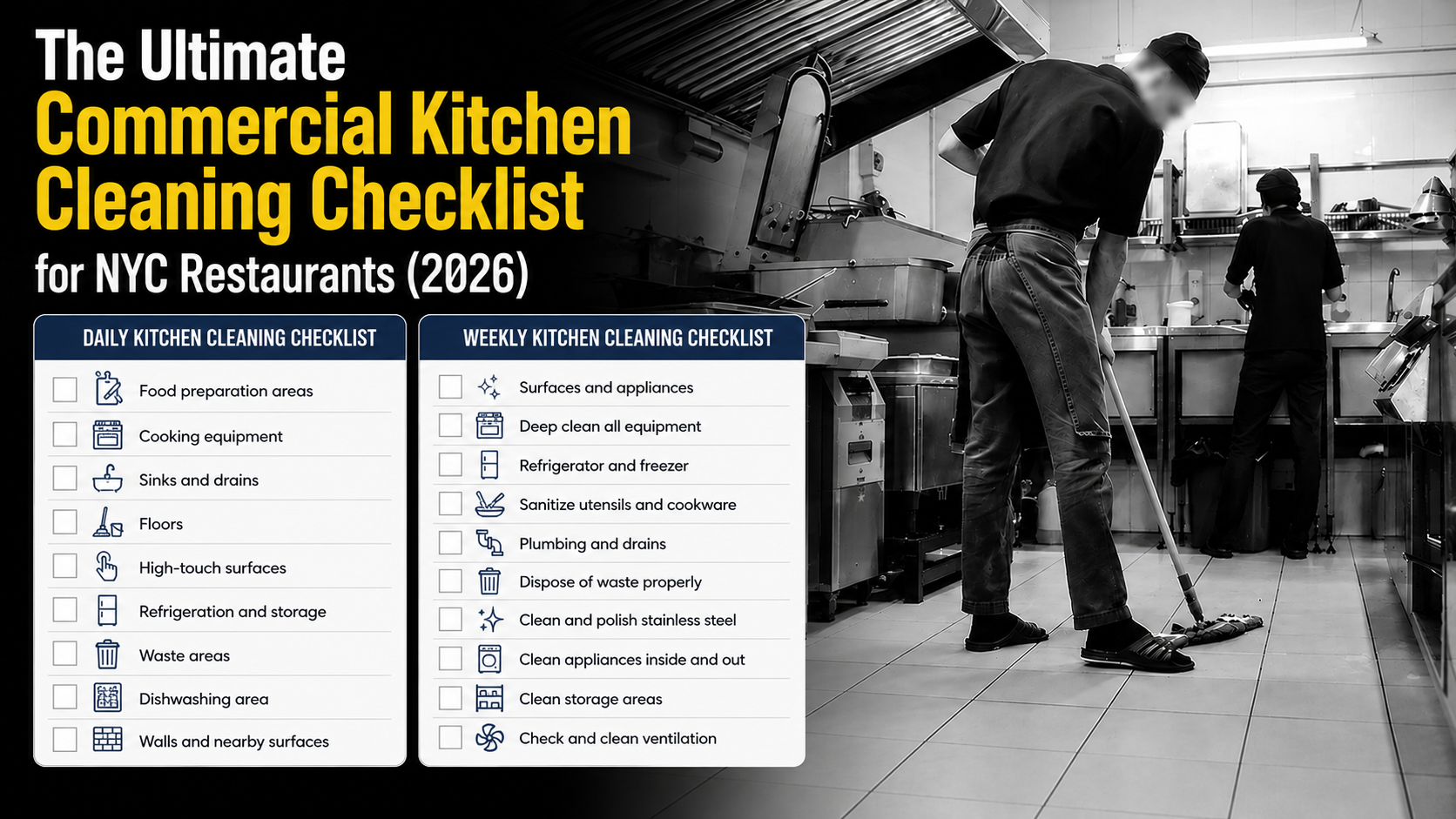
The table below gives your team a practical commercial kitchen restaurant cleaning checklist :
Commercial Kitchen Restaurant Cleaning Checklist
| Kitchen Areas |
Daily Cleaning Tasks |
When to Clean |
| Food preparation areas |
Clean and sanitize prep counters, cutting boards, food-contact surfaces, and preparation tools. |
After use and at closing |
| Cooking equipment |
Remove food residue and grease from grills, griddles, stovetops, fryers, and accessible equipment surfaces. |
After use and at closing |
| Sinks and drains |
Clean and sanitize sinks, remove food debris, and check drains for visible residue or buildup. |
Throughout the day and at closing |
| Floors |
Sweep food particles and debris, then mop spills, grease, and dirt from kitchen floors. |
As needed and at closing |
| High-touch surfaces |
Clean handles, switches, faucets, refrigerator handles, and other frequently touched surfaces. |
Throughout the day |
| Refrigeration and storage |
Wipe handles and accessible surfaces and clean any food spills promptly. |
Daily and as spills occur |
| Waste areas |
Empty waste containers, clean surrounding surfaces, and remove food residue or spills. |
When bins are full and at closing |
| Dishwashing area |
Clean sinks, racks, dishwashing surfaces, and surrounding floors after service. |
After use and at closing |
| Walls and nearby surfaces |
Remove visible food splashes, grease, and residue from surrounding surfaces. |
As needed and at closing |
Weekly Commercial Kitchen Cleaning Checklist
In a busy commercial kitchen in NYC, daily cleaning keeps the kitchen under control. However, some areas need a more detailed cleanup.
Issues like grease can settle around equipment, food particles can collect in drains, and dust can build up on shelves.
A weekly commercial kitchen cleaning checklist helps staff catch these areas before the buildup becomes harder to remove. Each task should be specific enough that a team member can complete it and check it off without having to guess.
The table below explains the tasks better:
Kitchen Cleaning Checklist
| Kitchen Area |
What to Clean |
Checklist Task |
| Cooking equipment |
Removable grates, trays, knobs, burners, and accessible surfaces. |
Remove, wash, and sanitize detachable parts. Clean accessible equipment surfaces. |
| Exhaust area |
Accessible hood surfaces, filters, and surrounding areas. |
Wipe grease from hood surfaces and clean removable filters as required. |
| Refrigerators & freezers |
Shelves, racks, handles, door seals, and interior surfaces. |
Clean shelves, racks, handles, seals, spills, and food residue. |
| Storage areas |
Shelves, racks, corners, and floor areas. |
Wipe shelves and racks. Remove dust, food particles, and debris. |
| Walls & backsplashes |
Areas behind and beside cooking and preparation stations. |
Remove grease, food splashes, and visible residue. |
| Floors & corners |
Floor edges, corners, and areas around movable equipment. |
Move accessible equipment, remove trapped debris, degrease, and mop. |
| Drains |
Drain covers, holes, and the area around them. |
Remove food particles and debris. Clean drains that you can access and the surrounding areas and sanitize. |
| Small equipment |
Removable components and exterior surfaces. |
Clean removable parts and wipe equipment exteriors according to manufacturer instructions. |
| Waste & recycling areas |
Bins, lids, handles, floors, and surrounding walls. |
Empty, wash, and sanitize bins and lids. Clean surrounding spills and residue. |
Commercial Kitchen Deep Cleaning Checklist
A kitchen can look spotless at closing and still have a few spots that require a deeper cleaning. Always check the space under the fryer, grease accumulated behind a range, residue near drain holes, or dirt in floor corners.
These areas often stay out of the daily routine because they are harder to reach and take more time. That is why a commercial kitchen deep cleaning checklist needs its own set of tasks.
Deep cleaning targets the buildup that routine cleaning may not fully remove and helps restore areas that receive less frequent attention.
The following table lists the essential tasks in the deep cleaning checklist for a commercial kitchen:
Kitchen Deep Cleaning Checklist
| Kitchen Area |
Deep Cleaning Task |
What to Check |
| Cooking equipment |
Deep-clean accessible internal and external components according to manufacturer instructions. |
Heavy grease, carbon, and food residue. |
| Hood and exhaust areas |
Clean accessible hood surfaces and filters as required. |
Accumulated grease and residue. |
| Behind and beneath equipment |
Move accessible equipment and clean floors and surrounding surfaces. |
Trapped grease, food particles, and debris. |
| Walls and ceilings |
Clean washable walls, backsplashes, and affected ceiling areas. |
Grease, stains, and food splashes. |
| Floors and grout |
Scrub floors, edges, corners, and grout lines. |
Embedded grease, dirt, and residue. |
| Drains |
Thoroughly clean accessible drains and surrounding areas. |
Buildup, debris, and odors. |
| Refrigeration |
Deep-clean shelves, racks, seals, and accessible interior surfaces. |
Spills, residue, and accumulated grime. |
| Storage areas |
Empty and clean shelves, racks, corners, and floors. |
Dust, debris, expired products, and residue. |
| Waste areas |
Wash and sanitize bins, lids, walls, and surrounding floors. |
Leaks, residue, odors, and buildup. |
Commercial Kitchen Cleaning Log: How to Track Completed Tasks
A checklist for commercial kitchen cleaning is useful only when your team actually follows it. In a busy restaurant, staff can easily miss a task during a rush or forget what was completed during a hectic closing shift.
A commercial kitchen area cleaning log checklist provides an easy way for managers to monitor what work has been completed and see if there is anything that needs to be done. The log should be easy to update and simple for staff and management to read.
A blank commercial kitchen cleaning checklist is also a great tool for managers who want to establish a routine that suits their kitchen layout, equipment, and team size. You can make the process beneficial by using short entries, initials, check marks, or the time at which you finished.
Record the Cleaning Date
Add the date for every completed cleaning task. This helps managers see whether daily, weekly, and deep-cleaning tasks are being completed on schedule.
Name the Kitchen Area
Specify the area that was cleaned, such as the cooking line, prep station, storage area, or dishwashing section.
List the Completed Task
Instead of just marking an area as "clean," specify the task that you completed. For instance, you can note that the exterior of the fryer was cleaned of grease or the floor under the equipment was washed.
Identify the Staff Member
Record who completed the task. This creates clear responsibility without making the log complicated.
Mark Missed Tasks
If something could not be completed, note it instead of marking it as finished. The manager can then assign the task to another staff member or include it in the next appropriate cleaning cycle.
Review the Log Regularly
Managers should check the log periodically to identify repeated missed tasks, areas that need more attention, or changes needed in the cleaning routine.
Common Commercial Kitchen Cleaning Mistakes
A kitchen can look clean while still leaving crucial cleaning undone. Throughout the hectic service in NYC, the staff's attention, understandably, was on getting food out, wiping away visible messes, and getting the kitchen ready for the next shift. That is when small oversights can become routine.
Frequent errors are common due to inadequate cleaning in the commercial kitchen, unclear responsibilities, or treating every task as a daily chore. A clear commercial kitchen cleaning checklist helps separate routine cleaning from weekly and deep-cleaning work.
Watch for these common problems:
- Cleaning only visible surfaces - Grease, food particles, and dirt can accumulate behind equipment, in drains, under counters, and on the edges of floors.
- Skipping food-contact surfaces - Counters, cutting boards, utensils, and preparation equipment need proper cleaning and sanitizing after use.
- Treating mopping as enough for floors - Kitchen floors can retain grease and food particles around corners, under equipment, and near drains.
- Ignoring equipment instructions - Using the wrong product or method can damage equipment or leave surfaces improperly cleaned.
- Mixing cleaning and sanitizing - Cleaning removes dirt and residue, while sanitizing reduces microorganisms to an appropriate level. They are not interchangeable steps.
- Leaving drains until the end of the week - Food particles, grease, and moisture can accumulate quickly in drainage areas.
- Skipping the cleaning log - Without a record, managers may have no clear way to know which tasks were completed or missed.
- Relying on one person to remember everything - A structured checklist distributes responsibility and reduces the chance of important tasks being forgotten.
When Should NYC Restaurants Hire Professional Commercial Kitchen Cleaning Services?
By now, you know that a checklist can bring order to your kitchen cleaning routine. However, you must know that it cannot solve every cleaning challenge on its own.
Daily and weekly tasks help control routine dirt and buildup. Problems such as grease can be persistent, equipment can require specialized attention, and areas outside the normal cleaning circuit can be missed.
This is where professional commercial kitchen cleaning services can add value. Professional cleaners can take on the more demanding work while following the daily commercial kitchen cleaning checklist.
Knowing when to choose a commercial cleaning company in New York can help prevent routine cleaning gaps from becoming larger problems.
Grease Buildup Becomes Difficult to Manage
Grease is one of the biggest challenges in a commercial kitchen. It can spread from cooking equipment to nearby walls, floors, surfaces, and hard-to-reach areas. Once it becomes heavy or sticky, routine wiping may no longer be enough.
- Grease is left behind after routine cleaning.
- Cooking equipment is heavily soiled with residue.
- Mopped floors still look greasy and stained.
- Hood and adjacent areas have visible dirt accumulation.
When Deep Cleaning Keeps Getting Delayed
Your staff may know which areas need deep cleaning but still struggle to fit those tasks into a busy restaurant schedule. When detailed cleaning keeps moving to the next week, buildup has more time to accumulate.
- Areas behind or beneath equipment are repeatedly missed.
- Drains need more detailed cleaning.
- Floor corners develop stubborn buildup.
- Storage areas are rarely emptied and cleaned.
Kitchen Has High Cleaning Demands
Every business owner must know that there is more cleaning involved in some restaurants than others. A busy NYC kitchen can produce substantially more grease, food particles, spillage, and trash than a tiny army of restaurant staff shuffling between three shifts in a day.
- High-volume cooking creates frequent grease and food residue.
- Large kitchens have more equipment and surfaces.
- Multiple shifts increase cleaning demands.
- Staff has limited time between service periods.
Cleaning Routine Lacks Consistency
A checklist is effective only if the items on it are done correctly and in a timely manner. If different employees follow different methods or important tasks regularly get missed, your cleaning system may need additional support.
- Cleaning tasks are frequently missed.
- Staff responsibilities are unclear.
- Cleaning logs are incomplete.
- The same areas repeatedly need follow-up.
When Specialized Cleaning Is Needed
Some kitchen cleaning tasks require more than routine sweeping, mopping, and surface cleaning. Specialized equipment, detailed procedures, or manufacturer-specific cleaning instructions may be needed for certain areas and appliances.
- Commercial cooking equipment needs detailed cleaning.
- Heavy grease requires specialized treatment.
- Hard-to-reach areas need professional equipment.
- Certain cleaning tasks require specialized procedures.
Keep Your Commercial Kitchen Cleaning Checklist Consistent
A commercial kitchen cleaning checklist provides the restaurant staff with a functional system to monitor the daily, weekly, and monthly cleaning tasks. The kitchen organization will be much easier to handle when you have clear cleaning duties, and these duties are well met.
However, addressing the buildup in commercial spaces thoroughly can become an issue when the business grows. Taking the help of a professional cleaning agency can prove to be fruitful in such situations.
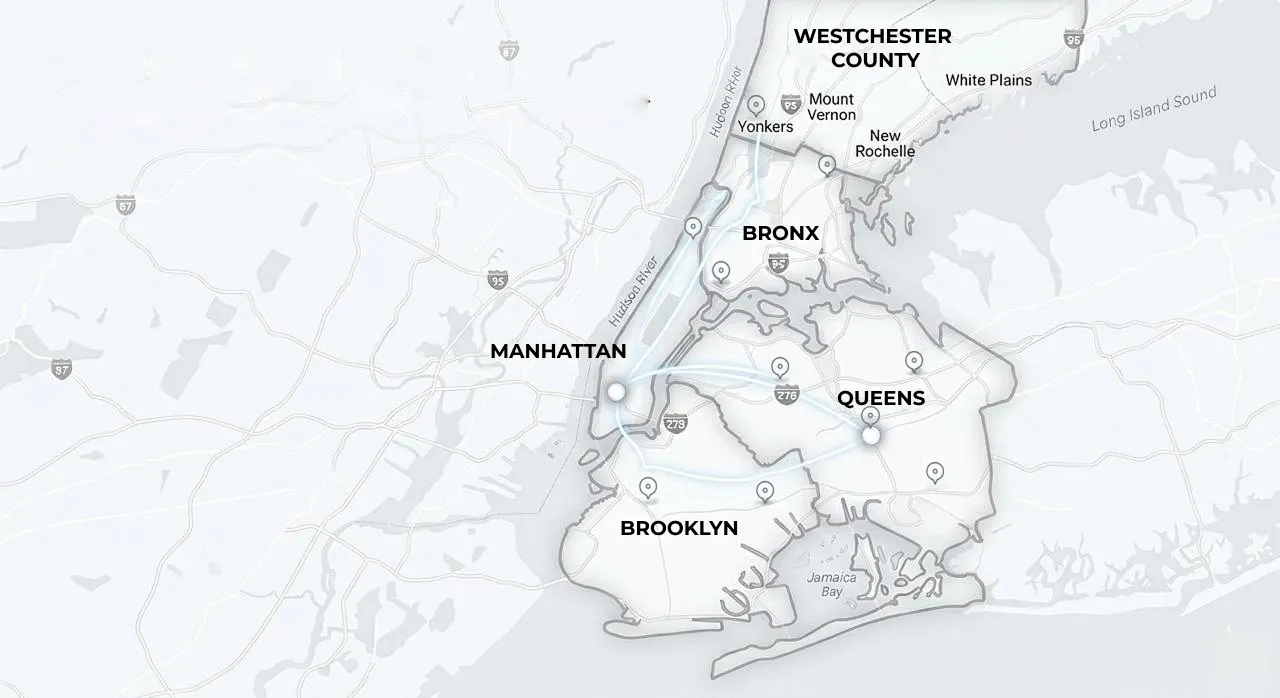
At Sterling Cleaning Services, we provide professional commercial cleaning solutions for businesses across NYC. Our trained cleaning professionals adhere to structured cleaning procedures designed around the needs, layout, and cleaning demands of your commercial facility.
We offer deep cleaning solutions for high-traffic areas to help combat the grease, residue, dirt, and grime that can build up in busy commercial kitchens. We focus on detailed cleaning practices that help businesses maintain cleaner and more organized environments.
Maintain a cleaner, safer, and more organized commercial kitchen by connecting with Sterling Cleaning Services today!
Frequently Asked Questions
1. How often should a commercial kitchen be cleaned?
A commercial kitchen should be cleaned throughout the day. Food-contact surfaces should be cleaned and sanitized after use, while floors, cooking equipment, sinks, and high-touch areas need thorough attention.
2. What should be included in a commercial kitchen cleaning checklist?
A good checklist should cover the entire kitchen. It should include food preparation areas, cooking equipment, sinks, drains, floors, refrigeration, storage shelves, and high-touch surfaces.
3. What should be cleaned every day in a commercial kitchen?
The areas used constantly should be cleaned every day in a commercial kitchen. It includes prep counters, cutting boards, cooking surfaces, sinks, floors, handles, refrigeration handles, and high-touch surfaces.
4. How often does a commercial kitchen need deep cleaning?
Most commercial kitchens should be deep cleaned at least once a month. The high-volume kitchens need deep cleaning weekly or more often depending on grease, food buildup, and the type of cooking.
5. What areas are commonly missed when cleaning a commercial kitchen?
The difficult-to-see or reach areas are commonly missed during commercial kitchen cleaning. Areas like the space behind accessible equipment, drain openings, refrigerator seals, or grease on nearby walls often need deep cleaning.
6. What is the difference between cleaning and sanitizing in a commercial kitchen?
Cleaning and sanitizing are not the same thing. Cleaning removes food, grease, dirt, and other residue from a surface. Sanitizing comes after cleaning and is intended to reduce microorganisms to a safer level.
7. Can I use a pre-built commercial kitchen cleaning checklist?
Yes, a pre-built commercial kitchen cleaning checklist can be quite beneficial. It can give restaurant staff a starting point for organizing daily, weekly, and deep-cleaning tasks. However, it should be adjusted to match your kitchen's equipment, layout, operating hours, staffing, and cleaning requirements.