Walk into a busy office after a full day, and the signs of use are usually easy to spot. You may see fingerprints on glass doors, dust around desks, marks on the floors, overflowing bins, or a restroom that needs attention before the day is over.
Keeping up with these jobs can be difficult when employees already have their own work to handle. A quick wipe here or an emptied bin there may deal with an immediate mess. However, it does not replace regular cleaning across the entire workplace.
Professional cleaners take on that responsibility as part of a planned service. They can work through offices, restrooms, entrances, floors, kitchens, and shared areas according to the property's needs and schedule.
The benefits of commercial cleaning services go beyond having a cleaner-looking office. They can affect how the workplace is maintained, how much time employees spend dealing with cleaning, and how consistently different areas of the property receive attention.
In this blog, we’ll look at what commercial cleaning services cover, the main benefits for businesses, and how to find professional cleaning services.
Quick Answer
Commercial cleaning services help businesses keep their workplaces clean, hygienic, safe, and presentable without putting routine cleaning work on employees. The main benefits include:
- Cleaner offices, restrooms, entrances, and shared spaces.
- Less time spent managing routine cleaning tasks.
- More consistent cleaning across the property.
- Better attention to high-traffic and frequently touched areas.
- Access to professional cleaning equipment and trained staff.
- Flexible cleaning schedules that fit business operations.
What Are Commercial Cleaning Services?
Commercial cleaning services are professional cleaning services provided for workplaces and other business properties. They cover routine cleaning, periodic deep cleaning, and other tasks needed to keep different areas of a property clean and properly maintained.
The exact work depends on the building. An office may need regular attention to desks, floors, restrooms, kitchens, and meeting rooms, while a retail space, medical facility, or multi-tenant property may have different cleaning requirements.
A commercial cleaning service may include:
- Dusting and wiping desks, furniture, counters, and other suitable surfaces.
- Vacuuming carpets and cleaning hard floors.
- Cleaning and maintaining restrooms.
- Emptying waste bins and managing routine waste.
- Cleaning entrances, glass doors, and common areas.
- Cleaning frequently touched surfaces such as handles, switches, and shared equipment.
- Deep cleaning areas that need more detailed attention.
- Periodic floor, carpet, glass, or other specialized cleaning.
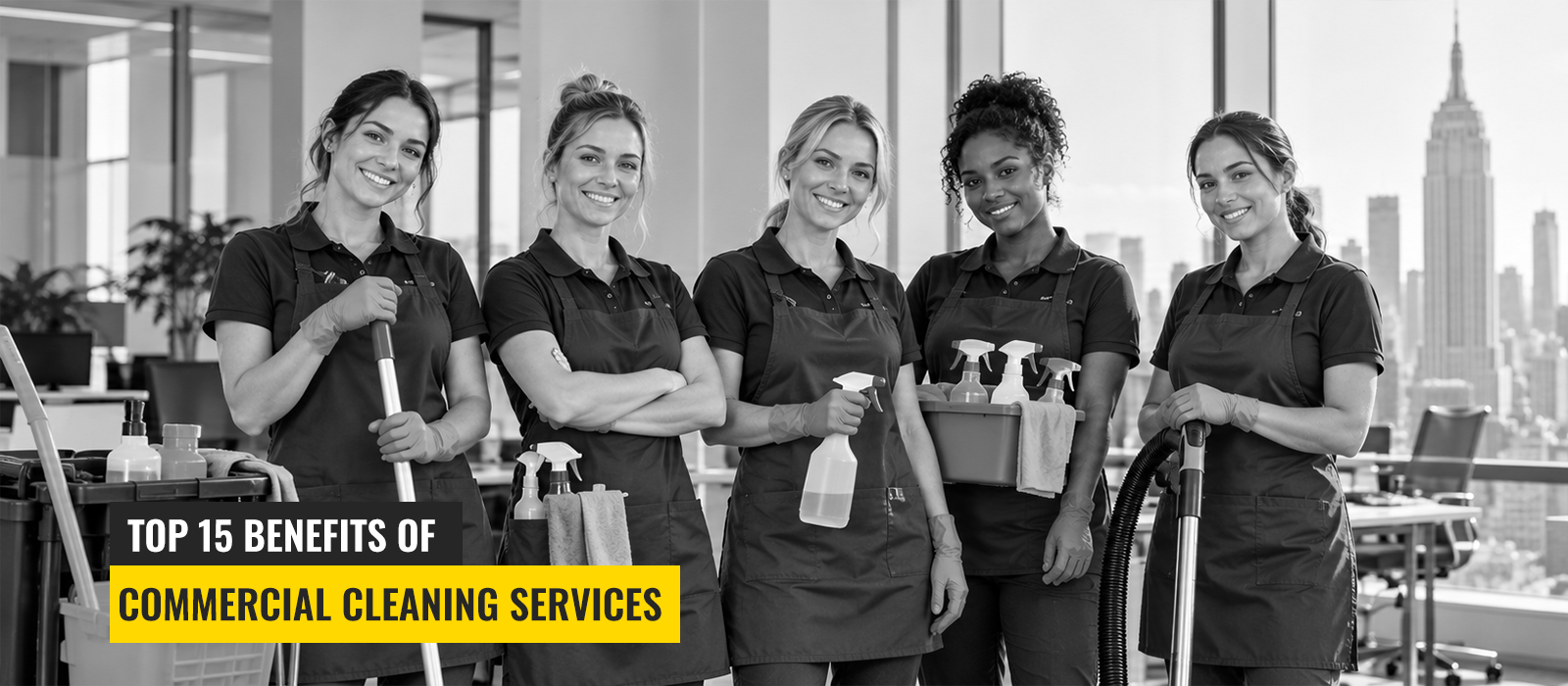
Top 15 Benefits of Commercial Cleaning Services
The value of professional cleaning becomes clearer when you look beyond the regular cleaning tasks. A commercial property has dozens of areas competing for attention throughout the day.
Keeping the high-traffic areas clean takes time, planning, and people who are responsible for the work. That matters because cleaning affects more than appearance.
OSHA's workplace standards, for instance, require applicable workplaces and walking-working surfaces to be kept clean. They mandate keeping the floors clean and in a dry condition.
The following reasons explain why commercial cleaning is important:
1. Keeps the Workplace Looking Professional
A clean workplace is easier for employees to maintain and easier for visitors to feel comfortable in. Fingerprints on glass, overflowing bins, marked floors, dusty reception areas, and untidy restrooms can quickly make a property look neglected. Regular cleaning gives businesses a way to keep those everyday signs of use under control.
- Reception areas stay presentable throughout the working week.
- Floors and entrances receive regular attention.
- Restrooms are cleaned and restocked according to the agreed scope.
- Shared spaces are less likely to develop visible buildup.
2. Supports Better Workplace Hygiene
Desks are not the only surfaces that need cleaning. Door handles, switches, elevator buttons, counters, shared equipment, restroom fixtures, and other touchpoints can receive repeated contact during the day.
A defined cleaning routine gives these areas a place in the schedule rather than leaving them to be cleaned only when someone notices a problem.
- Frequently touched surfaces can be included in routine cleaning.
- Restrooms and shared facilities receive scheduled attention.
- Waste and spills can be dealt with as part of the cleaning process.
- Appropriate disinfection can be included where the facility requires it.
3. Helps Keep Floors and Walkways Safer
Floors and passageways need more than occasional vacuuming. Spills, tracked-in water, loose debris, clutter, and poorly managed cleaning equipment can create problems for people moving through the property.
OSHA specifically addresses clean and dry walking-working surfaces and requires hazards such as spills and obstructions to be addressed.
- Spills can be dealt with promptly.
- Entrances can receive extra attention during wet or high-traffic periods.
- Cleaning equipment can be kept out of active walkways.
- Floors can be inspected for conditions that need maintenance attention.
4. Takes Routine Cleaning Off Employees' Plates
Employees may empty a bin or wipe down a table when something needs immediate attention. That does not mean routine commercial cleaning should become part of everyone's job.
One of the advantages of commercial cleaning services is that recurring cleaning responsibilities are assigned to a dedicated team.
- Employees can spend less time dealing with routine cleaning.
- Cleaning tasks do not have to compete with normal workloads.
- Managers have a defined team responsible for the agreed cleaning scope.
5. Makes Cleaning More Consistent
Cleaning quality can vary when different employees handle tasks whenever they have time. A professional service works from an agreed scope, schedule, and set of property requirements.
That consistency is particularly useful for businesses with multiple rooms, floors, locations, or shared facilities.
- Regular tasks can be assigned specific frequencies.
- Supervisors can check completed work against the agreed scope.
- Missed areas are easier to identify and address.
- Changes in occupancy or building use can be reflected in the cleaning plan.
6. Gives High-Traffic Areas the Attention They Need
Not every part of a building gets dirty at the same rate. A lobby used by hundreds of people may need attention far more often than a private office that is occupied occasionally.
A cleaning plan can reflect that difference instead of treating every room in exactly the same way.
- Entrances and reception areas can receive more frequent attention.
- High-use restrooms can be checked more regularly.
- Corridors, elevators, and stairways can be included according to traffic.
- Low-use areas can follow a different cleaning frequency where appropriate.
7. Access to Professional Equipment and Cleaning Methods
Some cleaning tasks require more than a standard vacuum and a bottle of general-purpose cleaner. Commercial properties may have carpeted areas, hard floors, large glass surfaces, extensive restroom facilities, or floor finishes that require specific methods.
Professional cleaners can bring equipment and techniques suited to the work rather than expecting employees to manage everything with basic supplies.
- Commercial-grade vacuums can be used for larger carpeted areas.
- Floor equipment can be used for appropriate periodic maintenance.
- Specialist products can be selected for suitable surfaces.
- Deep-cleaning equipment can be brought in when routine cleaning is insufficient.
8. Supports Better Day-to-Day Workplace Conditions
Cleanliness is one part of the broader indoor environment. Dust, moisture, odors, building maintenance, ventilation, and pollutant sources can all influence indoor environmental conditions.
The EPA identifies source control, ventilation, filtration, moisture, and building maintenance as factors that affect indoor air quality.
- Dust and visible buildup can be addressed through routine cleaning.
- Waste and odors can be managed as part of the cleaning scope.
- Moisture or leak concerns can be reported to the appropriate maintenance team.
- Cleaning staff can flag conditions that need further investigation.
9. Helps Catch Visible Maintenance Problems
Cleaning staff work across areas that may otherwise receive little day-to-day attention. A cleaner may notice a leaking fixture, damaged flooring, water staining, broken hardware, or an unusual buildup while carrying out routine work.
This also supports property management cleaning compliance. As businesses follow the rules, they are able to immediately identify conditions that need to be reported, documented, or addressed.
- Water stains can be reported before they become harder to trace.
- Damaged floors or fixtures can be flagged for repair.
- Recurring moisture can be brought to a manager's attention.
- Maintenance teams can receive clearer information about where an issue was observed.
10. Makes Deep Cleaning Easier to Manage
Routine cleaning deals with everyday use. It does not eliminate the need for periodic work such as detailed floor care, carpet cleaning, interior glass cleaning, or cleaning areas that are difficult to reach during normal service.
Having an established cleaning provider makes it easier to plan these jobs instead of treating every deep-cleaning requirement as a separate project.
- Periodic deep cleaning can be added to the service plan.
- Less accessible areas can receive scheduled attention.
- Carpet and floor care can be planned around building use.
- Additional cleaning can be arranged after events or periods of heavy activity.
11. Reduces the Management Burden of In-House Cleaning
Managing cleaning internally involves more than assigning someone to empty bins. Someone needs to determine what gets cleaned, when it gets cleaned, which supplies are required, who covers an absence, and how missed work is handled.
For many businesses, benefits of professional office cleaning services include moving much of that routine coordination to a dedicated cleaning provider.
- Cleaning schedules can be established in advance.
- Supplies and equipment can be incorporated into the service arrangement.
- Staff coverage can be managed by the cleaning provider.
- Managers have a clear point of contact for cleaning-related issues.
12. Helps Care for Floors, Fixtures, and Other Surfaces
Regular cleaning can also be part of routine property care. Dirt, grit, spills, residue, and improper cleaning methods can affect floors, fixtures, furniture, and other surfaces over time.
Using appropriate cleaning methods for the material can help businesses avoid treating every surface in the same way.
- Floors can be cleaned according to their material and finish.
- Furniture and fixtures can receive suitable surface care.
- Glass and doors can be maintained as part of the routine.
- Buildup can be addressed before it becomes more difficult to remove.
13. Fits Cleaning Around Business Hours
A cleaning schedule should work around the business rather than interfere with normal operations. Offices may prefer service before employees arrive or after closing, while retail, healthcare, and other facilities may require cleaning during quieter periods.
This flexibility is one reason businesses consider hiring commercial cleaning services rather than relying on employees to clean during working hours.
- Services can be scheduled before opening or after closing.
- High-traffic areas can be cleaned during quieter periods.
- Cleaning can be coordinated around meetings, deliveries, and building access.
- Daytime cleaning can be used where the property requires it.
14. Scales With Changing Business Needs
Cleaning requirements rarely stay the same for years. A business may add employees, move into another floor, open another location, change operating hours, or experience a significant increase in customer traffic.
A commercial cleaning arrangement can be adjusted as those requirements change.
- Cleaning frequency can increase when traffic rises.
- Newly occupied areas can be added to the scope.
- Periodic services can be added as the facility changes.
- Cleaning schedules can be revised around new operating hours or access requirements.
15. Makes It Easier to Handle Unexpected Cleaning Needs
Commercial spaces do not always stay on the same cleaning routine. A spill, client event, weather-related mess, unexpected visitor traffic, or other disruption can create cleaning work outside the normal schedule.
Having an established cleaning provider gives businesses a clearer way to deal with these situations without pulling employees away from their regular responsibilities.
- Additional cleaning can be arranged when unexpected messes occur.
- High-use areas receive extra attention after events or busy periods.
- Spills and visible messes can be addressed without relying on employees.
- Cleaning requirements can be communicated through an established point of contact.
Which Areas Are Covered by Commercial Cleaning Services?
The benefits of professional cleaning depend largely on how well the service covers the property as a whole. Cleaning an office floor or emptying waste bins does not address everything that builds up during a working day.
This is because different areas experience different levels of traffic, use, and wear. That's why you need an appropriate cleaning routine.
A commercial cleaning service can cover the main working areas as well as the shared spaces that are often used throughout the day. The exact scope depends on the property, its size, occupancy, and cleaning requirements.
Office and Work Areas
Workstations, private offices, and open-plan areas collect dust, fingerprints, paper waste, food residue, and general signs of daily use. These spaces need regular attention to keep desks, floors, furniture, and shared surfaces in good condition.
- Dust and wipe desks, furniture, counters, and suitable work surfaces.
- Vacuum carpets and clean hard flooring.
- Empty waste bins and replace liners where required.
- Clean doors, handles, switches, and other frequently touched surfaces.
- Remove visible dust, marks, and surface buildup.
Restrooms
Restrooms require frequent cleaning because they are used repeatedly throughout the day. A proper cleaning routine covers both visible surfaces and the fixtures that need regular attention.
- Clean toilets, sinks, faucets, and other fixtures.
- Clean mirrors and suitable glass surfaces.
- Mop floors and remove visible spills or buildup.
- Clean dispensers and frequently touched areas.
- Empty waste containers and replace liners where required.
Entrances, Lobbies, and Reception Areas
Entrances and reception areas are among the first parts of a property visitors see. They also receive constant foot traffic, which means dirt, moisture, debris, and fingerprints can accumulate quickly.
- Vacuum, sweep, or mop entrance flooring.
- Clean glass doors and suitable interior glass.
- Wipe reception counters and other appropriate surfaces.
- Clean door handles and other touchpoints.
- Remove tracked-in dirt and visible debris.
Kitchens and Break Rooms
Shared kitchens and break rooms can develop food residue, spills, odors, and overflowing waste throughout the day. Cleaning needs to cover the surfaces employees use most often.
- Clean counters, sinks, and tables.
- Wipe suitable appliance exteriors.
- Clean floors and address spills.
- Empty waste bins.
- Clean frequently touched handles and surfaces.
Conference and Meeting Rooms
Conference rooms can be used by different employees, clients, and visitors throughout the day. Tables, chairs, floors, glass surfaces, and shared equipment can therefore need regular attention.
- Wipe tables and suitable furniture surfaces.
- Remove visible dirt and debris from floors.
- Clean doors, handles, and other touchpoints.
- Remove waste according to the agreed cleaning schedule.
- Clean suitable glass and presentation surfaces.
Hallways, Elevators, and Common Areas
Shared circulation areas connect different parts of the property and can experience constant movement. Dirt from entrances can also spread into hallways, elevators, stairways, and other common spaces.
- Vacuum, sweep, or mop floors according to the surface.
- Clean elevator floors, doors, buttons, and suitable surfaces.
- Wipe handrails and frequently touched areas.
- Remove visible debris from corridors and common areas.
- Report damaged flooring, leaks, or other conditions that require maintenance attention.
Specialized and Periodic Areas
Routine cleaning does not cover every task a commercial property may need. Some areas require additional equipment, more detailed cleaning, or service at scheduled intervals.
These may include:
- Carpet and upholstery cleaning.
- Floor stripping, polishing, or other appropriate floor care.
- Interior glass and window cleaning.
- High or difficult-to-reach areas.
- Deep cleaning after events or periods of heavy use.
- Additional cleaning for areas added to the property's service scope.
In-House vs. Commercial Cleaning Services: What’s the Difference?
Once you know what areas a commercial cleaning service can cover, the next question is whether those tasks should be handled by your own staff or an outside provider.
Many businesses still prefer in-house staff for basic cleaning. This can be a practical choice for smaller workplaces with limited cleaning needs and fewer areas requiring regular attention.
One of the top reasons to choose commercial cleaning services is the combination of consistent scheduling, dedicated cleaning staff, and access to suitable equipment. These are areas that can be harder to manage consistently with in-house staff.
In-House Cleaning vs. Commercial Cleaning Services
| Factor |
In-House Cleaning |
Commercial Cleaning Services |
| Responsibility |
Employees or internal cleaning staff manage the cleaning work. |
A dedicated cleaning provider manages the agreed cleaning scope. |
| Scheduling |
Cleaning is organized around internal staff availability and workloads. |
Cleaning can be scheduled around business hours, building access, and daily operations. |
| Staffing |
The business manages hiring, availability, and coverage. |
The cleaning provider manages its own team and service coverage. |
| Equipment and Supplies |
The business purchases, stores, and maintains cleaning equipment and products. |
Equipment and cleaning supplies may be provided as part of the service. |
| Quality Control |
Managers need to monitor whether cleaning tasks are completed properly. |
The provider may use supervisors, inspections, checklists, and quality-control procedures. |
| Deep Cleaning |
Additional staff time or outside services may be needed for detailed cleaning. |
Deep cleaning and specialized services can be added to the cleaning scope. |
| Flexibility |
Changes may require adjustments to internal staffing and schedules. |
Cleaning frequency and service scope can be adjusted as property needs change. |
| Employee Time |
Employees may spend time cleaning instead of focusing on their primary duties. |
Routine cleaning responsibilities are handled by the cleaning team. |
| Scalability |
Increased cleaning requirements may require additional internal resources. |
Services can be expanded as the property's cleaning requirements change. |
How to Choose a Commercial Cleaning Company?
Once you decide that outsourcing fits your business, the next step is to assess the cleaning provider itself. The advantages of commercial cleaning services depend on whether the company can deliver the scope, schedule, staffing, and quality standards your property actually requires.
A detailed review also makes it easier to understand how commercial cleaning helps business operations without relying on price alone.
The following are tips for choosing a commercial cleaning company in New York:
- Assess your property's cleaning needs - Consider the size of the property, number of occupants, traffic levels, operating hours, and areas that require regular or specialized cleaning.
- Review the company's commercial experience - Look for experience with properties similar to yours, particularly when the building has high traffic, multiple areas, or specific cleaning requirements.
- Check insurance and credentials - Confirm that the provider carries appropriate insurance and can provide commercial cleaning certifications when required. Ask about staff training and any relevant professional credentials.
- Review the cleaning scope - Make sure the proposal clearly explains which areas are covered, which tasks are performed, how often they are completed, and which services are charged separately.
- Ask about staffing and supervision - Find out who will manage the cleaning team, how staffing coverage is handled, and whom you should contact when a service issue occurs.
- Understand the quality-control process - Ask how completed work is inspected, how missed tasks are reported, and what happens when the agreed cleaning standard is not met.
- Check scheduling flexibility - Make sure the provider can work around your operating hours, building access requirements, employee activity, deliveries, and other daily operations.
- Compare detailed quotes - Review what each proposal includes rather than comparing the final price alone. Check supplies, equipment, cleaning frequency, additional visits, and specialized services.
- Review communication and responsiveness - A clear point of contact makes it easier to report issues, request changes, and keep the cleaning service aligned with your property's needs.
- Check recent reviews and references - Look for feedback about consistency, communication, reliability, and service quality. Commercial references can also provide useful insight into how the provider operates after the contract begins.
Make Commercial Cleaning Part of Your Business Operations
The benefits of Commercial Cleaning Services extend beyond a cleaner workplace. A professional cleaning service can help businesses maintain consistent standards, manage recurring cleaning tasks, and keep different areas of the property properly maintained.
At Sterling Cleaning Services, we provide commercial cleaning solutions built around the way each property operates. Our team works with businesses to establish clear cleaning scopes, schedules, and service expectations based on the size, use, and daily activity of the facility.
We provide commercial cleaning services in NYC to make the spaces clean, healthy, and safe for regular use. Our cleaning teams can also work around business hours, building access, occupancy, and other operational needs to minimize disruption.
Develop a service plan tailored to your property by connecting with Sterling Cleaning Services today!
FAQs
1. What are the main benefits of commercial cleaning services?
The main commercial cleaning benefits are consistent cleaning, less work for employees, better attention to high-use areas, and a more presentable workplace. A professional cleaning team can also handle recurring tasks, deep cleaning, and additional cleaning when the property needs it.
2. Why is commercial cleaning important for a business?
Commercial cleaning is important because regular cleaning helps maintain a cleaner, safer, and more organized workplace. Offices, restrooms, entrances, kitchens, and shared spaces can all collect dirt and waste during the day. Having a defined cleaning routine helps prevent these areas from being overlooked.
3. What should I look for in a commercial cleaning company?
Seek relevant business experience, adequate insurance, professional personnel, a defined cleaning job, quality-control measures, and consistent communication when seeking a commercial cleaning company. See also what is included in the quote, how they manage their staff coverage, and whether their schedule aligns with yours.
4. How often should a commercial property be professionally cleaned?
Most busy commercial properties need cleaning several times a week, while high-traffic areas may need attention every day. The right frequency depends on occupancy, foot traffic, property size, operating hours, and how each area is used.
5. What does a commercial cleaning service usually include?
Surface cleaning, vacuuming, mopping, restroom cleaning, waste removal, and cleaning of entrances and shared spaces are all considered standard services. The service list can also include deep cleaning, carpet care, floor care, glass cleaning, and other periodic services, depending on the provider and property.
6. Can commercial cleaning services work around business hours?
Yes, many commercial cleaning services can schedule work around a property's operating hours and access requirements. Cleaning can often be arranged before opening, after closing, or during quieter periods to reduce disruption to employees, customers, and visitors.