September 18, 2026
Dorm Room Cleaning Checklist: A Complete Guide Before Students Return
Get a simple dorm room cleaning checklist for 2026. Learn how to clean and prepare dorm rooms before students return with tips from Sterling Cleaning Services.


Do you visit your local church every Sunday? Chances are you've experienced some of life's most meaningful moments there. From quiet prayer gatherings and joyful weddings to baptisms, funerals, and community events, a church serves as a place where people come together in faith.
With so many people passing through its doors each week, maintaining a clean and welcoming environment becomes an important responsibility. At the same time, different areas of the church receive different levels of use.
The sacred place is filled with delicate furnishings, religious statues, stained-glass windows, wooden pews, and other sacred features that require gentle cleaning.
However, cleaning them without a structured approach may lead to inconsistencies. You may even miss the important cleaning tasks, affecting both hygiene and the overall worship experience.
That's where following a church cleaning checklist becomes essential. It helps you organize cleaning tasks and ensure every part of the facility receives the attention it needs.
If you're looking for a practical way to keep your church clean, organized, and ready for every service, you've come to the right place.
In this blog, we'll discuss the complete church cleaning checklist, explain how often different areas should be cleaned, discuss common maintenance challenges, and share practical tips for keeping your church ready for every service.
A church welcomes people throughout the week for worship services, prayer meetings, Bible studies, weddings, funerals, children's ministry, and community gatherings. With different spaces being used for different purposes, it's easy for cleaning responsibilities to become inconsistent without a clear plan.
In such cases, a well-structured church maintenance checklist helps staff members and volunteers stay organized. Following the document ensures no important areas are overlooked. It helps you preserve the cleanliness and dignity of every space within the church.
The following reasons explain why a Church maintenance checklist is so important:
A clean church creates a positive first impression for both regular members and first-time visitors. Worshippers can easily focus on their prayers when the place has well-maintained sanctuaries, entryways, fellowship halls, and seating areas.
Clean areas without dust, clutter, or unpleasant odors make the church feel ideal for visitors. It also reflects the care and respect given to the place of worship.
Churches often contain valuable wooden pews, altars, communion tables, religious statues, stained-glass windows, and other delicate features. These items require gentle cleaning techniques and appropriate products to prevent scratches.
Following a checklist helps ensure they receive the care they deserve on a regular basis. A professional cleaning company that uses the checklist would ensure that there are no inconsistencies.
Churches are visited by children, seniors, and individuals with underlying health conditions. Routine cleaning of high-touch surfaces, classrooms, restrooms, and shared spaces helps reduce contaminants.
By following the checklist, the cleaners ensure that the dust, allergens, and germs in the hard-to-reach spaces are properly cleaned. It helps create a healthier environment for the entire congregation.
The top reason to follow a checklist while cleaning is to ensure long-term consistency. It ensures that the cleaning team follows the same cleaning standards and techniques.
Such practices further help reduce the chances of missed tasks. You can maintain effective cleanliness in the church throughout the week instead of only before major services.
Churches host a variety of events beyond Sunday worship. Weddings, baptisms, funerals, holiday services, youth programs, and community gatherings are often conducted there.
These functions often bring larger crowds into the building. A structured checklist helps ensure every area is properly prepared before each event.
Routine maintenance extends the lifespan of carpets, flooring, furniture, and other interior finishes. Addressing dirt, spills, and dust before they build up helps prevent premature wear.
Following a checklist while cleaning also helps preserve the appearance of the facility. Without proper care, you reduce long-term maintenance and replacement costs.
Having a checklist is only the first step. Following it at the right intervals is what keeps the church consistently clean, organized, and ready for worship.
However, there isn't a church cleaning schedule that works for every time. The ideal cleaning frequency depends on the size of the congregation, the number of weekly services, and community events organized.
A practical cleaning schedule looks like this:
Areas used every day or after each service should be cleaned daily. This includes entrances, restrooms, and high-touch surfaces.
Sanctuaries, wooden pews, classrooms, church offices, kitchens, and hard floors should receive a more detailed cleaning every week. It will help to prevent dust buildup and maintain a presentable worship environment.
Monthly cleaning can be scheduled to clean interior windows, dust high fixtures, and refresh upholstered seating. It will help prevent dust or dirt from settling into the essential objects.
You can hire deep cleaning services for high-traffic areas before major religious celebrations. The professionals would gently clean stained-glass windows, maintain religious statues and altars, and clean flooring using appropriate cleaning methods.
Now that you know how often different areas should be cleaned, it's time to put that schedule into action. In this regard, following a structured church janitorial checklist helps ensure every space receives the attention it needs.
Following a comprehensive document supports a cleaner, healthier, and more welcoming space. Professional cleaning teams also understand the importance of working respectfully inside a place of worship. They schedule cleaning around services whenever possible, work quietly, and handle the religious elements gently.
Now that you have an idea of what needs to be covered during church cleaning, let's look at the tasks to complete as part of your daily cleaning routine.
For more clarity, think about everything that happens in a church on a typical day. Worship services, prayer meetings, office work, children's ministry, and visitors all leave behind signs of daily use.
These high-traffic areas accumulate dirt, dust, and microbes. Giving them regular attention helps maintain a clean, welcoming environment. It further helps maintain a welcoming environment for the next service, meeting, or community gathering.
Even with a daily cleaning routine, some areas don't receive the right attention. Dust settles on less frequently touched surfaces, and shared spaces begin to show signs of regular use.
A weekly cleaning routine fills those gaps and keeps the entire church looking its best. The professional cleaners follow the checklist to make sure that the common-use areas remain speck-free and sanitized.
The weekly church cleaning checklist includes the following tasks:
Daily and weekly cleaning indeed keeps the church presentable. However, some areas require more detailed care.
A monthly routine helps preserve church assets, tackle overlooked spaces, and prevent small issues from becoming costly problems.
The monthly cleaning checklist needs to include the following:
Major services and seasonal celebrations bring larger crowds and heavier use of church facilities. Scheduling deep cleaning services a few times each year during occasions like Christmas or Easter helps prepare the place for big gatherings.
The professional cleaners would use industry-grade tools and specialized products to protect delicate furnishings and prepare every space for these important occasions.
The deep cleaning checklist must include:
While going through the checklists, you might be certain that it makes the cleaning job easier. However, you can only achieve perfect cleanliness by ensuring that all the essential areas are properly covered.
You need to understand that churches present unique cleaning challenges. Cleaners need to follow proper methods to effectively preserve sacred furnishings and manage large gatherings.
Every cleaning task requires extra care, planning, and attention to detail. Handling this requirement through volunteers or DIY methods may lead to inconsistent output.
In such cases, churches can take help from professional church cleaning services to ensure their facilities remain clean and welcoming for masses.
Some of the challenges that the churches face are:
Altars, stained-glass windows, religious statues, and wooden pews often require specialized cleaning products. Using harsh chemicals or abrasive tools can permanently damage these valuable features.
Churches host prayer meetings, weddings, funerals, Bible studies, and community events throughout the week. Cleaning needs to be scheduled around these activities. The cleaners need to maintain a quiet and respectful decorum.
Sunday services, holiday celebrations, and community programs would naturally bring more visitors to the building. Places like entrances, sanctuaries, fellowship halls, and restrooms require more frequent maintenance.
Many churches have classrooms, offices, kitchens, nurseries, libraries, and event spaces. These areas need to maintain high cleaning standards and follow a consistent cleaning routine.
Churches welcome people of all ages, from young children to senior members of the congregation. The constant traffic increases the chances of contamination and health risks.
A church should definitely feel fresh, peaceful, and welcoming the moment people walk through its doors. However, maintaining that cleanliness shouldn't come at the expense of the environment.
Choosing eco-friendly cleaning practices helps create cleanliness without exposing the congregation to unnecessary chemical residues. It also protects the delicate church furnishings from damage.
The gentle products further support a healthier indoor environment for children, seniors, volunteers, clergy, and every worshipper.
Sacred places like churches usually depend on volunteers, staff, or pastors for cleaning. While everyone contributes as much as possible, handling the in-depth cleaning isn't always easy.
With a growing congregation, maintaining a consistently clean and respectful environment can quickly become overwhelming without professional support.
In such cases, relying on Church cleaning services in NYC can prove to be helpful. The experienced teams understand how to care for sacred spaces while working around the church's schedule.
The following points explain why opting for the professional cleaning company is a good choice:
Professional Church Cleaning Services understand that churches are active places of worship. They work quietly and schedule cleaning around services and events whenever possible. The expert cleaners also treat religious furnishings, statues, altars, and other sacred spaces with the respect they deserve.
Professional teams follow structured cleaning procedures to ensure every area receives the same level of care. They ensure that from sanctuaries and fellowship halls to classrooms and restrooms, nothing is overlooked. They follow a planned routine instead of a last-minute approach for the best results.
Cleaning large worship spaces often requires commercial-grade equipment and specialized techniques. Professional cleaners know how to maintain carpets, hard flooring, stained-glass windows, and other delicate surfaces without causing unnecessary damage.
Church leaders and volunteers already dedicate their time to serving the congregation. Partnering with a trusted church cleaning company in NYC allows them to focus on essential activities and prayer.
Keeping a Church Cleaning Checklist handy is one of the most effective ways to create a clean, welcoming, and well-organized place of worship. Such practices would help protect sacred furnishings, improve hygiene, and ensure every visitor enjoys a comfortable worship experience.
At Sterling Cleaning Services, we understand that every church deserves gentle and respectful cleaning. Our experienced team works efficiently around worship schedules, uses industry-approved cleaning methods, and handles delicate religious elements with the care they deserve.
We also customize cleaning plans to match your congregation's needs, ensuring every part of your church receives consistent attention. By working with us, you will truly understand the benefits of hiring professional church cleaning services for maintaining a clean and organized worship space.
Create a cleaner, safer, and more inviting place of worship by connecting with Sterling Cleaning Services today!
A deep church cleaning focuses on the areas that aren't part of the regular cleaning routine. It usually includes deep cleaning carpets, polishing hard floors, dusting high surfaces, cleaning stained-glass windows, and more. The professionals follow a structured cleaning method to restore the church to its best condition.
The hard-to-reach areas are often overlooked during cleaning. Light fixtures, air vents, stained-glass windows, storage rooms, and the space underneath wooden pews can easily be missed during routine cleaning.
To clean church pews safely, start by removing dust with a soft microfiber cloth. You need to use a wood-safe cleaner that's suitable for the type of finish on the pews. Always avoid harsh chemicals, abrasive pads, or excessive water, as they can damage the wood over time.
There's no fixed price for all places when you hire a church cleaning service. The cost usually depends on the size of the building, how often it needs to be cleaned, and the number of rooms. Most professional cleaning companies provide a customized quote after assessing the church and its cleaning needs.
The time taken to clean the church depends on the size of the place and the type of cleaning being performed. A small church may only take a few hours, while a larger facility with many rooms can take considerably longer.
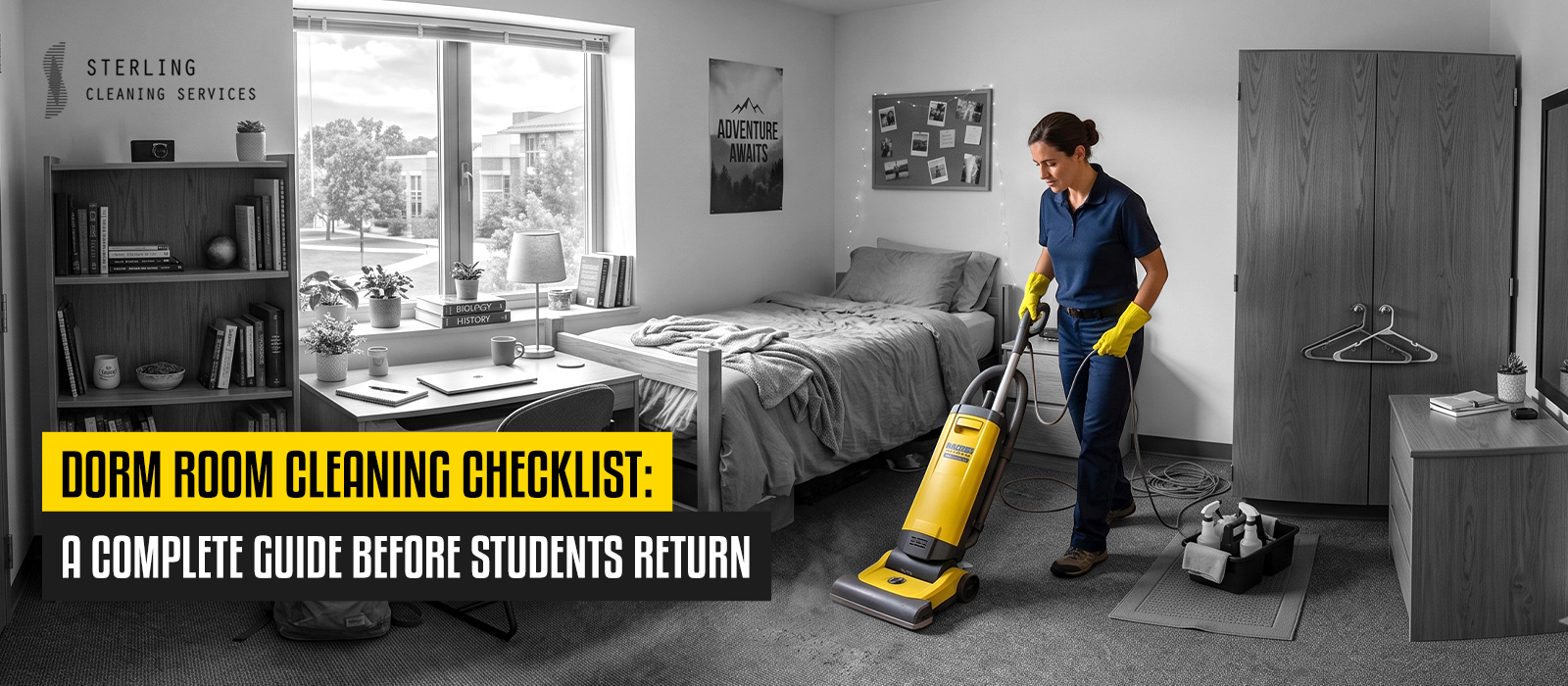
Get a simple dorm room cleaning checklist for 2026. Learn how to clean and prepare dorm rooms before students return with tips from Sterling Cleaning Services.

Learn how property managers can maintain cleaning compliance with ADA, NFPA, and health standards while creating safer, cleaner, and well-maintained properties. The guide covers key cleaning considerations, safety practices, and compliance-focused approaches for effective property management.

Choosing the right commercial cleaning company in Manhattan requires careful consideration of experience, services, pricing, reliability, and customer reviews. Use these factors to find a trusted cleaning partner for your business.
Please reach us at any time to set up an appointment to review your commercial cleaning requirements. Sterling will provide an on-site review of your janitorial needs, then create a custom proposal that fits both your specifications and budget