Imagine a patient is discharged in the morning, and another admission is scheduled just a few hours later. The housekeeping team has limited time to prepare the room before the next patient arrives.
The bed has been made, the floor has been mopped, and the room appears ready. But what about the call button, bed rails, light switches, overbed table, or restroom fixtures?
Missing even one high-touch surface can increase the risk of cross-contamination and compromise patient safety. That's why every healthcare facility should follow a structured hospital patient room cleaning checklist.
A well-defined document helps maintain optimal healthcare cleaning services for patient safety. By following the list, your cleaning team can ensure that every patient room is maintained consistently. It supports infection prevention and ensures no critical task is overlooked, even during busy hospital operations.
If you're looking for a way to maintain safe and hygienic patient rooms in New York, then you have come to the right place.
In this blog, we will discuss daily cleaning tasks, terminal cleaning procedures, essential supplies, best practices, and everything else needed to maintain consistently high cleaning standards.
Why Does Hospital Patient Room Cleaning Matter in NYC?
Hospitals are known to be filled with patients and commuters. The care rooms are no exception; they experience continuous activity throughout the day.
Patients, healthcare professionals, caregivers, and visitors frequently come into contact with the objects. Items like bed rails, overbed tables, call buttons, door handles, medical equipment, and restroom fixtures are constantly touched by people. Without proper cleaning and disinfection, these high-touch surfaces can quickly become sources of contamination.
For hospitals in New York, maintaining clean patient rooms goes beyond appearance. Following structured hospital room cleaning in NYC helps reduce the risk of healthcare-associated infections (HAIs), supports safer patient care, and aligns with hospital cleaning standards recommended by organizations such as the CDC, OSHA, the EPA, and the New York State Department of Health.
Here’s why maintaining a clean patient room is so important:
Reduces the Risk of Healthcare-Associated Infections (HAIs)
The primary reason to keep the patient room clean is to remove harmful microorganisms. Regular patient room disinfection reduces opportunities for cross-contamination and helps protect both patients and healthcare workers.
Supports NYC Health and Regulatory Standards
Hospitals are expected to follow cleaning and infection prevention recommendations established by the CDC, OSHA, the EPA, and the New York State Department of Health.
Consistent healthcare facility cleaning, proper disinfectant use, and safe waste handling help healthcare facilities maintain compliance. Such practices help create a safer environment for everyone.
Improves Patient Confidence
Patients and their families immediately notice whether a hospital room is clean and well-maintained. A hygienic environment builds confidence, creates a positive first impression, and reflects the hospital's commitment to quality care.
Protects Healthcare Staff
Doctors, nurses, and support staff spend long hours inside patient rooms. Proper cleaning reduces unnecessary exposure to contaminants and helps create a safer workplace.
Supports Faster Patient Turnover
A standardized cleaning process helps prepare patient rooms efficiently between admissions. Using a hospital sanitation checklist for the same ensures that every area is prioritized without overlooking essential cleaning tasks. This reduces delays and improves the overall workflow of hospital operations.
Preserves Hospital Equipment
Routine cleaning prevents the buildup of dust, spills, and contaminants on hospital furniture. Proper cleaning also prevents dirt buildup on medical equipment and fixtures. Such practices help extend their lifespan and reduce long-term maintenance costs.
Maintain the highest hygiene standards with expert healthcare facility cleaning services.
What Should Be Included in a Hospital Patient Room Cleaning Checklist?
By now, you are clear on why hospital cleaning is so important and how a checklist helps the process. It might have made you curious: what should be included in a hospital housekeeping checklist?
A detailed cleaning checklist simply doesn't mention generic cleaning processes like wiping down visible surfaces. It understands that every patient room contains high-touch areas. The list prioritizes cleaning needs for medical equipment, shared spaces, and restrooms that require different cleaning frequencies and procedures.
A structured checklist for cleaning hospital rooms helps environmental services teams follow a consistent process while ensuring every critical task is completed before the room is ready for patient use.
A complete hospital disinfection checklist should include the following areas:
Patient Care Areas
Patient beds, bed rails, overbed tables, bedside cabinets, IV poles, chairs, and other frequently used equipment should be cleaned and disinfected regularly to reduce the risk of contamination.
High-Touch Surfaces
Frequently touched items such as call buttons, door handles, light switches, remote controls, telephones, and handrails require routine disinfection. They should be properly sanitized, as these are the most common points for germ transmission.
Patient Restrooms
Every hospital restroom cleaning checklist should include toilets, sinks, faucets, grab bars, mirrors, dispensers, countertops, and floors. It helps to maintain a hygienic environment and reduce the spread of harmful pathogens.
Floors and Waste Disposal
Floors should be vacuumed or mopped using approved cleaning products, while soiled linens, medical waste, and regular trash should be handled according to hospital infection prevention procedures.
Cleaning Records and Inspections
Apart from mentioning the specific cleaning areas, you should also prioritize inspections. The checklist would ensure that the facility maintains accountability, verifies compliance, and that cleaning standards remain consistent.
Daily Patient Room Cleaning Checklist
Patient rooms should be cleaned multiple times throughout the day to maintain a safe and hygienic environment for patients, visitors, and healthcare professionals.
In this regard, taking help from professionals offering healthcare cleaning services for patient safety can prove to be fruitful. These experts follow consistent patient room cleaning procedures to reduce the spread of harmful microorganisms. Such practices ensure that every room remains ready for quality patient care.
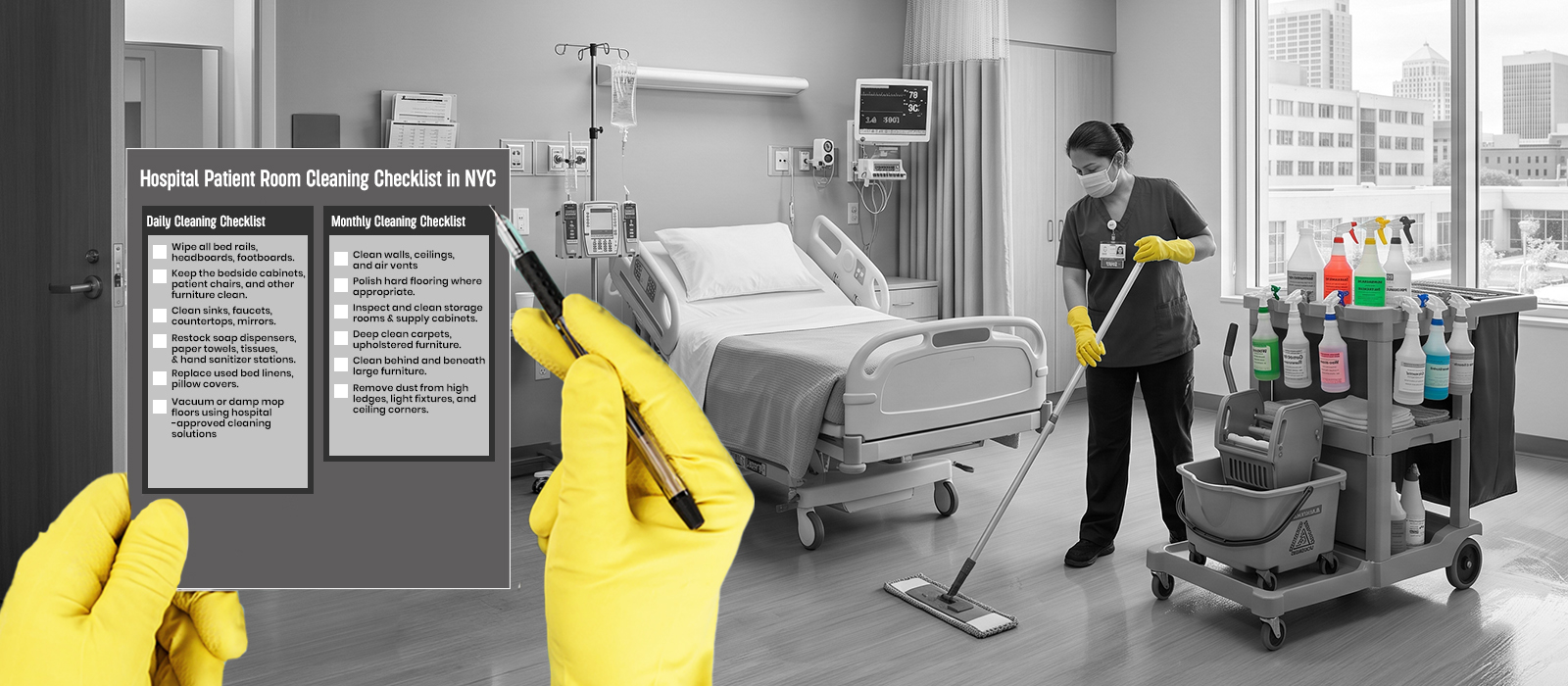
A daily patient room cleaning checklist should include:
- Wipe all bed rails, headboards, footboards, and overbed tables.
- Keep the bedside cabinets, patient chairs, and other furniture clean.
- Disinfect call buttons, remote controls, telephones, and nurse communication devices.
- Clean frequently touched surfaces, including door handles, light switches, and handrails.
- Clean sinks, faucets, countertops, mirrors, and other restroom fixtures.
- Restock soap dispensers, paper towels, tissues, and hand sanitizer stations.
- Empty regular waste bins and biomedical waste containers using approved disposal procedures.
- Replace used bed linens, pillow covers, and patient gowns as required.
- Vacuum or damp mop floors using hospital-approved cleaning solutions.
- Inspect the room for spills, stains, or damaged fixtures that require immediate attention.
Terminal Cleaning Checklist After Patient Discharge
While going through the regular patient room cleaning needs, you might be wondering: what happens after the person is discharged?
After the individual leaves, simply depending on routine cleaning is not enough. The room must be thoroughly cleaned and disinfected before it can safely accommodate the next patient. Such practices help remove contaminants that may remain on frequently touched surfaces. Sanitizing the medical equipment, furniture, and restroom fixtures reduces the risk of infection transmission throughout the facility.
A terminal cleaning process should include the following tasks:
- Remove used linens, disposable items, and waste following hospital disposal procedures.
- Clean and disinfect the patient bed, mattress, bed rails, and overbed table.
- Wipe and disinfect bedside cabinets, chairs, storage units, and other furniture.
- Clean reusable medical equipment as per hospital cleaning standards.
- Disinfect high-touch surfaces, including call buttons, remote controls, telephones, door handles, light switches, and handrails.
- Dispose of medical waste while following regulations and standards.
- Thoroughly clean and disinfect the patient restroom, including toilets, sinks, grab bars, mirrors, and countertops.
- Vacuum or damp mop the entire floor, including areas beneath furniture and around corners.
- Inspect walls, vents, windowsills, and other overlooked surfaces for dust or visible contamination.
- Restock essential patient care supplies before preparing the room for the next admission.
- Complete the final inspection and document that the room is ready for occupancy.
Hospital Cleaning Supplies and Equipment Needed
By now, you know that cleaning patient rooms in a hospital is quite essential. However, the rooms won’t be properly cleaned without the right tools.
A professional cleaning service provider uses industrial-grade equipment and reliable cleaning methods to make the rooms properly clean. They use protective gear to perform their tasks safely and efficiently.
Using the right supplies helps improve cleaning consistency and supports long-term patient room sanitization.
Every hospital should have the following cleaning supplies and equipment readily available:
- EPA-registered hospital-grade disinfectants approved for healthcare environments.
- Neutral surface cleaners for beds, furniture, and non-clinical surfaces.
- Microfiber cloths and color-coded cleaning cloths to minimize cross-contamination.
- Mop and bucket system with hospital-approved floor cleaning solutions.
- HEPA-filter vacuum cleaner for carpets, entry mats, and upholstered furniture.
- Cleaning brushes for corners, grout lines, and difficult-to-reach areas.
- Disposable gloves, face masks, protective eyewear, gowns, and other PPE.
- Spray bottles and portable cleaning caddies for easy access to supplies.
- Alcohol-based hand sanitizers, hand soap, and paper towels.
- Disinfectant wipes for high-touch surfaces and shared medical equipment.
- Biomedical waste containers, sharps containers, and heavy-duty trash liners.
- Clearly labeled waste segregation bins for safe disposal.
- Wet floor caution signs to help maintain workplace safety during cleaning.
- Cleaning logs or digital inspection checklists to document completed tasks.
- Replacement linens, patient gowns, and essential room supplies for quick room turnover.
Common Cleaning Mistakes to Avoid
Do you know that even the most detailed cleaning checklist can fall short if basic cleaning practices are overlooked? Small mistakes made during routine cleaning can increase the risk of cross-contamination.
It can compromise patient safety and reduce the effectiveness of infection prevention efforts. Identifying the common issues helps medical facility cleaning in NYC service providers maintain a cleaner, safer, and more consistent healthcare environment.
The following are common hospital cleaning mistakes that need to be avoided:
- Overlooking high-touch surfaces such as bed rails, call buttons, door handles, light switches, and remote controls.
- Using the wrong disinfectant or failing to follow the manufacturer's recommended contact time.
- Cleaning before removing visible dirt and debris, which can reduce the effectiveness of disinfectants.
- Using the same cleaning cloth or mop across multiple patient rooms increases the risk of cross-contamination.
- Skipping patient restrooms or giving them less attention than patient care areas.
- Improper handling of medical waste and soiled linens creates unnecessary safety and hygiene risks.
- Rushing room turnover and missing critical cleaning tasks before admitting the next patient.
- Failing to clean reusable medical equipment according to manufacturer guidelines.
- Not replacing worn or contaminated cleaning tools reduces overall cleaning effectiveness.
- Ignoring routine staff training, leading to inconsistent cleaning practices and avoidable errors.
Best Practices for Hospital Patient Room Cleaning
It is a hard fact that hospital environments change constantly throughout the day. Patients are admitted and discharged, healthcare professionals move between rooms, and high-touch surfaces are used repeatedly.
The constant use increases the chance of contamination and infections. It is the primary reason why the thorough cleaning of patient rooms should be prioritized.
In this regard, following consistent cleaning practices would ensure that every patient room remains safe, hygienic, and ready for the next stage of care.
The following are some of the best practices that can help cleaning teams improve patient room hygiene:
- Follow a standardized hospital cleaning protocol for every patient room.
- Clean from cleaner areas to dirtier areas to prevent cross-contamination.
- Disinfect high-touch surfaces multiple times throughout the day.
- Use EPA-approved disinfectants and follow the recommended contact time.
- Wear appropriate PPE while handling waste and contaminated materials.
- Replace cleaning cloths and mop heads between patient rooms.
- Inspect patient rooms after cleaning to verify that all tasks are completed.
- Document completed patient room cleaning procedures for accountability.
- Restock essential supplies before the room is occupied again.
- Provide regular training to keep cleaning staff updated on current infection prevention practices.
How Often Should Hospital Patient Rooms Be Cleaned?
After following the right cleaning practices, the next step is establishing a consistent cleaning schedule. Different patient room areas require attention at different intervals.
While some surfaces need cleaning several times a day, others require scheduled monthly maintenance or thorough cleaning after a patient is discharged.
Following a consistent schedule helps hospitals maintain high cleaning standards. It helps keep patient rooms ready for safe occupancy.
Daily Cleaning
Routine cleaning should be carried out every day in occupied patient rooms to maintain cleanliness and reduce the buildup of germs.
Daily tasks include:
- Disinfect high-touch surfaces.
- Clean patient beds, furniture, and medical equipment.
- Sanitize patient restrooms.
- Empty waste bins and replace liners.
- Replace used linens as required.
- Vacuum or damp mop floors.
- Restock essential patient room supplies.
Monthly Cleaning
Monthly cleaning focuses on areas that must be kept clean, safe, and well-maintained for patients. These scheduled tasks help improve overall hygiene while extending the lifespan of hospital facilities and equipment.
Monthly cleaning should include:
- Clean walls, ceilings, and air vents.
- Remove dust from high ledges, light fixtures, and ceiling corners.
- Deep clean carpets, upholstered furniture, and waiting area seating.
- Clean behind and beneath large furniture and medical equipment.
- Inspect and clean storage rooms and supply cabinets.
- Polish hard flooring where appropriate.
- Check patient room fixtures for signs of wear or maintenance needs.
- Review cleaning records and replenish cleaning supplies where necessary.
Deep Cleaning
Deep cleaning should be scheduled regularly to address areas that are not part of routine daily cleaning. These hard-to-reach areas or high-traffic zones require more thorough attention.
Deep cleaning may include:
- Cleaning walls, ceilings, and air vents.
- Shampooing carpets and upholstered furniture.
- Cleaning behind and beneath large furniture and equipment.
- Polishing hard flooring where appropriate.
- Inspecting and cleaning storage areas.
- Removing dust from high ledges and light fixtures.
Why NYC Hospitals Choose Professional Healthcare Cleaning Services?
Preparing a patient room is a detailed process with dozens of individual cleaning tasks. It requires completing multiple tasks, from disinfecting high-touch surfaces to handling medical waste correctly.
Every step plays a role in protecting patients and healthcare professionals. Without a structured approach, important tasks can easily be missed, especially during busy hospital operations.
In such cases, taking help from professionals offering Healthcare cleaning services in NYC can be quite beneficial. Experienced cleaning teams follow standardized procedures and use hospital-grade disinfectants.
With their expertise, they help healthcare facilities maintain safe, compliant, and consistently hygienic patient environments.
Trained Healthcare Cleaning Professionals
Cleaning teams receive specialized training in healthcare cleaning protocols, infection prevention, proper disinfectant use, and safe waste handling.
Consistent Cleaning Standards
Healthcare cleaning services in NYC follow systematic cleaning procedures. They follow the checklist to ensure that every patient room receives the same level of attention and care.
Regulatory Compliance
Experienced teams understand healthcare cleaning requirements. They help facilities maintain compliance with CDC, OSHA, EPA, and New York State Department of Health recommendations.
Flexible Cleaning Support
Hospitals can easily schedule their cleaning needs as per patient volume. They can opt for daily housekeeping, terminal cleaning, emergency cleaning, or additional support as needed.
Improved Operational Efficiency
Outsourcing cleaning allows healthcare professionals to focus on patient care while experienced cleaning teams maintain hygienic, patient-ready environments.
Ready to improve infection control? Get in touch for a customized cleaning solution.
Create Safer Patient Environments with the Right Cleaning Partner
Following a hospital patient room cleaning checklist helps hospitals maintain cleaner patient environments and support infection prevention in medical spaces.
In this regard, a structured cleaning process ensures that every patient room is prepared safely before the next admission. However, handling the cleaning task on your own can lead to inconsistencies.
At Sterling Cleaning Services, we understand the unique cleaning requirements of hospitals and other healthcare facilities. Our trained professionals follow industry-approved cleaning protocols and use hospital-grade disinfectants to deliver reliable solutions.
Our trained team follows systematic methods like a medical facility or dental office cleaning checklist to ensure optimal cleanliness. We can easily accommodate your cleaning needs as per your working hours for the best results.
Maintain a safe, compliant, and hygienic patient environment every day by connecting with Sterling Cleaning Services today!
Frequently Asked Questions
1. What is included in a hospital patient room cleaning checklist?
A hospital patient room cleaning checklist typically includes the important task of making the patient rooms safe. It typically includes tasks like disinfecting patient beds, medical equipment, high-touch surfaces, restrooms, floors, and waste disposal areas. It also prioritizes inspecting the room before it is occupied by another patient.
2. How often should patient rooms be disinfected?
Ideally, the occupied patient rooms should be cleaned and disinfected daily. The high-touch surfaces should be disinfected multiple times throughout the day. After a patient is discharged or transferred, the room should undergo terminal cleaning before it is assigned to the next patient.
3. What disinfectants are used in hospitals?
Hospitals typically use EPA-registered, hospital-grade disinfectants that are approved for healthcare environments. The selected disinfectant should be effective against a broad range of pathogens and safe for the environment.
4. What is terminal cleaning in hospitals?
Terminal cleaning is a thorough cleaning and disinfection process performed after a patient is discharged or transferred. It involves disinfecting patient care areas, high-touch surfaces, medical equipment, and restrooms.
5. Why is high-touch surface cleaning important?
High-touch surface cleaning is important as it is touched or accessed by multiple people throughout the day. Regular cleaning and disinfection help reduce the spread of harmful microorganisms and support infection prevention within healthcare facilities.
6. Can hospitals outsource patient room cleaning services in NYC?
Yes, many hospitals partner with professional healthcare cleaning service providers to maintain consistent cleaning standards. It helps support infection prevention and improve operational efficiency. Experienced cleaning teams follow industry-approved protocols and use the right tools to make hospitals ideal for patients. Healthcare Facility Cleaning Services, NYC