Quick Answer
A Breakroom Cleaning Checklist should cover:
- Countertops, tables, and sinks
- Microwaves, refrigerators, and coffee stations
- Floors, trash, and recycling areas
- High-touch surfaces and handles
- Breakroom bathrooms
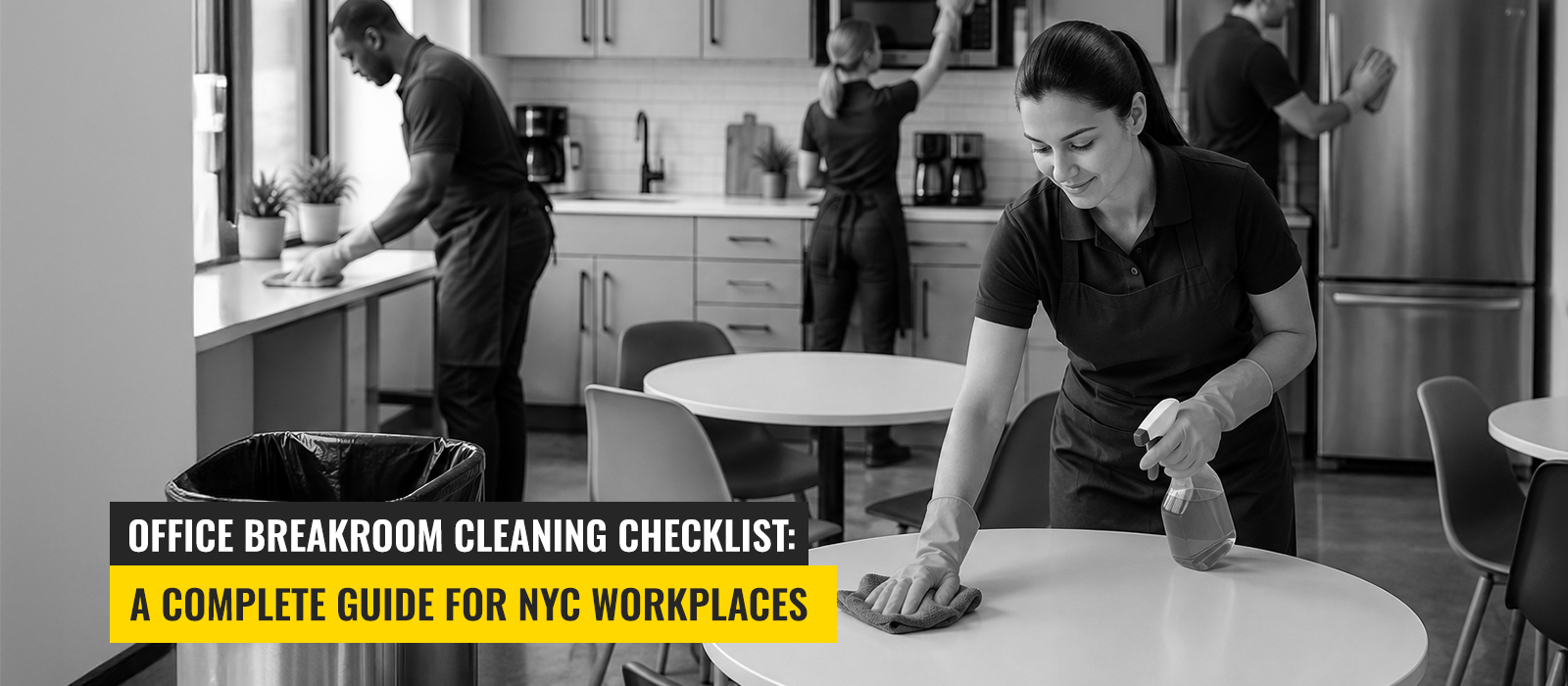
Every employee working in a NYC corporate environment spends some part of the day in the office breakroom. From quick coffee breaks to informal team chats, these spaces see constant activity throughout the workday.
With so many people sharing the same tables and surfaces, small messes can quickly become a bigger cleaning problem. Spilled coffee, food crumbs, overflowing bins, and unclean appliances can make the breakroom unpleasant for everyone.
That is why workplace breakroom cleaning needs a consistent routine rather than occasional tidying. A cleaning checklist for business helps cleaning teams and employees know what needs attention and how often each task should be completed.
If you're trying to learn how to maintain a cleaner and more comfortable office breakroom, then you are at the right place.
In this guide, we’ll discuss the essential breakroom cleaning tasks, frequencies, common mistakes, and practical ways to maintain a cleaner office breakroom.
What Is a Breakroom Cleaning Checklist and Why Does It Matter?
Your office breakroom can tell you a lot about how well it is being maintained. A sticky coffee counter, crumbs around the microwave, or an overflowing bin can make an otherwise professional workplace feel neglected.
Routine cleaning can be done by your in-house cleaners, but without a disciplined schedule, light cleaning jobs can slip through the cracks. A Breakroom Cleaning Checklist helps cleaning teams stay consistent by covering everyday messes, high-touch surfaces, appliances, waste areas, and tasks that require deeper attention.
It also makes cleaning responsibilities easier to track. Rather than waiting for the breakroom to become dirty, teams can operate on a schedule and address the trouble areas before employees notice them.
A well-planned checklist helps handle the NYC office cleaning effectively:
- Maintain surface hygiene across tables, countertops, sinks, and shared areas.
- Control food waste and prevent spills, crumbs, and residue from accumulating.
- Keep appliances clean by including microwaves, refrigerators, coffee makers, and other shared equipment.
- Manage high-touch areas such as door handles, cabinet handles, appliance controls, and light switches.Control odors by including trash bins, refrigerators, sinks, and drains in routine cleaning.
- Maintain cleaning accountability by giving staff a clear set of tasks to complete and track.
- Improve employee comfort by keeping the breakroom clean, organized, and ready for use.
Keep Your Workplace Fresh, Clean, and Ready Every Day
What Areas Should Be Included in Workplace Breakroom Cleaning?
By now, you know the importance of keeping breakrooms clean in a busy commercial space in NYC. However, simply knowing that cleaning is important is not enough.
You should also know which areas require regular cleaning and which ones need more thorough attention. These day-to-day activities of employees and staff can lead to the accumulation of dirt, dust, and microbes.
This means that simply focusing on visible dirt during workplace breakroom cleaning isn't sufficient. In such cases, following a complete cleaning routine can help make the spaces clean, healthy, and safe for employees and visitors.
The following are the essential areas that need to be handled during professional office cleaning:
Food Preparation and Dining Areas
Tables and countertops come into direct contact with food, drinks, hands, and shared items throughout the day. Regular employee breakroom cleaning helps remove crumbs, spills, grease, and surface residue before they build up.
- Wipe and disinfect tables after heavy use.
- Clean countertops and food preparation surfaces.
- Remove crumbs and food residue from tables and corners.
- Wipe chairs and other frequently used furniture.
- Clean cabinet handles and accessible cabinet surfaces.
Appliances and Beverage Stations
Microwaves, refrigerators, coffee makers, and water dispensers are regularly used by multiple employees. Their handles, buttons, doors, and surrounding surfaces can collect dirt quickly.
- Clean the inside and outside of microwaves.
- Wipe refrigerator doors, handles, and accessible surfaces.
- Clean coffee makers and beverage stations.
- Wipe appliance buttons, controls, and touchpoints.
- Remove visible spills and food residue around appliances.
Sinks, Floors, and Waste Areas
Sinks and waste areas can develop odors and buildup when they are not cleaned regularly. Floors also need attention because food crumbs, drink spills, and tracked-in dirt can accumulate throughout the day.
- Clean and disinfect sinks and faucets.
- Remove food particles from sink areas.
- Empty trash and recycling bins regularly.
- Clean floors and address spills promptly.
- Wipe the area around waste containers.
- Clean corners and other areas where crumbs collect.
High-Touch Surfaces
Some breakroom surfaces are touched repeatedly and may lack the needed attention during routine cleaning. Including them in the commercial cleaning checklist helps reduce the buildup of dirt and residue on shared touchpoints.
- Disinfect door and cabinet handles.
- Wipe light switches and appliance controls.
- Clean refrigerator and microwave handles.
- Disinfect shared dispensers and touchpoints.
- Wipe frequently used surfaces throughout the breakroom.
What Makes Office Breakroom Cleaning Challenging?
An office breakroom can be one of the hardest areas to keep consistently clean due to the traffic. Employees use the same appliances, counters, sinks, tables, and waste areas throughout the day.
It creates new cleaning needs almost continuously, as there can be visible dirt. For instance, food residue can dry inside a microwave, coffee spills can stain counters, or refrigerator spills can create unpleasant odors.
Some high-touch surfaces may also be cleaned less often simply because they are easy to overlook. Understanding these challenges helps professional cleaning teams give proper attention to the essential areas of the breakroom.
| Spaces |
What to Clean |
Common Cleaning Issues |
| Microwave station |
Microwave interior, exterior, door, handle, and buttons. |
Food spills, sticky residue, expired items, and lingering odors can build up over time. |
| Refrigerator |
Refrigerator doors, handles, shelves, drawers, and accessible interior surfaces. |
Grease and dried residue can become difficult to remove. |
| Coffee and beverage station |
Coffee makers, beverage dispensers, trays, counters, and surrounding surfaces. |
Stains, standing water, and residue can collect around the sink. |
| Sink area |
Sink basin, faucet, drain, backsplash, and surrounding counter. |
Overflowing waste, food residue, and unpleasant odors can affect the area. |
| Tables and chairs |
Tabletops, chair surfaces, edges, and areas underneath furniture. |
Crumbs, grease, drink rings, and sticky residue can remain on tables and counters. |
| Countertops |
Food preparation and serving surfaces. |
Dirt, fingerprints, and residue can accumulate on frequently touched surfaces. |
| Trash and recycling area |
Trash and recycling bins, lids, handles, and surrounding areas. |
Food crumbs, tracked-in dirt, and sticky spills can collect on floors and mats. |
| Floors |
Main floor, corners, edges, and areas beneath furniture. |
Coffee stains, spilled grounds, water marks, and residue can build up around beverage stations. |
| High-touch surfaces |
Door handles, cabinet handles, light switches, appliance buttons, and controls. |
Fingerprints, dust, and food residue can accumulate around cabinet handles and drawers. |
Daily Office Breakroom Cleaning Checklist
Now that you know which areas of the breakroom need attention, the next step is to determine when they should be cleaned. In a busy NYC office, the breakroom does not stay in the same condition throughout the day.
Morning coffee, lunch breaks, shared appliances, and constant foot traffic can quickly create new spills, crumbs, waste, and surface buildup. That is why daily cleaning should focus on the areas employees use most.
A practical daily office breakroom cleaning checklist should include:
- Wipe and disinfect tables and countertops.
- Clean and disinfect sinks and faucets.
- Clean microwave doors, handles, controls, and interior surfaces.
- Wipe coffee makers and beverage stations.
- Clean refrigerator handles and visible spills.
- Disinfect door handles, cabinet handles, and light switches.
- Empty trash and recycling bins.
- Sweep and mop breakroom floors.
- Remove food crumbs from tables, floors, and corners.
- Clean spills and food residue promptly.
- Check shared appliances for visible buildup.
- Refill soap, paper towels, and other essential supplies.
Monthly and Deep Cleaning Checklist
While going through the daily cleaning needs, you may be wondering: isn't that sufficient? Indeed, daily cleaning keeps the breakroom fresh and manageable. However, it cannot address every area where buildup develops over time.
For instance, grease can settle inside appliances, dust can gather behind equipment, and residue can accumulate in drains. These areas require more detailed attention.
Professional cleaning teams can provide monthly and deep cleaning services to address these overlooked areas. They focus on removing hidden dirt, stubborn buildup, and issues from areas that are difficult to reach during routine cleaning.
A commercial office cleaning checklist should include the following tasks:
Monthly Breakroom Cleaning Tasks
- Clean refrigerator shelves, drawers, door seals, and interior surfaces.
- Remove dirt from microwave interiors, turntables, ceilings, and vents.
- Descale coffee makers and clean removable parts.
- Wipe cabinet fronts, handles, drawers, and accessible interiors.
- Clean walls and backsplashes around food preparation areas.
- Deep clean sink drains, faucets, and surrounding surfaces.
- Wash and disinfect trash and recycling bins.
- Clean breakroom chairs and upholstered seating.
- Check appliances for buildup, leaks, or maintenance concerns.
Deep Breakroom Cleaning Tasks
- Move appliances to clean behind and underneath them.
- Remove stubborn grease and food buildup from appliances.
- Deep clean refrigerator interiors and removable components.
- Scrub sink basins, drains, faucets, and surrounding areas.
- Clean walls, corners, baseboards, and hard-to-reach surfaces.
- Wash and disinfect trash and recycling bins inside and out.
- Clean vents, grilles, and other overlooked surfaces.
- Steam clean upholstered seating where applicable.
- Inspect the breakroom for stains, leaks, damage, or maintenance issues.
Breakroom Bathroom Cleaning Checklist
Bathrooms are an important part of any commercial space breakroom. Employees use them throughout the workday, leading to quick dirt and odor buildup.
This increases the need for in-depth cleaning of these areas. A neglected sink, empty soap dispenser, overflowing bin, or dirty floor can quickly become a hygiene concern.
Following a breakroom bathroom cleaning checklist helps cleaning teams cover the essential tasks consistently. It also makes it easier to maintain clean fixtures, fresh surfaces, stocked supplies, and a comfortable environment for employees.
The following are the areas to cover in the commercial restroom cleaning checklist:
- Clean and disinfect toilets, seats, lids, and surrounding surfaces.
- Scrub and disinfect sinks, faucets, and countertops.
- Wipe mirrors and remove water spots and streaks.
- Disinfect door handles, locks, switches, and other high-touch surfaces.
- Mop floors, corners, and areas around bathroom fixtures.
- Empty waste bins and replace liners.
- Refill toilet paper, paper towels, soap, and hand sanitizer.
- Clean and disinfect soap and paper-product dispensers.
- Remove visible stains, spills, and residue promptly.
- Check for leaks, damaged fixtures, or other maintenance concerns.
How to Create an Effective Office Cleaning Schedule?
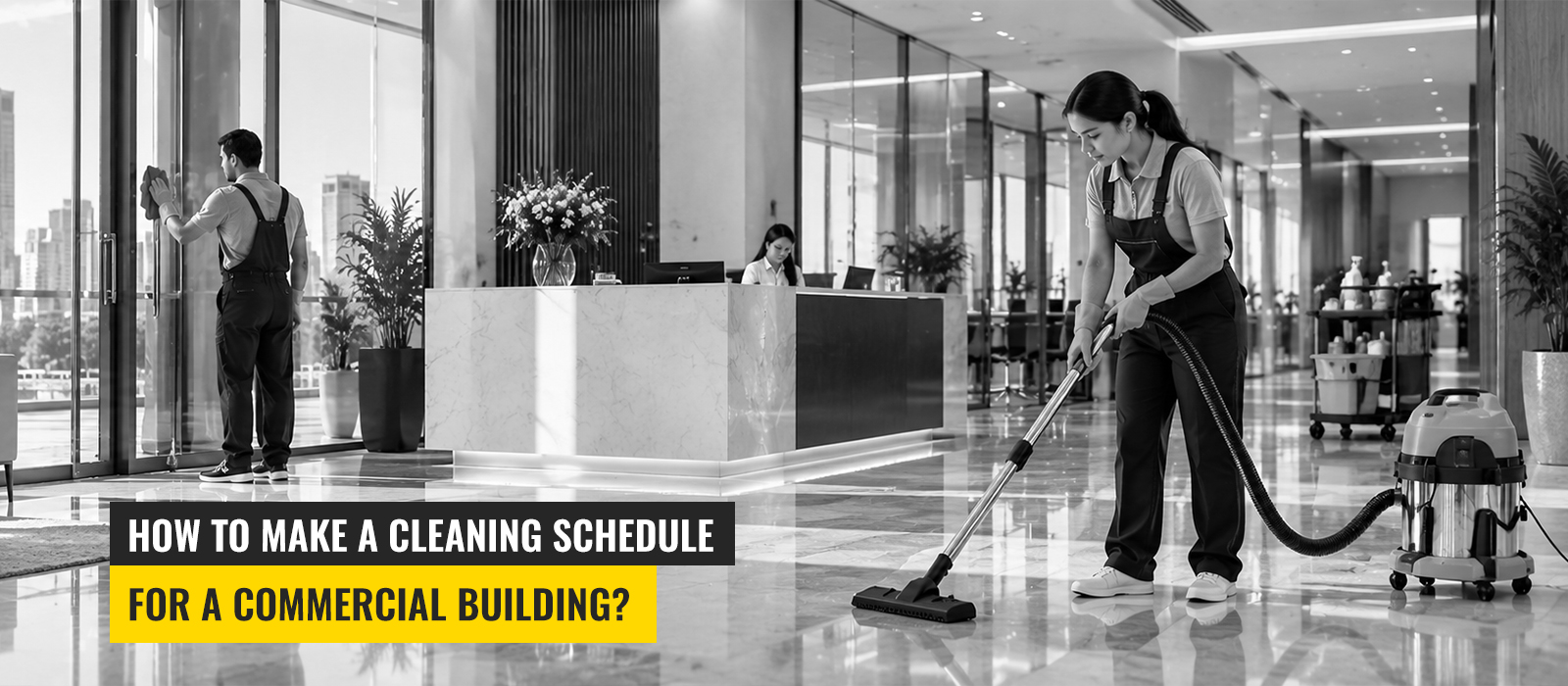
A cleaning routine becomes much easier to manage when it matches the way your office actually operates. A breakroom used by 20 employees will not have the same cleaning needs as one used by 100 people throughout the day.
A practical office cleaning schedule should consider employee traffic, breakroom usage, cleaning frequency, and the tasks that require daily or periodic attention. The cleaning team should follow OSHA workplace hygiene practices to ensure optimal safety and workplace hygiene.
Assess How Your Breakroom Is Used
Start by looking at how many employees use the space and when traffic is highest. A busy lunch period may leave more food waste, spills, and surface residue than quieter parts of the day.
Separate Tasks by Frequency
Not every cleaning task needs to be completed every day. Divide the office cleaning checklist into daily, weekly, monthly, and deep-cleaning tasks.
Assign Cleaning Responsibilities
Clearly define who handles each task. Employees can take care of simple habits such as removing their food and reporting spills, while cleaning teams handle scheduled cleaning and detailed maintenance.
Plan Around Office Hours
Schedule cleaning when it causes minimal disruption to employees. High-traffic areas might require in-depth cleaning during quieter periods. In contrast, deeper cleaning can be planned outside normal working hours.
Review and Adjust the Schedule
A cleaning schedule should change when office usage changes. If employee numbers increase or the breakroom starts experiencing more spills, waste, or odors, the cleaning frequency may need to increase.
Common Office Breakroom Cleaning Mistakes to Avoid
Even with a regular cleaning routine, some breakroom problems continue because important areas are overlooked. A quick wipe of visible surfaces may make the room look clean, but it may leave behind food residue, appliance buildup, hidden dirt, and germs on frequently touched surfaces.
Avoiding these mistakes can make the cleaning routine more consistent:
- Cleaning only visible dirt while overlooking areas beneath appliances, furniture edges, and corners.
- Ignoring appliance interiors where food residue, grease, stains, and odors can build up.
- Forgetting high-touch surfaces such as door handles, cabinet handles, switches, and appliance controls.
- Leaving coffee, food, and drink spills until later, allowing them to dry and become harder to remove.
- Replacing bin liners without cleaning the bins themselves or the surrounding floor.
- Overlooking sinks and drains where food particles, standing water, and residue can collect.
- Using the same cleaning products or methods on every surface without considering material or appliance requirements.
- Skipping monthly and deep cleaning because the breakroom appears clean after daily cleaning.
- Failing to follow a consistent schedule, which can cause important tasks to be missed.
When Should NYC Offices Hire Professional Breakroom Cleaning Services?
A busy office breakroom can quickly become difficult to manage when employees are using the space throughout the day. Spills, food waste, appliance buildup, and high-touch surfaces all require regular attention.
When routine cleaning is no longer enough, professional support can provide the consistency your workplace needs. This is even more crucial for companies that require dependable Manhattan office cleaning with regular breakroom care.
Professional cleaners can also work around your office cleaning schedule and adjust cleaning frequency based on employee traffic and breakroom usage. Consider professional help when:
Breakroom Has Heavy Daily Traffic
High employee traffic creates more spills, crumbs, waste, and surface buildup. Frequent employee breakroom cleaning may be necessary to keep the space comfortable throughout the workday.
Cleaning Tasks Keep Getting Missed
A busy workplace can make it difficult for employees or internal staff to keep up with every task. Professional cleaners can follow a structured routine and cover overlooked areas.
Appliances Need Detailed Cleaning
Microwaves, refrigerators, coffee makers, and other shared appliances require more than occasional wiping. Professional teams can include these areas in scheduled cleaning services.
Office Needs Consistent Hygiene Standards
A professional commercial breakroom cleaning team can maintain consistent procedures across breakrooms, bathrooms, common areas, and other workplace spaces.
Thorough Cleaning Takes Too Much Time
Thorough cleaning tasks can be time-consuming for internal staff. Professional cleaners have industrial-grade equipment, products, and experience to handle these tasks efficiently.
Keep Your NYC Office Breakroom Clean With Sterling Cleaning Services
A well-maintained breakroom supports a cleaner and more comfortable workplace. However, handling the cleaning task without a structured routine or methods can create inconsistent cleanliness.
In such cases, following a Breakroom Cleaning Checklist helps teams manage daily tasks. The results become more effective when businesses take the help of professional cleaning services that address the buildup that routine cleaning can miss.
Make Your Office Breakroom Cleaner, Healthier, and Fresher
At Sterling Cleaning Services, we provide reliable commercial cleaning in NYC. Our team of specialists is dedicated to providing uniform cleaning, transparent communication, and functional service solutions tailored to the requirements of your facility.
We maintain transparency throughout the process and help resolve common questions like: What do commercial cleaning services offer in NYC?
From routine breakroom cleaning to detailed office cleaning, our team can help you maintain a workplace that looks professional and feels comfortable every day.
Find the reliable cleaning support for your NYC office breakrooms by connecting with Sterling Cleaning Services today!
Frequently Asked Questions
1. How often should an office breakroom be cleaned?
An office breakroom should be cleaned daily to manage high-touch surfaces and address spills throughout the day. Businesses should also conduct monthly and deep cleaning to ensure optimal cleaning of appliances, cabinets, floors, bins, and less accessible areas.
2. What should be included in an office breakroom cleaning checklist?
An office breakroom cleaning checklist should include in-depth cleaning of essential surfaces. It should include tables, countertops, sinks, appliances, waste bins, floors, high-touch surfaces, and shared areas. The checklist should also include tasks based on cleaning frequency.
3. Who is responsible for cleaning an office breakroom?
There is no specified responsibility when it comes to cleaning an office breakroom. It can be shared between employees and professional cleaning teams. Employees should clean up personal food waste and spills, while cleaning professionals can handle scheduled cleaning.
4. How can businesses maintain workplace breakroom hygiene?
Businesses can maintain workplace breakroom hygiene by following OSHA guidelines and establishing clear cleaning procedures. They can hire services from professional cleaning companies for optimal results. These experts utilize proper hygiene products, clean up spills immediately, and follow a routine schedule of cleaning.
5. When should an office hire professional breakroom cleaners?
An office should consider hiring professional cleaners when employee traffic is high, cleaning tasks are frequently missed, or internal staff cannot maintain the required cleaning frequency. Professional support can also offer flexible cleaning services and handle monthly and deep-cleaning requirements.