Oops! Something went wrong while submitting the form.
Have you ever wondered what happens if an employee slips on your commercial space's wet lobby floor? A cleaning cart narrows an accessible route, or a blocked corridor goes unnoticed until an inspection.
These situations can happen when cleaning staff overlook basic safety and cleaning procedures. A wet floor, obstructed walkway, or misplaced cleaning cart can quickly turn an ordinary task into a property management concern.
That is why property management cleaning compliance should be part of everyday property operations. For properties in New York, cleaning is about more than keeping a building looking presentable. It also involves sanitation, accessibility, fire and life safety, occupant safety, inspections, and proper documentation.
Requirements vary by property type, occupancy, jurisdiction, and applicable federal, state, and local rules. In these situations, professional cleaning support can help to ensure consistent processes, spot problems in advance, and keep common areas in good condition.
In this guide, we will cover the key compliance considerations, cleaning requirements by property area, commercial building cleaning checklist, and when professional cleaning support may be worthwhile.
Quick Answer
Clean compliance provides property managers a framework to maintain safe, clean, accessible, and well-maintained spaces that also meet applicable requirements.
What It Covers - Cleaning schedules, sanitation, safety checks, accessibility, inspections, and documentation.
Why It Matters - It helps identify hazards early, maintain shared spaces, and support applicable regulatory obligations.
What to Prioritize - Focus on high-traffic areas, restrooms, entrances, common areas, and recurring safety issues.
What Is Property Management Cleaning Compliance?
Property management cleaning compliance refers to the procedures used to keep a managed property clean, safe, and sanitary. It also ensures that the space is accessible while meeting applicable requirements.
Building cleaning compliance covers all the requirements, from cleanliness to the appearance of a building. Property managers also need consistent cleaning routines, inspections, documentation, and timely action when problems are found.
A practical approach can include:
Scheduled cleaning - Setting appropriate cleaning tasks and frequencies for each area.
Safety controls - Managing wet floors, spills, obstructions, equipment, and other cleaning-related hazards.
Sanitation - Keeping restrooms, common areas, waste spaces, and high-touch surfaces properly maintained.
Accessibility - Avoiding cleaning practices that block or restrict applicable accessible routes and areas.
Inspections - Checking completed work and identifying conditions that need attention.
Documentation - Recording cleaning activities, inspections, complaints, and corrective actions.
Why Does Cleaning Compliance Matter for Property Managers?
Clean, well-maintained spaces affect how safely a property operates every day. Regular cleaning also helps property managers minimize preventable risks, keep common areas clean, and promote the well-being of the occupants.
With the help of a professional cleaning agency, you can easily identify problems before they become larger maintenance concerns. Such practices again reduce the chances of unwanted expenses or legal lawsuits.
The following reasons explain why cleaning compliance matters:
Protecting Employee Health
Bathrooms, lobbies, elevators, hallways, and the like are subject to heavy daily usage. Routine dusting and cleaning of dirt, rubbish, spills, and grime, as well as maintenance on frequently touched surfaces, are essential.
This is an important part of property management health and safety standards. It is essential, particularly in commercial buildings with high occupancy, frequent visitors, or shared amenities.
Reducing Slip and Trip Hazards
A floor that has been recently cleaned may still be hazardous if it remains wet or if the warning signs are not adequately employed. Cleaning tools, cords, carts, loose mats, and supplies may also be obstacles if left in the flow of foot traffic.
Regular checks help property managers spot these conditions and have them corrected before someone is injured.
Maintaining Accessible Spaces
Cleaning teams need to consider how their work affects people moving through the property. A cart, vacuum, bucket, or temporary barrier should not unnecessarily restrict an applicable accessible route or entrance.
Businesses need to follow the Americans with Disabilities Act, which provides information on federal accessibility requirements. It can help you understand the rules applicable to the property.
Supporting Fire and Life Safety
Housekeeping also plays a role in keeping important building areas orderly. Accumulated waste, unnecessary storage, or cleaning equipment left in corridors can create concerns that property managers should address promptly.
Cleaning teams should know which areas must remain clear and when a housekeeping issue needs to be escalated.
Preparing for Inspections
Regular inspections allow property managers to identify problems before they become recurring complaints or inspection concerns. Following a property management cleaning checklist can help teams maintain cleanliness and safety standards.
They can check floors, restrooms, common areas, entrances, waste areas, and circulation routes consistently. This approach also makes it easier to record deficiencies and confirm corrective actions are completed.
Maintaining Consistent Property Conditions
Properties often have different occupancy levels, operating hours, and cleaning needs across individual areas. A process helps teams to ensure consistent property management cleaning standards rather than expecting this through informal expectations.
Clear responsibilities also make it easier to identify whether an issue is a cleaning task or a maintenance problem.
Keeping Better Cleaning Records
Cleaning records can help demonstrate that routine tasks and inspections are being carried out as planned. Managers can record completed work, identified problems, complaints, corrective actions, and follow-up inspections.
This supports property maintenance compliance by creating a practical record of how cleanliness and related property issues are being managed.
ADA Requirements for Property Management Cleaning
As you look at the different safety and accessibility needs of a managed property, you may have come across the Americans with Disabilities Act (ADA). But how does it relate to everyday cleaning, and what should property managers keep in mind?
It is a compliance framework that establishes accessibility requirements for covered properties and facilities. Cleaning itself is not an ADA requirement, but cleaning practices can affect whether accessible areas remain usable.
Property managers should make sure routine cleaning does not create unnecessary barriers or obstruct applicable accessible features.
Property managers should check the following:
Accessible routes - Keep applicable routes free from cleaning carts, vacuums, buckets, cords, and other temporary obstructions.
Entrances and doors - Make sure cleaning equipment does not restrict access to applicable entrances or doorways.
Accessible restrooms - Keep required accessible features and circulation areas usable while cleaning is underway.
Wet floors - Manage spills and wet surfaces promptly, and use appropriate warnings when an area cannot be kept dry immediately.
Temporary barriers - Avoid leaving barriers in place longer than necessary and provide an appropriate alternative route when required.
Cleaning schedules - Where possible, schedule disruptive cleaning activities during lower-traffic periods to reduce access problems.
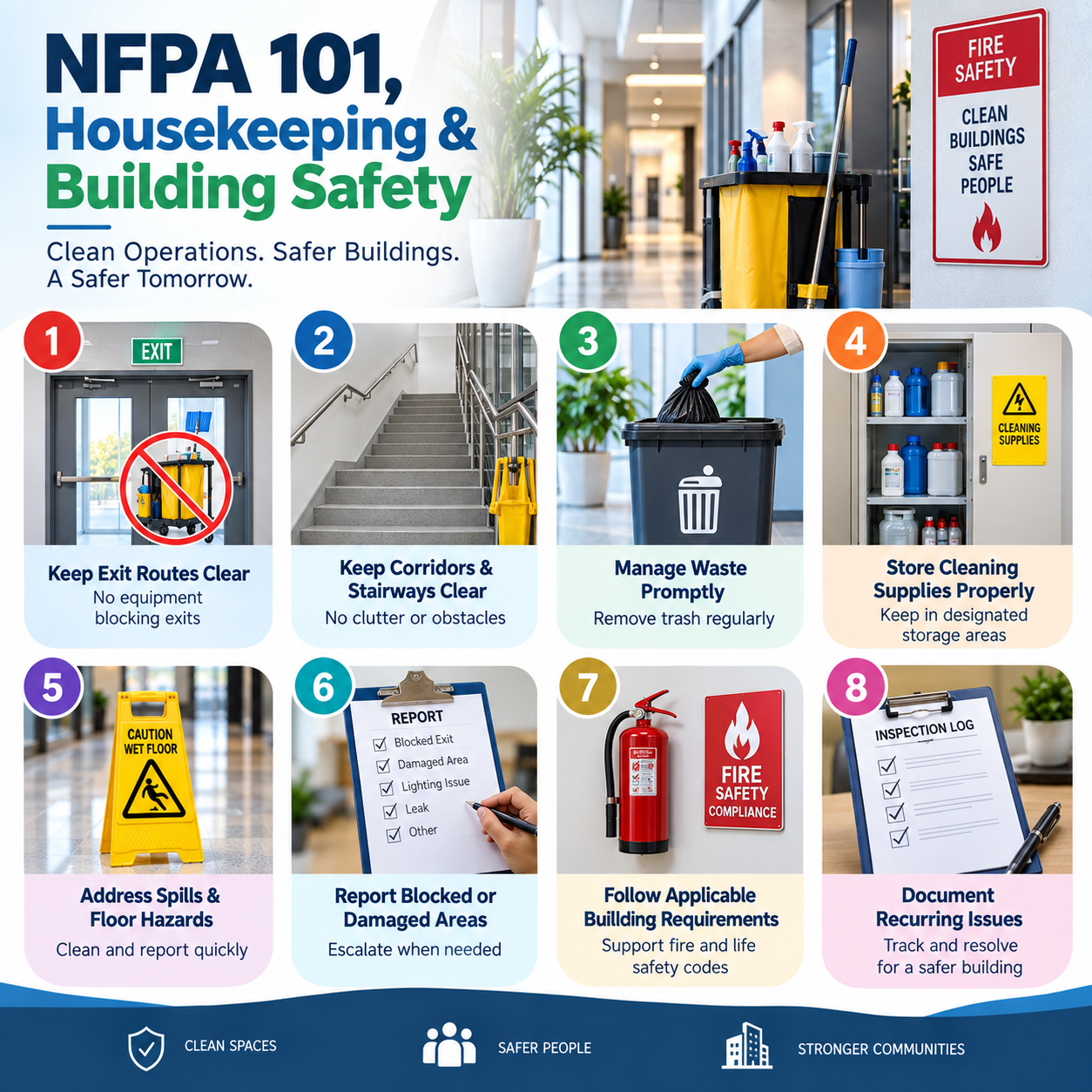
NFPA 101, Housekeeping, and Building Safety
Fire and life safety are also key to maintaining a safe, well-managed property. National Fire Protection Association 101, or the Life Safety Code, addresses areas such as means of egress, fire protection, and occupant safety.
Its application depends on the property type and the codes adopted by the applicable jurisdiction. Property managers should verify which office building cleaning requirements apply to their buildings.
Good housekeeping practices can support commercial cleaning compliance by helping keep circulation areas orderly and reducing avoidable hazards.
Keep exit routes clear - Do not leave cleaning carts, vacuums, supplies, waste containers, or other equipment where they could obstruct required exits or means of egress.
Keep corridors and stairways unobstructed - Routine cleaning should leave hallways, stairways, and other circulation areas clear of equipment, waste, and unnecessary items.
Manage waste promptly - Remove trash and discarded materials according to the property's procedures. This helps prevent buildup in shared or designated building areas.
Store cleaning supplies properly - Keep chemicals, equipment, and supplies in appropriate storage areas, not in corridors, stairwells, or other circulation spaces.
Address spills and floor hazards - Wet floors, damaged flooring, leaks, and similar conditions should be identified and addressed promptly.
Report blocked or damaged areas - Cleaning staff should know when to escalate blocked exits, damaged doors, lighting problems, leaks, or other building conditions.
Follow applicable building requirements - Property managers should distinguish between facility cleaning regulations and broader fire, building, and life-safety requirements.
Document recurring issues - Inspection records can help identify repeated housekeeping problems and support property management safety standards across the building.
Health and Sanitation Considerations for Managed Properties
Commercial space owners must treat health and sanitation as an ongoing part of their property operations. They must ensure buildings with shared restrooms, entrances, elevators, offices, and other high-traffic areas are properly maintained.
Building sanitation requirements vary by property type, occupancy, applicable commercial cleaning regulations, and local requirements. Property management should be able to follow uniform procedures for cleaning, waste management, and moisture management.
The following are the areas that need to be properly managed:
Restrooms and Shared Facilities
Restrooms and shared facilities require regular attention because they experience frequent use throughout the day. Cleaning schedules should reflect occupancy, traffic, and the condition of each area.
Clean fixtures, faucets, handles, and dispensers regularly.
Remove spills, dirt, and buildup from floors.
Check essential restroom supplies during inspections.
Report recurring odors, leaks, and blocked drains.
Waste and High-Traffic Areas
Lobbies, hallways, elevators, break areas, and waste collection points can accumulate dirt and waste quickly. Cleaning teams need to prepare schedules based on traffic levels before they become a hassle.
Remove trash according to the cleaning schedule.
Clean frequently touched surfaces regularly.
Keep waste collection areas clean.
Report leaks, odors, and pest activity.
Clean spills promptly.
Moisture and Mold Prevention
Moisture build-up can lead to mold growth, and reducing moisture is a key element in commercial building mold control. The EPA advises fixing moisture problems as soon as possible in order to prevent mold. In this regard, property managers can refer to the EPA's mold remediation in schools and commercial buildings guide for additional guidance.
Report leaks, condensation, and water stains.
Address recurring moisture through maintenance.
Restrict access to significantly water-damaged areas when necessary.
Escalate visible mold or extensive water damage.
Document recurring moisture problems.
What Are the Cleaning Requirements for Different Property Areas?
Every commercial property has areas with different levels of traffic, occupancy, and cleaning needs. A practical cleaning plan should help maintain these specific areas. Property management cleaning requirements should be based on how each space is used and how often it is occupied.
This approach is especially useful for setting commercial property cleaning standards across offices. In these cases, a professional cleaning company can help property managers ensure high-traffic areas receive extra attention.
Common area cleaning requirements should reflect the property's level of traffic, occupancy, and the use the property receives. The following table explains the points in detail:
Property Area Cleaning Table
Property Area
Cleaning Focus
Cleaning Frequency
Entrances and Lobbies
Floors, entry doors, glass, mats, counters, and frequently touched surfaces.
Daily, with additional attention during periods of heavy traffic.
Hallways and Corridors
Floors, walls, doors, handrails, and visible dirt or debris.
Daily or as needed based on foot traffic.
Elevators
Floors, doors, buttons, mirrors, walls, and other interior surfaces.
Daily, with frequent attention to high-use surfaces.
Restrooms
Toilets, sinks, faucets, mirrors, floors, dispensers, and fixtures.
Daily, with more frequent cleaning in busy properties.
Offices
Desks, workstations, floors, waste bins, glass, and shared surfaces.
Daily or according to office occupancy and use.
Common Areas
Floors, seating, doors, handrails, and shared surfaces.
Daily or according to the property's traffic level.
Break Rooms and Kitchens
Counters, sinks, tables, appliances, floors, and waste bins.
Daily or as needed based on use and occupancy.
Conference Rooms
Tables, chairs, floors, shared equipment, and frequently touched surfaces.
After use or according to the property's cleaning schedule.
Waste and Disposal Areas
Steps, handrails, landings, floors, and accumulated dirt or debris.
Daily or as needed based on building traffic.
Property Manager's Cleaning Compliance Checklist
By now, you have a clearer view of the areas that need regular attention. The next step is to make sure those cleaning practices are carried out consistently.
Following practical cleaning compliance for property managers helps teams verify that cleaning work is completed safely and consistently.
The following are the key points to include in the checklist for property managers:
Cleaning Standards and Scheduling
A cleaning checklist for property managers can help teams follow the same schedule and prevent routine tasks from being missed.
Confirm scheduled tasks are completed.
Check that cleaning frequency matches property use.
Review missed or incomplete cleaning tasks.
Adjust schedules when occupancy or traffic changes.
Safety and Accessibility
Cleaning work should leave the property safe to use, and a property manager safety checklist can help identify unnecessary access problems.
Check for wet-floor hazards.
Remove equipment from active walkways.
Keep required exit paths clear.
Check applicable accessible routes.
Store cleaning supplies safely.
Maintenance Issues
Cleaning inspections can reveal problems that require maintenance rather than additional cleaning. A property maintenance checklist can help teams record these issues.
Look for leaks or water damage.
Report damaged flooring or fixtures.
Check for recurring moisture problems.
Escalate visible mold concerns.
Record issues requiring repair.
Inspection and Documentation
A building inspection cleaning checklist and clear records help managers track problems and confirm that corrective actions are completed.
Record inspection dates.
Document identified deficiencies.
Track complaints and recurring issues.
Record corrective actions.
Confirm follow-up inspections.
Compliance Review
Cleaning procedures should be reviewed against the requirements that apply to the specific property. Commercial space owners can also review Subtitle A of Title III of the Americans with Disabilities Act to understand the applicable accessibility requirements for covered properties.
Verify applicable accessibility requirements.
Review relevant fire and life-safety requirements.
Maintain required inspection records.
Update procedures when property requirements change.
When Should Property Managers Consider Professional Cleaning Services?
Managing cleaning internally can work for smaller properties with limited traffic and straightforward routines. However, as property size, operating hours, and cleaning demands increase, maintaining consistent standards can become harder to manage.
Professional cleaning support can give property managers a structured service schedule. With industrial-grade equipment and specialized techniques, these experts ensure the highest level of cleanliness.
The following are the reasons you should hire cleaning services for commercial spaces:
When Cleaning Tasks Are Frequently Missed
If routine tasks are repeatedly delayed, overlooked, or completed inconsistently, the existing cleaning process may no longer be sufficient. A dedicated cleaning team can provide a defined schedule and clear responsibility for maintaining the property.
When the Property Has High Occupancy or Traffic
Properties with frequent occupants, visitors, deliveries, and shared-space use generally require more regular attention. Professional services can help property managers maintain cleaning schedules that are based on true traffic levels as opposed to periodic or reactive cleaning.
Some situations require more than routine daily cleaning. Deep cleaning, turnover cleaning, detailed surface care, or additional attention following water or moisture issues may require appropriate equipment, techniques, and scheduling.
When Documentation and Inspections Matter
Property managers may require a more accurate record of cleaned properties, inspections, reported issues, and corrective actions. A structured service arrangement can simplify the process of tracking and monitoring these responsibilities.
When Cleaning Must Fit Building Operations
Cleaning should work around the property's operating schedule. Professional services can be arranged around occupancy, building access, meetings, deliveries, and other activities to reduce disruption.
Build a Consistent Cleaning Compliance Process with Sterling Cleaning Services
Property management cleaning compliance helps property managers keep buildings cleaner, safer, and better organized while keeping routine cleaning, inspections, and maintenance under control.
A consistent process makes it easier to manage different property areas, respond to cleaning issues, and meet building requirements.
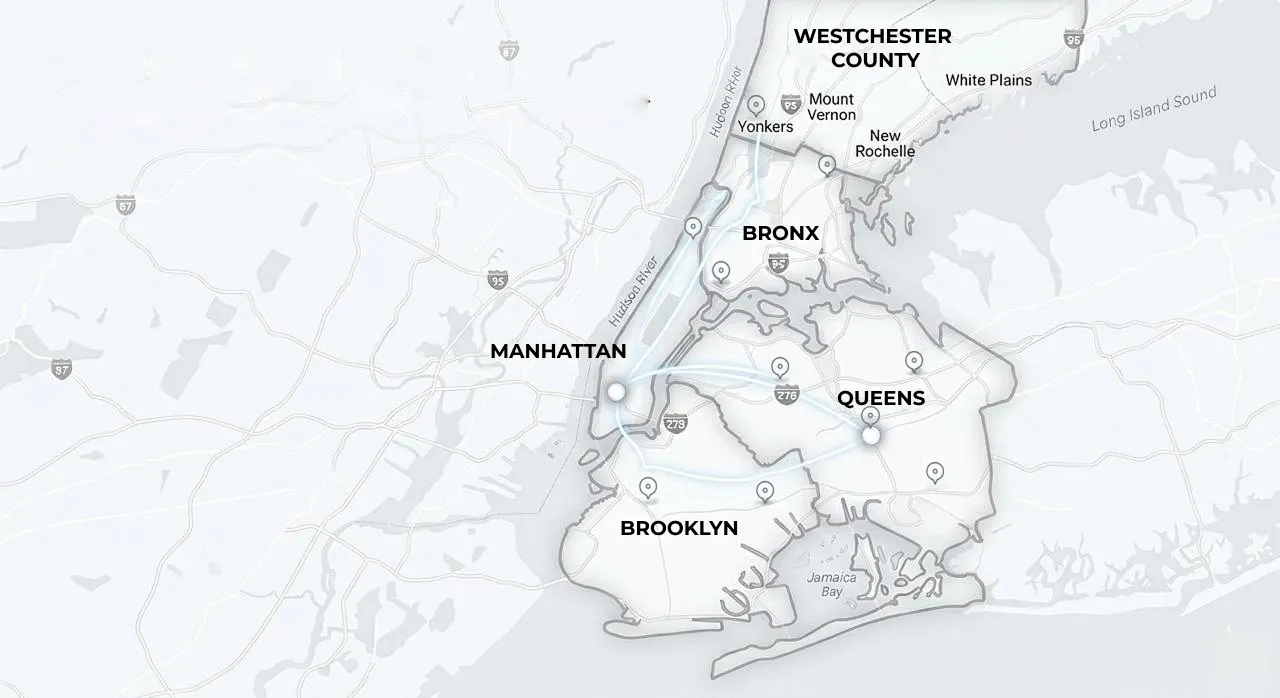
At Sterling Cleaning Services, we offer property management cleaning services for commercial spaces across New York City. Our team delivers dependable service and commercial property maintenance standards.
We maintain dependable cleaning standards while adapting our services to the needs of each property. Our team can also accommodate your property's operating schedule, including business hours, building access, occupancy, and other activities, to minimize disruption to your daily operations.
Make your commercial properties cleaner, healthier, and better maintained by connecting with Sterling Cleaning Services today!
FAQs
Does the ADA apply to all commercial properties?
No, the ADA does not apply to every commercial property in the same way. Its requirements depend on factors such as the property's use, whether it is a covered facility, and the owner's or operator's responsibilities.
Does NFPA 101 require a specific cleaning schedule?
No, NFPA 101 does not establish one universal cleaning schedule for every property. Its application depends on the building type and the codes adopted by the applicable jurisdiction. Proper housekeeping can still help keep required exits, corridors, stairs, and other circulation areas clear.
How often should a commercial property be cleaned?
Most commercial properties need regular cleaning. However, the appropriate frequency depends on the property and how it is used. Occupancy, foot traffic, operating hours, property type, and individual space usage can determine whether areas need frequent attention.
What should property managers document after a cleaning inspection?
Property managers should document the inspection date, areas reviewed, completed tasks, and follow-up checks. Maintaining these records keeps a clear history of cleaning activities, helping to pinpoint repeat problems.
What should happen when cleaning reveals a maintenance problem?
Report the issue to the appropriate property or maintenance team rather than treating it as a routine cleaning task. Leaks, wet or damaged carpet, water intrusion, broken or leaking fixtures, and recurrent moisture may all need repairs or further investigation. It is therefore essential to document and escalate these conditions.
When should a property manager consider professional cleaning services?
Property managers should consider professional cleaning when routine tasks are frequently missed. Professional services can also offer defined responsibilities, scheduled service, and cleaning that fits within the hours of operation of the property.
Keeping a dental office clean involves more than routine housekeeping. Learn how CDC infection-control recommendations, OSHA workplace safety requirements, and EPA regulations for disinfectants help dental practices manage cleaning procedures, protect staff and patients, and maintain appropriate hygiene standards.
Keep your NYC office or event space spotless after every event with this practical post-event cleaning checklist. Discover essential cleaning tasks, from waste removal and surface sanitization to restroom cleaning and floor care, to maintain a clean, safe, and professional environment.
Learn how to choose the right medical office cleaning company in the Bronx. Discover key factors such as healthcare cleaning experience, sanitation standards, trained staff, cleaning methods, reliability, and customized services to maintain a safe, hygienic environment for patients and staff.
Please reach us at any time to set up an appointment to review your commercial cleaning requirements. Sterling will provide an on-site review of your janitorial needs, then create a custom proposal that fits both your specifications and budget