Keeping your buildings cleaner, tenants happier, and properties operating efficiently year-round is a task.
Managing a property, especially in New York City, is never a small task. Between tenant requests, maintenance issues, inspections, vendor coordination, and daily operations, property managers often handle dozens of responsibilities at once.
Now add cleanliness to that list.
Hallways need attention. Trash areas require regular service. Elevators become high-touch zones. Seasonal weather creates additional maintenance concerns. Vacant units must be prepared quickly. Common areas need to remain presentable every day.
This is exactly why every property manager needs a well-organized property management checklist.
A structured cleaning and maintenance plan helps reduce complaints, improve tenant satisfaction, and protect property value. It creates a safer, more positive environment for residents, employees, and visitors.
Whether you manage apartment buildings, mixed-use properties, office buildings, condominiums, or commercial facilities, this guide provides a comprehensive property management cleaning checklist to help keep your property operating at its best.
What is Property Management Cleaning?
Property management cleaning is the systematic, scheduled approach to maintaining cleanliness and sanitation across residential or commercial properties.
It's pretty much distinct from basic housekeeping and is a strategic maintenance discipline that keeps properties safe, attractive, and compliant with health and safety standards.
Effective property cleaning checklists are required for several purposes:
- Tenant Satisfaction: Clean, well-maintained properties significantly improve tenant satisfaction and retention rates.
- Health & Safety Compliance: Regular sanitization prevents disease transmission and meets municipal health codes.
- Asset Preservation: Systematic property maintenance prevents deterioration and extends the lifespan of building components.
- Liability Reduction: Proper cleaning documentation protects you in legal disputes and insurance claims.
- Property Value Protection: Properties in excellent condition maintain and appreciate in value.
For property managers in NYC managing apartment building cleaning services or commercial spaces, a structured property management checklist ensures nothing falls through the cracks.
Rather than reactive cleaning after problems arise, proactive checklists prevent issues before they become costly.
Keep Every Property Move-In Ready Without the Hassle
Why Every NYC Property Manager Needs a Property Management Checklist?
Managing properties without a documented checklist is like running a business without financial records. You might survive in the short term, but you'll miss critical opportunities and face preventable crises.
Clear Accountability
A detailed property maintenance checklist creates clear expectations for your cleaning staff or contracted janitorial services in NYC. Each team member knows exactly what needs to be done, when, and to what standard. This accountability prevents important tasks from being skipped or forgotten.
Consistent Quality Standards
Without documentation, cleaning quality varies based on who performs the work. A standardized checklist ensures consistent standards across all units and common areas, regardless of personnel changes.
Regulatory Compliance
NYC has specific building codes and health regulations. A documented property management cleaning checklist demonstrates your commitment to compliance and provides evidence during inspections or audits. This is especially critical for multi-family buildings subject to frequent municipal inspections.
Cost Control & Prevention
Systematic cleaning prevents small problems from becoming expensive repairs. A $50 monthly gutter cleaning prevents a $5,000 roof replacement. Regular HVAC filter changes prevent system failures. Your checklist becomes a cost-prevention tool.
Time & Resource Efficiency
A well-organized facility maintenance cleaning schedule prevents the chaos of reactive maintenance. Your team works smarter, not harder, following a logical progression rather than jumping between urgent tasks.
Documentation for Tenant Relations
When disputes arise about property condition, your detailed checklist documentation protects you. It proves that you maintained the property in accordance with standards and lease agreements.
Competitive Advantage
Properties with documented, excellent maintenance records command premium rental rates and attract higher-quality tenants. Your property management services become a market differentiator.
Complete Property Management Cleaning Checklist
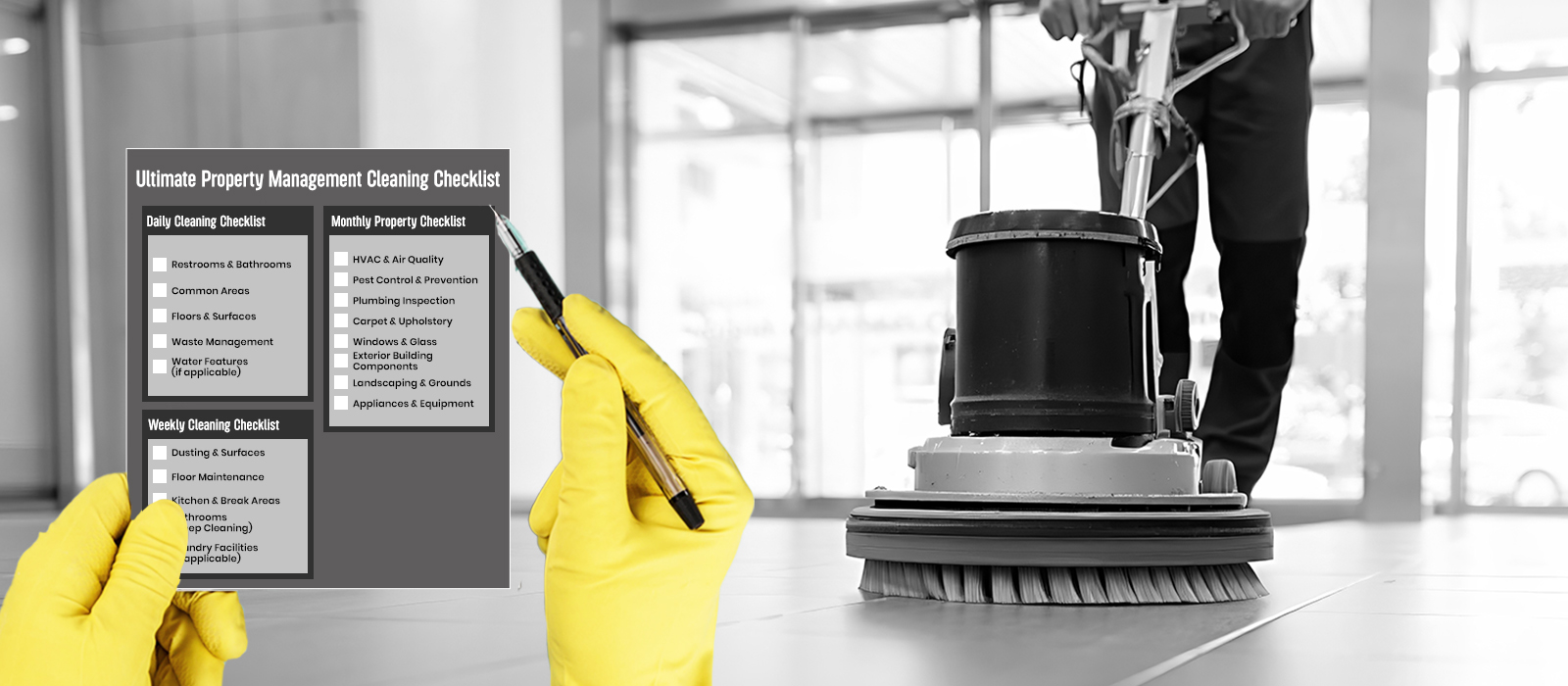
A successful property management checklist should include daily, weekly, and monthly tasks. These form the foundation of a clean, sanitary property.
Daily Cleaning Checklist
Daily tasks focus on high-traffic areas and health-critical spaces. Consistent, small-to-large cleaning routines can prevent larger maintenance issues, improve tenant satisfaction, and keep your property shining.
Restrooms & Bathrooms
Restrooms are among the most frequently used spaces in any property. Because they experience constant traffic, they require daily attention to maintain hygiene, prevent odors, and reduce the spread of germs.
- Disinfect and sanitize all toilets, including seats and lids.
- Clean and polish mirrors.
- Wipe down sinks and faucets with an appropriate cleaner.
- Disinfect all door handles and light switches.
- Clean shower/tub walls and fixtures.
- Sweep and mop floors thoroughly.
- Restock toiletries, toilet paper, and paper towels.
- Empty trash and replace liners.
- Check for water leaks or plumbing issues.
Common Areas
Common areas often create the first impression of a property. Lobbies, hallways, elevators, and corridors are used by everyone throughout the day, which means dirt, dust, and germs can build up quickly. Regular cleaning keeps these shared spaces welcoming and helps maintain the property's appearance.
- Vacuum/sweep all hallways and corridors.
- Wipe down elevator walls, mirrors, and buttons.
- Clean entrance doors, handles, and glass panels.
- Sweep and mop lobby floors.
- Disinfect high-touch surfaces (railings, light switches).
- Empty all trash receptacles.
- Check for debris in corners and crevices.
Floors & Surfaces
Floors and surfaces are exposed to constant foot traffic, spills, dust, and everyday wear. Keeping them clean enhances the property's aesthetics, extends the lifespan of flooring materials, and reduces safety hazards such as slips and falls.
- Vacuum all carpeted areas daily.
- Sweep hard floors (tile, laminate, concrete).
- Mop high-traffic areas with an appropriate cleaner.
- Address spills immediately.
- Wipe down worktops and counters.
- Polish any stainless steel fixtures.
Waste Management
Proper waste management is a prerequisite for maintaining a healthy and pleasant environment. Overflowing trash bins, litter, and neglected waste areas will lead to unpleasant odors, pest problems, and ultimately, bad tenant experiences. Daily waste checks help keep the property clean and organized.
- Remove trash from all units (for managed properties).
- Consolidate waste in dumpsters.
- Separate recyclables if applicable.
- Check for and remove any external litter.
- Inspect for pest activity signs.
Water Features (if applicable)
Pools, fountains, and other water features enhance a property's appearance and value, but they also require regular maintenance. Poor maintenance can quickly lead to water quality issues, algae growth, and equipment problems. Daily inspections help ensure these amenities remain safe and attractive.
- Check pool circulation systems.
- Test chlorine and pH levels.
- Skim debris from pool surfaces.
- Inspect fountains or water features for proper operation.
- Check for algae growth.
Weekly Cleaning Checklist
Weekly tasks address deeper-cleaning needs that don't require daily attention but help prevent deterioration. Consistent weekly cleaning also extends the life of surfaces, flooring, and fixtures throughout the property.
Dusting & Surfaces
Dust may seem harmless, but over time, it can affect indoor air quality and leave a property looking neglected. Weekly dusting helps remove allergens, maintain clean surfaces, and preserve fixtures and finishes.
- Dust all hard surfaces with soft cloths.
- Clean baseboards in common areas.
- Wipe down light fixtures and covers.
- Dust window sills and frames.
- Clean A/C vents and grilles.
- Polish handrails and metal fixtures.
Floor Maintenance
Floors experience some of the heaviest wear throughout any property. Weekly maintenance goes beyond routine sweeping and mopping to address stains, dirt buildup, and heavy-foot-traffic areas. Proper floor care also helps extend the lifespan of carpets, tile, stone, and hard flooring surfaces.
- Strip and wax hard floors (as needed based on traffic).
- Deep-clean carpet with hot-water extraction (high-traffic areas).
- Clean under furniture and in corners.
- Polish tile and stone floors.
- Remove scuff marks and stains.
Kitchen & Break Areas
Shared kitchens and break rooms can quickly become sources of germs, odors, and food debris if not cleaned regularly. Weekly deep cleaning helps maintain hygiene, improve the appearance of these spaces, and create a healthier environment for tenants, employees, or residents.
- Disinfect and scrub kitchen sinks
- Clean and sanitize countertops thoroughly
- Wipe down appliances (exterior and accessible interior)
- Clean inside the microwave
- Sanitize refrigerator handles and door seals
- Mop and disinfect kitchen floors
- Clean trash cans and liners
Bathrooms (Deep Cleaning)
While bathrooms require daily cleaning, a weekly deep clean helps remove buildup that routine maintenance may miss. This includes grout, hard water stains, soap residue, and hidden areas around fixtures. Deep cleaning helps maintain sanitation standards and keeps bathrooms looking fresh and well-maintained.
- Scrub shower walls and grout.
- Clean the shower/tub with an appropriate solution for the materials.
- Scrub toilet bowls thoroughly.
- Disinfect tile grout.
- Polish mirrors and remove streaks.
- Clean behind and under fixtures.
Laundry Facilities (if applicable)
Laundry rooms often receive heavy use in apartment buildings and shared properties. Weekly cleaning helps prevent odors, improve cleanliness, and keep equipment functioning properly. Regular inspections also help identify leaks or maintenance issues before they become costly repairs.
- Wipe down all washing machines and dryers.
- Clean lint traps thoroughly.
- Disinfect door handles and buttons.
- Sweep and mop the area thoroughly.
- Check for spills or leaks.
Exterior & Lighting
Exterior areas influence how residents, visitors, and prospective tenants view the property. Weekly inspections and cleaning help maintain curb appeal while improving safety. Proper lighting, clean walkways, and well-maintained entrances contribute to a more welcoming and secure environment.
- Inspect and replace burned-out exterior lights.
- Sweep walkways and remove debris.
- Clean the entrance area thoroughly.
- Wipe down outdoor railings.
- Remove spider webs and cobwebs.
- Check for water damage or moisture issues.
Walls & Doors
Walls, doors, and trim often show signs of daily use, especially in high-traffic areas. Fingerprints, scuff marks, and moisture stains can make a property appear neglected. Regular cleaning helps preserve surfaces and allows property managers to identify potential maintenance concerns early.
- Wipe down wall scuffs in high-traffic areas.
- Clean door frames and trim.
- Wipe light switches and outlet covers.
- Address fingerprints on glass and walls.
- Check for signs of moisture or mold.
Monthly Property Management Checklist
Monthly maintenance tasks focus on areas often overlooked in daily and weekly cleaning routines. These tasks address deep-cleaning and maintenance issues that help preserve the property's long-term condition.
HVAC & Air Quality
Indoor air quality directly impacts the comfort and health of tenants, employees, and visitors. Dust, debris, and clogged filters can reduce system efficiency and increase energy costs. Monthly HVAC inspections help maintain proper airflow, improve indoor comfort, and extend the life of heating and cooling equipment.
- Replace HVAC filters or have professionals service the system.
- Clean return air vents.
- Inspect ductwork for visible debris.
- Check thermostat functionality.
- Clean air conditioning unit exteriors.
- Schedule a professional HVAC inspection, if needed.
Pest Control & Prevention
Even well-maintained properties can experience pest problems if small warning signs go unnoticed. Regular inspections help identify issues early and reduce the risk of infestations. Preventive measures can also protect tenant satisfaction and prevent costly remediation work later.
- Inspect for signs of rodents, insects, or pests.
- Mend any cracks or openings that let the pests enter.
- Check drains for clogs or pest entry points.
- Inspect under sinks for leaks (pest attractants).
- Schedule professional pest control if needed.
- Check the dumpster area for any pest activity.
Plumbing Inspection
Minor plumbing issues can quickly develop into significant property damage if left unaddressed. Monthly inspections help detect leaks, drainage problems, and moisture issues before they affect walls, flooring, or building systems. Preventive plumbing checks can save both time and repair costs.
- Check all visible pipes for leaks.
- Test water pressure in multiple locations.
- Inspect under sinks for moisture or damage.
- Check for slow drains.
- Look for signs of water damage on ceilings/walls.
- Schedule a plumber for any concerns.
Carpet & Upholstery
Carpets and upholstered furnishings collect dust, dirt, allergens, and odors over time. Deep cleaning helps improve indoor air quality while extending the life of these materials. Regular inspections also allow property managers to identify areas that may require repairs or replacement.
- Deep clean all carpeted areas (professional-grade cleaning).
- Address stubborn stains.
- Check for wear patterns indicating the need for replacement.
- Clean under furniture.
- Treat for odors if needed.
- Inspect the padding condition.
Windows & Glass
Clean windows and glass surfaces improve natural light, enhance curb appeal, and contribute to a well-maintained appearance. Monthly inspections can also reveal damage, failing seals, or weather-related issues that may affect energy efficiency.
- Clean all windows inside and out.
- Check window frames for rot or damage.
- Inspect caulking and weatherstripping.
- Clean window wells and drainage.
- Polish glass doors and fixtures.
- Check for broken seals.
Exterior Building Components
The building exterior serves as the first line of defense against weather, moisture, and environmental damage. Routine inspections help you identify issues earlier and prevent expensive structural repairs later on.
- Inspect roof gutters and downspouts.
- Clean gutters of leaves and debris.
- Check exterior walls for damage, loose paint, or mold.
- Inspect siding for deterioration.
- Check the foundation for cracks or moisture.
- Inspect exterior doors and weatherstripping.
Landscaping & Grounds
Well-maintained landscaping is necessary to enhance curb appeal and create a positive first impression for tenants and visitors. Regular upkeep also prevents overgrowth, drainage problems, and safety hazards around the property.
- Remove dead plants and landscaping debris.
- Prune overgrown vegetation.
- Water plants and check irrigation systems.
- Add mulch to landscaping beds.
- Remove weeds from walkways and parking areas.
- Edge sidewalks and garden beds.
Appliances & Equipment
Appliances and building equipment experience regular wear and tear. Monthly inspections help ensure these systems continue to operate efficiently while eliminating the risk of unexpected breakdowns. Routine maintenance also helps extend equipment lifespan and improve tenant satisfaction.
- Clean inside refrigerators and freezers (if managed units).
- Inspect the oven and stovetop condition.
- Check the water heater for leakages or rust.
- Inspect the washer/dryer operation and exterior.
- Check dishwasher seals and operation.
- Inspect garbage disposal functionality.
Seasonal Cleaning Checklist for NYC Properties
NYC's dramatic seasonal changes require property-specific maintenance. Use these seasonal checklists to prepare for weather changes and address seasonal issues.
Spring Cleaning Checklist
Spring is a season of renewal; use it to address winter damage and prepare for summer activity. After months of snow, salt, moisture, and freezing temperatures, buildings may show signs of wear that require immediate attention. Spring cleaning helps prepare the property for warmer weather while addressing any damage left behind by winter.
Outdoor Tasks
Winter conditions can badly affect roofs, gutters, siding, and exterior surfaces. A thorough exterior inspection in spring helps identify damage early and prevents small issues from becoming larger repair projects during the year.
- Inspect the roof thoroughly for winter damage and leaks.
- Clean gutters and downspouts of winter debris.
- Inspect exterior walls for water damage or mold from winter moisture.
- Pressure wash exterior surfaces (where appropriate).
- Inspect and repair exterior caulking.
- Check HVAC exterior units for debris.
- Inspect the foundation for new cracks.
- Check the exterior doors and weatherstripping condition.
Indoor Deep Clean
Spring is an excellent time for a property-wide deep cleaning. Dust, allergens, and debris often accumulate during the colder months when windows remain closed, and ventilation is limited. A thorough interior cleaning helps improve air quality and refresh common areas.
- Steam clean carpets throughout the property.
- Wash windows and clean tracks.
- Clean ceiling fans and light fixtures.
- Dust all blinds and window treatments.
- Wipe down baseboards and crown molding.
- Clean inside the kitchen cabinets.
- Inspect and clean interior walls.
Landscaping
Landscaping plays a crucial role in a property's outdoor appeal. Spring maintenance helps restore outdoor spaces after winter weather and creates a welcoming appearance for residents, tenants, and visitors.
- Remove winter debris from landscaping.
- Prune trees and shrubs.
- Rake and aerate the lawn.
- Plant seasonal flowers and refresh mulch.
- Check irrigation systems.
- Remove leaves and twigs from the roof.
System Checks
Spring is also the ideal time to inspect major building systems before the demands of summer arrive. Preventive maintenance can improve efficiency and reduce unexpected service calls during warmer months.
- Have the HVAC system professionally inspected before heavy use of cooling.
- Test and service air conditioning systems.
- Inspect plumbing for winter damage.
- Check exterior painting for flaking.
Summer Cleaning Checklist
Summer means increased tenant activity and heat-related wear. Outdoor spaces receive more use, and warm weather can contribute to pest activity and additional wear throughout the property. Focus on cooling systems and outdoor areas.
Cooling Systems
Air conditioning systems work hardest during the summer months. Regular inspections and maintenance help improve energy efficiency, maintain comfort, and reduce the risk of unexpected breakdowns.
- Clean air conditioning filters (increase frequency in summer).
- Check the A/C unit operation daily.
- Clean A/C vents and returns.
- Inspect for refrigerant leaks.
- Check thermostat accuracy.
Pest Prevention (Critical in Heat)
Warm temperatures create ideal conditions for insects and pests. Regular inspections and appropriate preventive measures will help avoid infestations and maintain healthy living and working environments.
- Increase pest control frequency.
- Inspect for signs of insects.
- Ensure all drains are properly sealed.
- Remove standing water (attracts insects).
- Check the dumpster area frequently.
High-Traffic Area Maintenance
Summer often brings increased building activity, visitors, and use of shared amenities. Additional cleaning helps maintain the appearance of common areas and prevents excessive wear.
- Increase frequency of common area cleaning.
- More frequent trash removal.
- Increase pool maintenance if applicable.
- More frequent floor cleaning/waxing.
- Check for increased wear on carpets.
Exterior Maintenance
Heat, sunlight, and summer storms can impact exterior surfaces. Routine inspections help identify damage early and keep the property looking its best.
- Power-wash exterior surfaces more frequently.
- Check exterior for heat-damage paint issues.
- Ensure proper drainage around the building.
- Check for any visible mold growth.
- Inspect sidewalks for hot-weather deterioration.
Fall Cleaning Checklist
Fall preparation is essential for protecting a property during the upcoming winter season. Addressing maintenance issues before temperatures drop can help prevent weather-related damage and improve building efficiency.
Weatherization
Sealing gaps and preparing heating systems before winter arrives helps improve energy efficiency and maintain indoor comfort during colder months.
- Inspect and seal all gaps, cracks, and penetrations.
- Check weatherstripping on all doors and windows.
- Inspect caulking around windows and doors.
- Check for any gaps where drafts could occur.
- Test heating system operation.
- Have HVAC professionally serviced before heating season.
Leaf & Debris Management
Falling leaves can quickly clog gutters, drains, and downspouts. Regular cleanup helps prevent water damage and reduces maintenance issues during winter.
- Rake all landscaping areas.
- Clean gutters of leaves (critical for fall).
- Remove leaves from the roof surface.
- Remove landscaping debris.
- Trim dead branches from trees.
- Clear drains and downspouts.
Exterior Winterization
Exterior inspections before winter help identify vulnerabilities that could worsen in freezing temperatures, snow, or ice.
- Inspect the roof for loose shingles or damage properly.
- Check exterior walls for cracks or damage.
- Inspect the foundation for cracks.
- Ensure proper drainage away from the building.
- Check exterior doors and seals.
Interior Preparation
Preparing indoor spaces for the heating season improves comfort, energy efficiency, and overall building performance.
- Deep-clean carpets before the heating season starts.
- Clean air vents and returns (no dust for winter HVAC use).
- Inspect heating system components.
- Check emergency lighting and generators.
- Inspect areas prone to drafts.
Winter Cleaning Checklist
Winter protection is critical in NYC. Focus on salt damage, snow removal, and heating system maintenance. Consistent winter maintenance helps protect both the building and its occupants.
Snow & Ice Management
Snow and ice removal is necessary to maintain safe walkways and reduce liability risks. Having a clear plan in place helps property managers respond quickly during storms.
- Develop a snow removal plan and schedule.
- Arrange salt/sand spreading for walkways (as permitted).
- Inspect sidewalks daily for ice.
- Clear storm drains to prevent water backup.
- Document snow/ice removal (liability protection).
- Clear roof overhangs of ice buildup.
Salt Damage Prevention
While de-icing products improve safety, they can also damage floors, carpets, concrete, and exterior surfaces. Increased cleaning helps minimize long-term deterioration.
- Increase frequency of floor cleaning (salt tracked indoors).
- Rinse exterior surfaces to remove salt residue.
- Inspect vehicles and equipment for salt damage.
- Check for salt-caused deterioration on the exterior.
- Increase pressure washing frequency.
Heating System Maintenance
Reliable heating helps tenants sustain comfortably during the winter months. Routine inspections help ensure that systems continue to operate efficiently and safely throughout the season.
- Check the heating system daily for proper operation.
- Monitor boiler operation (if applicable).
- Check the thermostats in all areas.
- Inspect for carbon monoxide issues.
- Have professional service as needed.
- Keep the heating system area clear of debris.
Moisture & Mold Prevention
Snow, condensation, and indoor humidity can create moisture problems during winter. Early detection helps prevent mold growth and water damage.
- Increase ventilation to combat indoor moisture.
- Inspect for mold growth (increased risk in winter).
- Check for condensation on windows.
- Ensure proper drainage of melted snow/water.
- Address any water intrusion immediately.
- Check HVAC for moisture-related issues.
Interior Maintenance
Winter weather often means more dirt, salt, and moisture entering the building. Increased cleaning helps maintain safety and preserve flooring and common areas.
- Increase floor-cleaning frequency (mud and salt tracked in).
- Clean entrance areas thoroughly and frequently.
- Check for increased wear on carpets.
- Inspect floors for water damage.
- Address any slipping hazards immediately.
Move-In & Move-Out Property Management Checklist
Turnover periods are critical, and they set expectations for new tenants and protect your property. Following a detailed move-in and move-out checklist helps protect the property, reduce vacancy time, and improve tenant satisfaction.
Before Tenant Arrival (Move-In Cleaning)
This move-in, move-out cleaning checklist ensures units are in perfect condition before tenants occupy.
Deep Cleaning Requirements
Deep cleaning removes dirt, dust, odors, and residue left behind by previous occupants. This step helps restore the unit to a move-in-ready condition and creates a fresh, welcoming environment for incoming tenants.
- Professional carpet/floor cleaning throughout the unit
- Deep clean all kitchen surfaces and appliances
- Scrub bathrooms thoroughly (toilet, tub, shower, tile)
- Clean inside all cabinets and closets
- Dust all surfaces, baseboards, and crown molding
- Clean light fixtures and ceiling fans
- Wipe down all walls
- Clean windows inside and out, including frames
- Clean all blinds and window coverings
Appliance Preparation
Tenants expect appliances to be clean, safe, and fully operational when they move in. Inspecting and cleaning appliances before occupancy helps prevent service calls and ensures everything functions properly from day one.
- Clean/sanitize the refrigerator interior completely
- Clean oven interior thoroughly
- Clean the stovetop and ventilation hood
- Inspect dishwasher operation
- Test microwave operation
- Ensure all appliances function properly
- Stock filters and replacement parts, if applicable
Bathroom Preparation
Bathrooms are among the first spaces tenants inspect during move-in. A thoroughly cleaned, properly functioning bathroom helps build confidence and prevent maintenance issues shortly after occupancy.
- Sanitize the toilet thoroughly.
- Clean and caulk the tub/shower.
- Inspect and repair any leaks.
- Ensure the ventilation fan operates.
- Caulk gaps and cracks.
- Replace shower caulk if needed.
- Test water pressure and temperature.
Flooring & Carpeting
Floors experience significant wear over time and can quickly affect the overall appearance of a unit. Cleaning, repairing, and inspecting flooring helps improve safety while extending the life of these surfaces.
- Professional carpet cleaning and stain removal.
- Polish/seal hard floors.
- Repair any floor damage.
- Replace damaged tiles or planks.
- Ensure all transitions are smooth and safe.
Paint & Walls
Fresh walls help make a unit feel newer, cleaner, and more inviting. Addressing damage, stains, and marks left behind by previous occupants helps improve the appearance of the space and reduces move-in concerns.
- Touch up or repaint as needed.
- Remove all previous tenant marks.
- Fill all holes and nail holes.
- Clean all walls thoroughly.
- Address any water stains.
Final Walkthrough Items
Before handing over the keys, one last inspection helps confirm that all systems are functioning properly and that the unit is ready for occupancy. This step can prevent maintenance requests during the first days of a new lease.
- Ensure all locks operate smoothly.
- Check all windows open and close properly.
- Test all lights and outlets.
- Verify hot water availability.
- Check that all smoke detectors have batteries.
- Ensure all doors close properly.
- Verify air conditioning/heating operation.
After Tenant Departure (Move-Out Cleaning)
This phase documents the property condition and prepares for the next tenant. A thorough move-out process helps reduce vacancy time, protect the property's value, and create accurate records for maintenance planning and security deposit evaluations.
Initial Assessment
The first walkthrough provides a clear picture of the unit's condition. Documenting issues early allows property managers to prioritize repairs, schedule professional cleaning services, and create an accurate record of any damage or maintenance concerns.
- Document all damage with photos/video.
- Note any areas requiring professional cleaning.
- Assess carpet condition.
- Check appliance functionality.
- Identify any repairs needed.
- Note water damage or mold.
Deep Cleaning Protocol
After the unit has been emptied, a comprehensive deep cleaning helps restore the space to move-in condition. This process removes dirt, odors, grease, and residue while preparing the apartment for repairs, inspections, or future showings.
- Remove all trash and tenant debris.
- Deep-clean the kitchen thoroughly.
- Degrease the stovetop and hood.
- Clean the inside of the refrigerator.
- Clean inside the oven.
- Clean the sink and faucet.
- Degrease all surfaces.
- Sanitize bathrooms.
- Remove all soap scum.
- Scrub grout thoroughly.
- Clean exhaust fans.
- Caulk gaps if needed.
- Disinfect all surfaces.
- Shampoo/replace carpets as needed.
- Polish all hard floors.
- Clean all windows and screens.
- Dust and wipe all surfaces.
Paint & Repairs
Normal wear and tear is expected, but move-out inspections often reveal damage that requires attention. Addressing cosmetic and structural issues before the next tenant arrives helps maintain property standards and reduces future maintenance requests.
- Inspect for wall damage.
- Fill all holes and repair damage.
- Touch up or repaint walls as needed.
- Repair any structural damage.
- Replace damaged baseboards.
- Address any water damage.
Appliance & Systems Check
Mechanical systems and appliances should be inspected after every tenant turnover. Testing equipment before the next occupancy helps prevent service calls and ensures that all systems are operating safely and efficiently.
- Test all appliances
- Verify water heater operation.
- Check HVAC systems.
- Test all electrical outlets.
- Verify plumbing functionality.
- Replace filters and parts as needed.
Final Condition Documentation
The final inspection creates a complete record of the property's condition before a new tenant moves in. Detailed documentation can support maintenance records, assist with security deposit decisions, and provide a baseline for future inspections.
- Photograph the entire unit (every room, corners, fixtures).
- Document any remaining damage.
- Note appliance condition.
- Verify cleanliness to move-in standard.
- Create a written condition report.
- Compare to move-in photos.
Common Cleaning Mistakes Property Managers Should Avoid
Learning from common errors helps you maintain higher standards and protect your property investment.
Mistake 1: Inconsistent Cleaning Schedule
The Problem: Without a documented schedule, cleaning becomes sporadic and reactive rather than preventive.
The Solution: Use a detailed property management checklist that specifies daily, weekly, monthly, and seasonal tasks with assigned dates. Building this routine prevents the chaos of reactive maintenance.
Impact: Consistent schedules reduce emergency repairs by up to 40% and maintain higher property values
Mistake 2: Using the Wrong Cleaning Products for Materials
The Problem: Different surfaces require different cleaners. Using acidic cleaners on natural stone or harsh chemicals on wood can cause permanent damage.
The Solution:
- Develop a product guide for your property.
- Train staff on proper cleaners for each surface.
- Invest in professional-grade products designed for building materials.
- Document what works for granite, marble, laminate, tile, wood, etc.
Impact: Proper products extend surface life by 5-10 years and maintain appearance standards.
Mistake 3: Ignoring Water Damage Early
The Problem: Small leaks may seem minor, but can quickly lead to mold, foundation damage, and structural deterioration. Early detection is critical.
The Solution:
- Include water damage inspection in the monthly checklist.
- Train staff to recognize early signs: discolored spots, musty odors, bubbling paint.
- Address all water issues immediately.
- Document issues and fixes.
Impact: Early intervention can prevent $10,000+ repairs that develop from ignored $100 issues.
Mistake 4: Poor Pest Prevention
The Problem: Reactive pest control after infestation is expensive and damages your reputation.
The Solution:
- Seal all entry points quarterly.
- Maintain excellent waste management (daily removal).
- Keep landscaping trimmed away from the building.
- Schedule regular professional pest prevention (not just treatment).
- Document prevention measures.
Impact: Preventive pest control costs 60% less than dealing with infestations.
Mistake 5: Neglecting HVAC Maintenance
The Problem: HVAC systems account for 30-40% of building energy use. Neglecting maintenance costs significant money and leads to tenant complaints.
The Solution:
- Change filters monthly or as recommended.
- Have a professional HVAC inspection seasonally.
- Clean vents and returns regularly.
- Keep HVAC areas clear of debris.
- Document all maintenance.
Impact: Proper HVAC maintenance reduces energy costs 15-20% and extends system life by 5+ years.
Mistake 6: Skipping Move-Out Deep Cleaning
The Problem: Properties that aren't deep-cleaned between tenants develop maintenance issues and fail inspection.
The Solution: Use the detailed move-out checklist provided in this guide. Professional move-out cleaning protects your property and reduces tenant turnover costs.
Impact: Proper move-out cleaning attracts better tenants and reduces vacancy periods.
Mistake 7: Inadequate Training for Cleaning Staff
The Problem: Undertrained staff creates inconsistent quality and misses important tasks.
The Solution:
- Provide written training on your checklist.
- Document proper procedures for different areas.
- Conduct regular quality checks.
- Provide feedback and retraining as needed.
- Offer incentives for high standards.
Impact: Well-trained staff reduces mistakes and accelerates cleaning completion.
Mistake 8: Ignoring Seasonal Maintenance
The Problem: New York's climate creates specific seasonal challenges. Ignoring them leads to preventable problems.
The Solution: Use the seasonal checklists in this guide. Plan ahead for:
- Winter: Snow removal, heating system checks, salt damage prevention
- Spring: Winter damage assessment, deep cleaning, HVAC service
- Summer: Cooling system maintenance, increased pest prevention
- Fall: Weatherization, leaf cleanup, heating preparation
Impact: Seasonal maintenance prevents weather-related damage and extends the property's lifespan.
Mistake 9: Overlooking Small Details
The Problem: Scratches on mirrors, fingerprints on glass, and stained grout; these small issues accumulate and create poor impressions.
The Solution:
- Include detail-focused tasks in weekly checklists.
- Walk through the property regularly yourself.
- Empower staff to address small issues immediately.
- Use quality materials for a lasting appearance.
- Inspect lighting to catch details clearly.
Impact: Attention to detail increases tenant satisfaction and allows premium rental rates.
Create Cleaner Spaces and Better Tenant Experiences
Maintain Your Property Effectively With a Comprehensive Property Cleaning Checklist!
A comprehensive property management checklist is one of the most valuable tools in your property management resource. It transforms cleaning from a chaotic, reactive process into a systematic, preventive discipline that protects your investment, attracts quality tenants, and reduces costs.
The checklists provided in this guide, daily, weekly, monthly, seasonal, and move-in/move-out, give you the framework to maintain properties to the highest standards. But implementing these checklists requires reliable execution.
Choose Professional Property Cleaning Services from the Experts of Sterling Cleaning Services!
Managing property cleaning yourself requires significant time, training, and coordination.
Many property managers find that partnering with professional janitorial services in NYC and apartment building cleaning services is the most cost-effective approach.
Sterling Cleaning Services specializes in professional property management services for residential and commercial properties throughout New York City. Our team understands the unique challenges NYC property managers face, from winter salt damage to summer pest prevention to the specific requirements of multi-unit buildings.
Whether you need daily facility maintenance cleaning for a commercial building, regular property maintenance checklist implementation for residential units, or comprehensive move-in/move-out cleaning services, Sterling Cleaning Services handles it all.
Stop juggling property cleaning tasks yourself. Let the experts handle maintenance while you focus on growing your property management business.