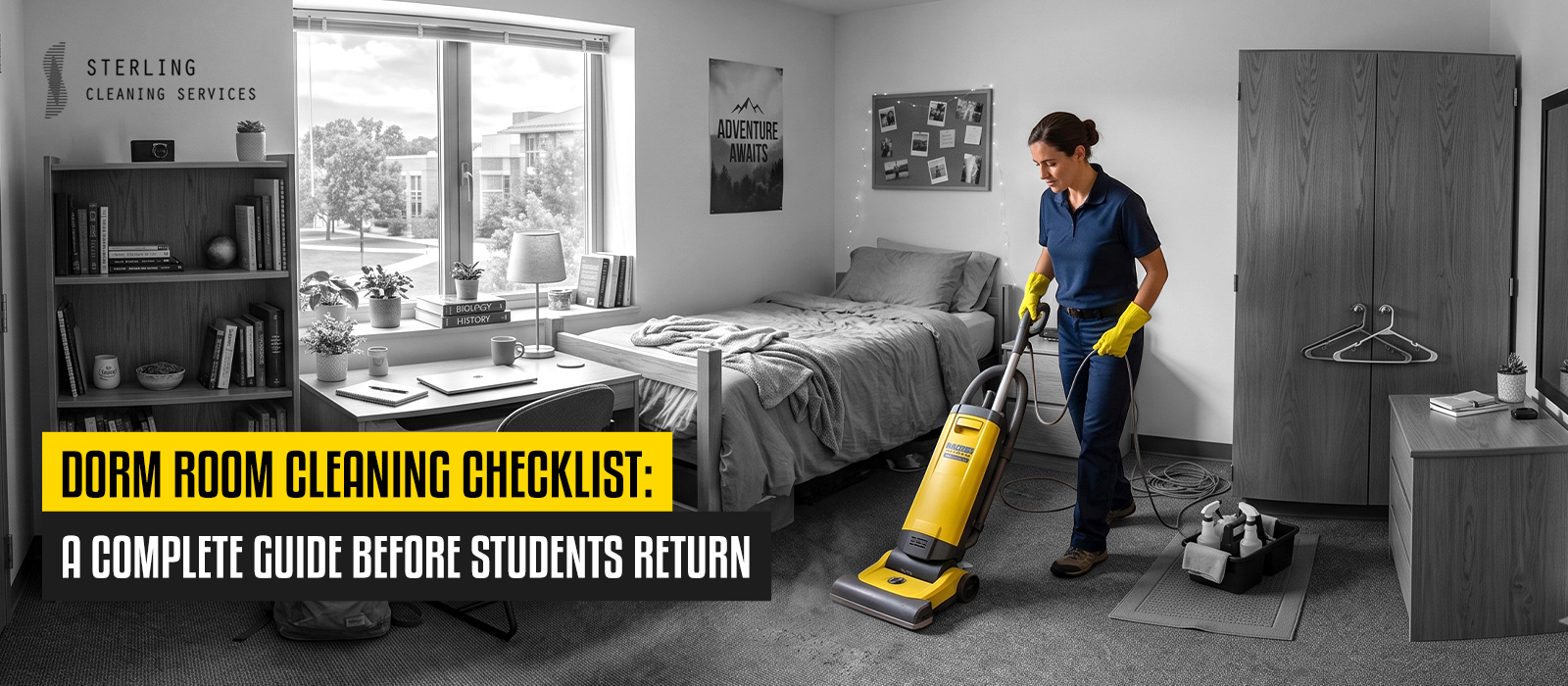
When students return to campus, a dorm room needs to feel ready from the moment they open the door. But after weeks or months of vacancy, rooms can collect dust, odors, stains, debris, and buildup in easy-to-miss places.
For housing teams, preparing multiple rooms before move-in can quickly become a time-sensitive task, especially when there is limited time between residents.
A quick sweep and wipe-down may make a room look clean, but it does not always address floors, bathrooms, storage spaces, or high-touch surfaces. Missed cleaning can leave the next individual dealing with a space that feels poorly maintained before they have even settled in.
In such cases, a structured dorm room cleaning checklist helps housing teams work through each area systematically. It can also make it easier to identify maintenance issues, determine which tasks need deeper attention, and ensure rooms are consistently prepared before students arrive.
In this blog, we’ll cover the essential cleaning steps, areas to inspect, supplies to keep on hand, and when professional cleaning support may be appropriate.
Quick Answer
Clean all dorm rooms thoroughly before students come back, including surfaces, floors, bathrooms, furniture, and high-touch areas.
- Remove dust, dirt, trash, and visible buildup.
- Clean floors, furniture, storage areas, and shared spaces.
- Clean and sanitize bathrooms and other frequently used areas.
- Disinfect appropriate high-touch surfaces.
- Check the room for stains, odors, damage, or maintenance issues.
- Complete a final inspection before the room is occupied.
What Is Dorm Room Cleaning?
Dorm room cleaning is the routine and detailed cleaning of student accommodation spaces within an educational or commercial facility. It involves removing dust, dirt, waste, stains, and surface buildup while keeping rooms prepared for student occupancy.
For facility managers, the work often goes beyond making a room look tidy. A commercial cleaning plan needs to account for the property's layout, occupancy, traffic levels, room condition, and the time available between residents.
Dormitory cleaning generally follows a defined scope and schedule so cleaning teams can maintain consistent standards across multiple rooms.
Depending on the facility, the cleaning program may involve:
- Routine cleaning during occupied periods.
- Detailed cleaning between student occupancy periods.
- Scheduled deep cleaning for areas requiring additional attention.
- Cleaning and sanitation procedures for frequently touched surfaces.
- Inspection and reporting of visible maintenance concerns.
Why Is Dorm Room Cleaning Important Before Students Return?
By now, you are well aware of what dormitory cleaning means. A room can appear clean during a quick inspection while still having dust, residue, odors, and overlooked surfaces.
Before students return, commercial cleaning teams need to restore each room to the facility's expected standard. For educational facilities and student housing operators, a defined cleaning process also makes room turnover more consistent and easier to manage.
Supports Dormitory Sanitation
Consistent cleaning supports dormitory sanitation by keeping student accommodation spaces in an orderly and sanitary condition. The goal is to keep all rooms and common areas of the facility up to the standards set for the building.
- Removes accumulated dust, dirt, and surface residue.
- Addresses areas that receive frequent use.
- Maintains consistent cleaning standards.
- Supports a controlled turnover process.
Improves the Student Experience
The condition of a room is one of the first things students notice when they arrive. Visible dust, stains, odors, or leftover residue can create the impression that the facility has not been properly maintained.
- Creates a cleaner first impression.
- Reduces visible signs of previous occupancy.
- Keeps rooms orderly and presentable.
- Maintains consistent standards across rooms.
Reduces Overlooked Cleaning Areas
Quick cleaning can leave less visible areas untreated, particularly when teams are working against a tight turnover schedule. A structured process helps ensure attention is not limited to the most obvious surfaces.
- Identifies areas beneath or behind furniture.
- Addresses corners, edges, and fixtures.
- Includes frequently touched surfaces.
- Reduces recurring cleaning gaps.
Helps Identify Maintenance Concerns
Cleaning teams often work across areas that facility managers may not inspect closely during a busy turnover period. Through the cleaning process, they can report visible conditions that require further investigation.
- Water stains or signs of moisture.
- Damaged flooring, walls, or fixtures.
- Unusual or persistent odors.
- Broken or deteriorated surfaces.
- Other visible maintenance concerns.
Makes Room Turnover More Consistent
When dozens or even hundreds of rooms need to be prepared, relying on individual judgment can create variations in cleaning quality. A defined process gives teams a consistent framework for completing and checking the work.
- Establishes clear cleaning expectations.
- Helps supervisors inspect completed rooms.
- Makes missed tasks easier to identify.
- Supports predictable room preparation.
Supports Health and Safety
Thorough cleaning helps maintain sanitary conditions before students return. Frequently used and high-touch areas require appropriate cleaning procedures, with disinfection carried out according to product instructions and facility protocols.
- Maintains sanitary conditions.
- Removes dirt and residue.
- Addresses high-touch surfaces.
- Supports cleaning protocols.
- Prepares rooms for occupancy.
How to Deep Clean a Dorm Room Before Students Return?
Deep cleaning is often necessary when a dorm room has been vacant for an extended period or needs more attention than routine service can provide. For facility managers, the process should follow a defined cleaning scope.
A structured approach helps cleaning teams address accumulated dirt, overlooked areas, and surfaces that need more detailed attention before occupancy.
A proper deep-cleaning process should also distinguish between Dorm room disinfection and general cleaning. Surfaces should be cleaned first where required, while disinfectants should be used only on appropriate surfaces.
1. Prepare the Room Before Cleaning
Start by removing waste and unnecessary items so cleaners can access the surfaces and areas that need attention. This also provides an opportunity to identify conditions that require maintenance rather than cleaning.
- Remove waste and leftover items.
- Open accessible areas for cleaning.
- Check for visible damage.
- Note moisture or unusual odors.
- Prepare the required equipment.
2. Clean From Higher Surfaces Downward
Working from higher surfaces toward the floor helps prevent dust and debris from settling on areas that have already been cleaned. Using the same sequence across rooms also makes the process easier to monitor.
- Dust higher surfaces first.
- Clean furniture and fixtures.
- Wipe accessible lower surfaces.
- Finish with floors.
- Follow surface-specific cleaning instructions.
3. Give High-Touch Surfaces Appropriate Attention
Frequently touched areas can receive repeated contact throughout the day and should be included in the facility's cleaning scope. High-touch surface disinfection should be performed on suitable surfaces using products approved for the material.
- Clean door handles and switches.
- Address frequently touched fixtures.
- Follow disinfectant contact times.
- Avoid spraying products directly onto electronics.
- Follow facility disinfection protocols.
4. Clean Floors and Furnishings Thoroughly
Flooring and furniture can collect dust, dirt, spills, and residue during occupancy or vacancy. Cleaning methods should match the material and the manufacturer's care requirements.
- Vacuum carpeted areas.
- Clean hard flooring appropriately.
- Spot-clean visible stains.
- Wipe suitable furniture surfaces.
- Check edges and less visible areas.
5. Inspect the Room Before Release
A final inspection ensures all agreed cleaning is completed before the room is handed back to the housing team. Supervisors can use the inspection to spot missed tasks or conditions that need follow-up.
- Check the room against the cleaning scope.
- Look for visible dust or residue.
- Confirm waste has been removed.
- Check high-touch areas.
- Report maintenance concerns.
6. When Extra Cleaning Support Is Needed
Large-scale turnover can become difficult when many rooms need detailed cleaning within a limited timeframe. In such cases, hiring a reliable company offering deep cleaning in NYC can help facilities manage the workload while maintaining consistent cleaning standards.
- Supports large-scale room turnover.
- Adds cleaning capacity during busy periods.
- Helps meet move-in deadlines.
- Maintains consistent cleaning standards.
Need Help Preparing Dorm Rooms for Student Move-In?
Which Areas of a Dorm Room Need to Be Cleaned?
Once the cleaning process is established, facility teams need to work through each room and surface systematically. Dormitories can contain bedrooms, bathrooms, kitchens, study areas, storage spaces, and shared facilities, with each area requiring a different cleaning approach.
For larger student housing facilities, the room-level process should also align with broader cleaning standards. This helps teams maintain a consistent scope while accounting for differences in materials, usage, and occupancy.
The following areas should be included in the cleaning inspection:
Bedroom and Sleeping Area
Bedrooms require attention beyond the most visible furniture. Dust can settle on bed frames, shelves, baseboards, and areas beneath furniture, while stains and residue may remain on frequently used surfaces.
- Dust bed frames, headboards, shelves, and ledges.
- Wipe desks, chairs, and other furniture.
- Clean accessible areas beneath and behind furniture.
- Check walls, doors, and fixtures for visible marks.
- Inspect mattresses according to facility policy.
Bathroom
Bathrooms need detailed cleaning because moisture, repeated use, and limited ventilation can contribute to residue and buildup. Fixtures and touchpoints should receive consistent attention during both turnover and routine service.
- Clean toilets, sinks, faucets, and mirrors.
- Clean showers, tubs, and surrounding surfaces.
- Remove residue from suitable fixtures.
- Mop floors and clean accessible edges.
- Empty waste bins and replace liners.
- Report damaged fixtures, leaks, or persistent moisture.
Kitchen or Kitchenette
Grease, food residues, spills, and waste can accumulate rapidly in food preparation areas. Cleaning should cover both visible surfaces and areas that are commonly missed during a quick turnover. Professional cleaners can make these spaces sanitary while adhering to the educational facility cleaning standards.
- Clean counters, sinks, and backsplashes.
- Wipe cabinets, handles, and accessible shelves.
- Clean applicable appliance surfaces.
- Remove food residue and dried spills.
- Empty waste containers.
- Check for odors or signs of leakage.
Study Room or Study Area
Study spaces contain surfaces that receive frequent hand contact and can collect dust around equipment and furniture. Electronic devices must be handled in accordance with facility protocols and manufacturer instructions.
- Clean desks and work surfaces.
- Wipe chairs and frequently touched areas.
- Dust shelves and accessible fixtures.
- Clean suitable equipment surfaces carefully.
- Check corners and areas beneath desks.
Living or Common Area
Shared living spaces experience repeated use, so cleaning needs to account for both visible dirt and frequent contact. Consistent Student residence cleaning ensures you are able to maintain the same standard within individual rooms and across shared facilities.
- Vacuum or mop floors according to the flooring type.
- Clean tables, chairs, and shared furniture.
- Dust accessible surfaces and fixtures.
- Remove waste and visible debris.
- Clean frequently touched handles and controls.
- Check for spills, stains, or damaged surfaces.
Storage and Closet Areas
Closets, drawers, and storage areas are often overlooked when doing a quick clean. Even when the main room looks spotless, dust and debris can still be left behind in these nooks and crannies.
- Empty and inspect accessible storage areas.
- Clean shelves, drawers, and closet surfaces.
- Remove dust from corners and edges.
- Check for belongings left by previous occupants.
- Report damaged shelving or fixtures.
Entryways and Corridors
Some of the highest levels of foot traffic in student housing occur in entryways and corridors. External dirt can be rapidly dispersed into surrounding rooms and shared spaces.
- Sweep, vacuum, or mop floors as appropriate.
- Clean entrance doors and handles.
- Remove visible dirt and debris.
- Clean corners, edges, and thresholds.
- Address frequently touched surfaces.
Laundry Areas
Laundry rooms are high-traffic areas that need constant attention because residents are always touching machines, handles, controls, and surfaces. Lint, dust, detergent residue, and discarded items also tend to gather around the equipment.
- Clean floors and accessible surrounding surfaces.
- Wipe suitable machine surfaces and handles.
- Remove lint and visible debris.
- Empty waste bins.
- Clean frequently touched controls.
- Report damaged equipment or leaks.
Shared and Outdoor Areas
Some student residences also include dining spaces, recreation rooms, lounges, entrances, or outdoor-use areas. These spaces should be included when they fall within the facility's cleaning scope.
- Remove visible waste and debris.
- Clean suitable tables, seating, and shared surfaces.
- Maintain floors and walkways according to the material.
- Clean high-touch points in shared spaces.
- Check areas for spills, stains, or maintenance concerns.
The Ultimate Dorm Room Cleaning Checklist
Now that the key rooms and cleaning areas have been identified, the next step is to make sure none of those tasks are missed during turnover. A structured checklist gives cleaning teams a practical reference for completing the work consistently.
It comes in handy particularly when you are pressed for time and need to get several rooms ready. The present standardized checklist for all rooms facilitates ward inspections and enables supervisors to detect cleaning deficiencies prior to occupancy.
This approach also reduces the chance of leaving behind dust, residue, waste, or other conditions that can contribute to dirty dorm rooms.
The following checklist outlines the essential areas that should be addressed during dormitory cleaning:
| Area |
Cleaning Task |
Final Check |
| Bedroom |
Dust and wipe furniture |
Bed frames, desks, chairs, shelves, and accessible surfaces are free from dust and residue. |
| Walls and Doors |
Clean visible marks and surfaces |
Doors, handles, walls, and accessible surfaces are free from obvious marks or buildup. |
| Floors and Carpets |
Vacuum, sweep, or mop |
Floors are free from visible dirt, debris, hair, stains, and accumulated dust. |
| Bathroom |
Clean and sanitize fixtures |
Toilets, sinks, faucets, showers, tubs, mirrors, and surrounding surfaces are clean. |
| Bathroom Floor |
Clean flooring and edges |
Floors, corners, thresholds, and areas around fixtures are free from residue and debris. |
| Kitchen/Kitchenette |
Clean food preparation areas |
Counters, sinks, cabinets, backsplashes, and applicable appliance surfaces are clean. |
| Storage Areas |
Clean shelves and compartments |
Closets, drawers, shelves, and storage spaces are free from dust, debris, and leftover items. |
| Study Area |
Clean desks and furniture |
Work surfaces, chairs, shelves, and suitable equipment are clean and presentable. |
| High-Touch Surfaces |
Clean and disinfect as required |
Handles, switches, controls, buttons, and other frequently touched surfaces receive appropriate attention. |
| Waste Areas |
Remove and manage waste |
Bins are emptied, cleaned where required, and fitted with fresh liners. |
| Common Areas |
Clean shared spaces |
Lounges, living areas, tables, seating, and other shared surfaces are clean and orderly. |
| Entryways |
Remove tracked-in dirt |
Entrance floors, thresholds, doors, handles, and nearby surfaces are clean. |
| Laundry Areas |
Clean equipment and surroundings |
Suitable machine surfaces, handles, floors, and surrounding areas are free from lint and visible debris. |
| Final Inspection |
Review completed work |
Completed tasks match the cleaning scope, and maintenance concerns have been reported before occupancy. |
What Cleaning Supplies Are Needed for a Dorm Room?
By now, you know that cleaning a dorm room properly requires thorough planning. Using basic products and relying on in-house staff won't deliver the results you need.
Different areas need different cleaning methods and frequencies. Even the dorm cleaning supplies used should be suitable for the surfaces being cleaned.
This is especially important in student housing, where cleaning teams may need to prepare several rooms within a set turnover period. Facilities that manage larger properties can also apply the same planning principles used in college campus cleaning services.
The essential dorm room cleaning supplies include:
- Surface cleaners: Suitable products for desks, tables, doors, furniture, counters, and other washable surfaces.
- Disinfectants: Appropriate products for high-touch surfaces that require disinfection as part of the facility's cleaning procedures.
- Microfiber cloths: Reusable cloths for dusting, wiping, and cleaning furniture and fixtures without leaving excessive lint.
- Vacuum equipment: Commercial vacuums help remove dust, hair, and debris from carpets, rugs, corners, and areas beneath furniture.
- Mops and floor-cleaning solutions: The equipment and solution should be selected according to the type of flooring being cleaned.
- Glass and mirror cleaner: Products designed for glass help remove fingerprints, marks, and residue from mirrors, windows, and glass surfaces.
- Restroom cleaning products: Separate cleaners are required for toilet bowls and for sinks, faucets, showers, bathroom floors, and more.
- Waste bags and liners: These supplies support routine waste removal from bedrooms, bathrooms, kitchens, and common areas.
- Cleaning brushes and scrubbers: Useful for grout lines, fixtures, edges, corners, and surfaces that need more detailed cleaning.
- PPE: Gloves and other protective equipment should be available when required by the cleaning products or specific tasks.
Move-In Cleaning vs. Routine Dorm Cleaning
While going through the list of cleaning supplies for first apartment or dorm cleaning, you might wonder: Is daily cleaning enough? This is a common question for commercial facilities managing student accommodation.
The answer depends on whether the room is occupied, between residents, or being prepared for a new move-in.
Move-in cleaning requires a more detailed approach, while routine cleaning focuses on maintaining the room during regular use.
The table below explains the key differences:
| Factors |
Move-In Cleaning For Dorms |
Routine Dorm Cleaning |
| Purpose of Cleaning |
Prepares the room for a new student and restores the expected facility standard. |
Maintains the cleanliness and condition of occupied dorm rooms. |
| Timing |
Usually completed during room turnover, before students move into the space. |
Follows the facility's regular cleaning schedule during student occupancy. |
| Level of Cleaning |
Provides detailed cleaning across the room, bathroom, furniture, floors, fixtures, and storage areas. |
Focuses on regular dusting, vacuuming, mopping, surface cleaning, and waste removal. |
| Room Condition |
Addresses dust, stains, residue, leftover items, and buildup from previous occupancy. |
Addresses everyday dirt, dust, spills, waste, and surface residue. |
| Surface Attention |
Gives greater attention to furniture, fixtures, corners, edges, and less visible areas. |
Covers regularly used surfaces and areas included in the routine cleaning scope. |
| High-Touch Areas |
Includes appropriate cleaning and disinfection of frequently touched surfaces. |
Gives regular attention to frequently touched surfaces based on facility procedures. |
| Preparation for Occupancy |
Ensures the room is clean, orderly, and ready for the next student. |
Keeps the room maintained for continued student occupancy. |
When Should Student Housing Consider Professional Cleaning?
The difference between move-in and routine cleaning becomes especially important when a facility has many rooms to prepare within a limited timeframe.
When the workload becomes difficult, professional support can prove helpful. These experts use industrial -grade equipment and specialized techniques to make the dorm room clean and safe for use.
With their help, you can effectively keep the schools clean, maintain consistent cleaning standards, and keep turnover on schedule.
Professional cleaning may be worth considering when:
- Many rooms need to be prepared before students return, making the workload difficult for the internal team to manage.
- Existing staff do not have enough time or capacity to complete the required cleaning within the available schedule.
- Rooms require detailed attention after previous occupants leave, including the removal of stains, residue, dust, and buildup.
- The facility has a short window between resident turnover and the next move-in period.
- Dormitory cleaning services are needed to maintain a consistent cleaning scope across multiple rooms or buildings.
- Certain floors, carpets, fixtures, or heavily used areas require specialized products, equipment, or cleaning methods.
- The facility needs stronger supervision, inspections, or quality-control procedures to maintain cleaning standards.
- Professional dorm cleaning services are needed during busy move-in periods, major events, or other periods of increased demand.
- Deep cleaning student housing is required when routine cleaning cannot provide the level of attention needed.
Preparing Dorm Rooms Before Students Return with Expert Support
Getting dorm rooms ready for students involves a uniform cleaning protocol, focused work in commonly neglected spots, and meticulous double-checking. A systematic Dorm room cleaning schedule allows the facility team to effectively handle turnover and keep standards consistent across the student housing.
Sterling Cleaning Services provides commercial cleaning support tailored to the needs of educational facilities and student housing. Our trained cleaning teams adhere to specific cleaning scopes, maintain consistent service standards, and accommodate the schedules of facilities to ensure efficient room turnover.
We offer systematic college campus cleaning services that ensure that larger educational environments are properly maintained. Our expert cleaners also provide quality checks and cleaning plans that can be adjusted according to room volume, traffic levels, and facility needs.
Complete your dorm room preparation and student housing cleaning by connecting with Sterling Cleaning Services today!
FAQs
1. How should dorm rooms be cleaned before students return?
Dorm rooms should be systematically cleaned prior to student move-in. It needs to include surfaces, furniture, bathrooms, floors, storage areas, and high-touch points. Adhering to the uniform procedure for each room enables the cleaning crews to provide consistent results.
2. How often should dorm rooms be professionally cleaned?
Dorm rooms should be professionally cleaned according to occupancy, foot traffic, facility requirements, and the student turnover schedule. More detailed cleaning is generally needed between occupants.
3. What should be included in a dorm room cleaning checklist?
A dorm room cleaning checklist should include bedrooms, bathrooms, floors, furniture, storage areas, and more. A final inspection should also be included to confirm that all required tasks have been completed.
4. Should dorm rooms be disinfected before move-in?
Yes, appropriate high-touch surfaces in dorm rooms should be disinfected before move-in. Cleaning before disinfection helps remove dirt and residue so disinfectants can be used as directed.
5. What areas are commonly overlooked during dorm room cleaning?
Commonly missed areas in dorms are behind and underneath furniture, corners, storage spaces, fixtures, door handles, switches, and other high-touch surfaces. These are important to include in the cleaning scope to ensure no tasks are missed when turning over a room.
6. When should student housing consider professional cleaning support?
For student accommodation, if many rooms need to be prepared, professional cleaning support should be considered. This kind of support can add cleaning capacity, with a clear scope and inspection process.
7. What cleaning supplies are needed for dorm room preparation?
Dorm room preparation requires suitable cleaning supplies for the apartment. It includes surface cleaners, disinfectants, microfiber cloths, commercial vacuums, and safety equipment. The products and equipment should be selected according to the surfaces, cleaning tasks, and facility procedures.