Oops! Something went wrong while submitting the form.
Toddlers can turn a clean classroom into a high-traffic space within minutes. Toys pass from child to child, snack crumbs collect under tables, and fingerprints appear on all the surfaces they touch, including doors, tabletops, and other hard surfaces. The bathrooms and changing areas also demand frequent tidying and wiping during the day.
These tasks need to be done regularly, not just as a quick end-of-day cleanup. The right daycare cleaning checklist allows staff and facility managers to systematically record daily, weekly, and monthly cleaning procedures. It can also identify areas that need extra attention after major messes or illness.
In this guide, we break down the cleaning tasks that deserve attention at each frequency and how to organize them into a practical schedule. We also explain why professional cleaning support may make sense for a daycare facility.
Quick Answer
A daycare cleaning routine should cover the areas children and staff use most often. A practical schedule should include:
Cleaning classrooms, toys, play areas, bathrooms, floors, entrances, and high-touch surfaces.
Cleaning carpets, furniture, play equipment, doors, and less frequently cleaned areas.
Deep-cleaning corners, storage areas, vents, and other areas where dirt may build up.
Following product labels, facility procedures, and applicable childcare facility cleaning requirements.
What Should Be Included in a Daycare Cleaning Checklist?
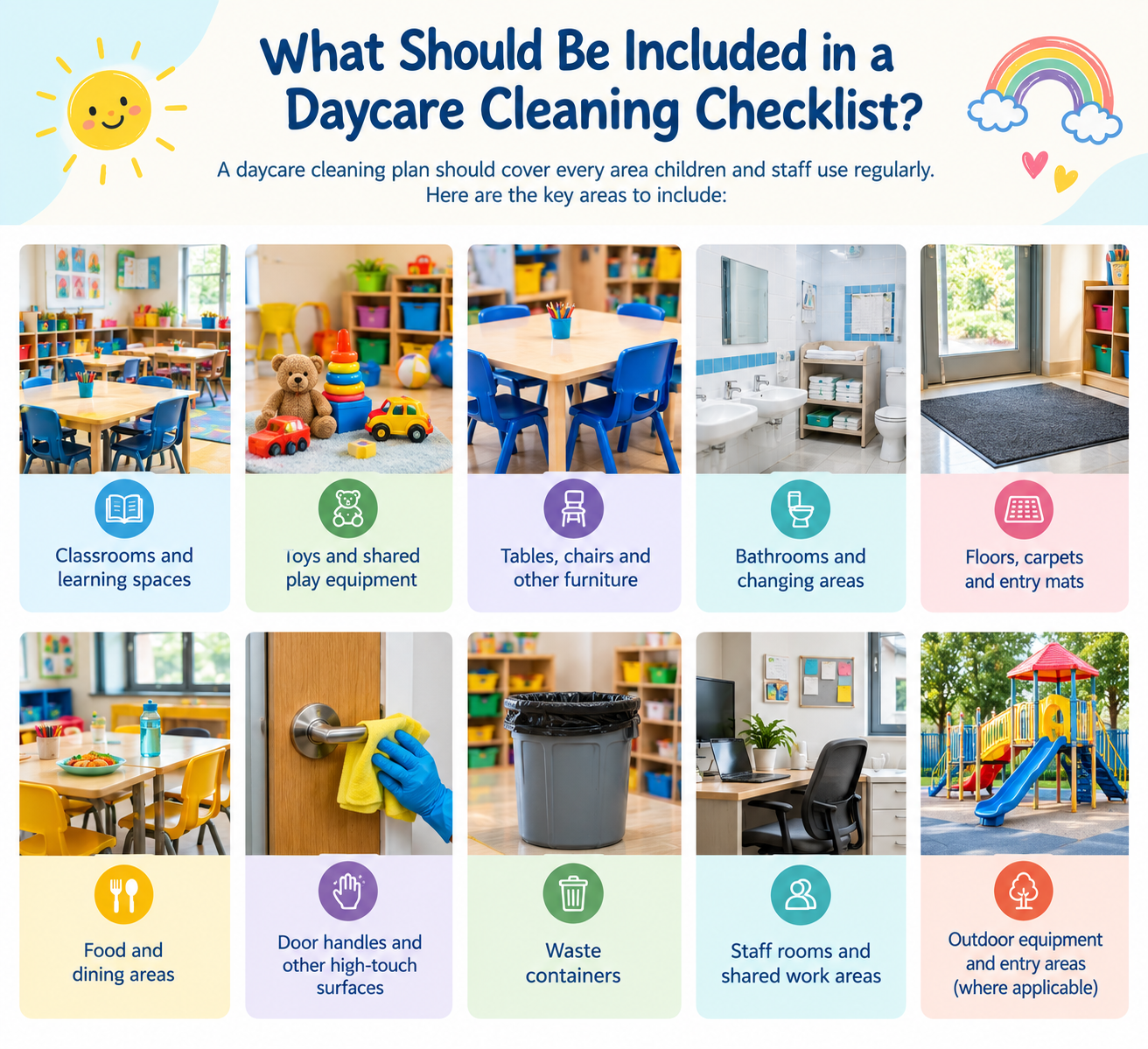
A daycare cleaning plan should include every area children and staff use regularly. This includes classrooms, playrooms, restrooms, changing areas, dining spaces, entrances, staff areas, and storage spaces.
Key areas include:
Classrooms and learning spaces
Toys and shared play equipment
Tables, chairs, and other furniture
Bathrooms and changing areas
Floors, carpets, and entry mats
Food and dining areas
Door handles and other high-touch surfaces
Waste containers
Staff rooms and shared work areas
Outdoor equipment and entry areas, where applicable
A childcare cleaning checklist makes these responsibilities easier to assign and review. Staff can initial completed tasks, while supervisors can check for missed areas or recurring problems.
Daily Daycare Cleaning Tasks
Daily cleaning focuses on areas used constantly. Children may move between classrooms, play areas, bathrooms, and dining spaces several times during the day.
The frequency may also need to increase when a space becomes visibly dirty or experiences heavy traffic. The CDC (Centers for Disease Control and Prevention) recommends regularly cleaning high-touch surfaces and cleaning visibly dirty surfaces.
Classrooms and Learning Areas
Classrooms collect crumbs, craft materials, dirt, and dust as children move between activities. Tables and activity surfaces can also receive repeated contact throughout the day.
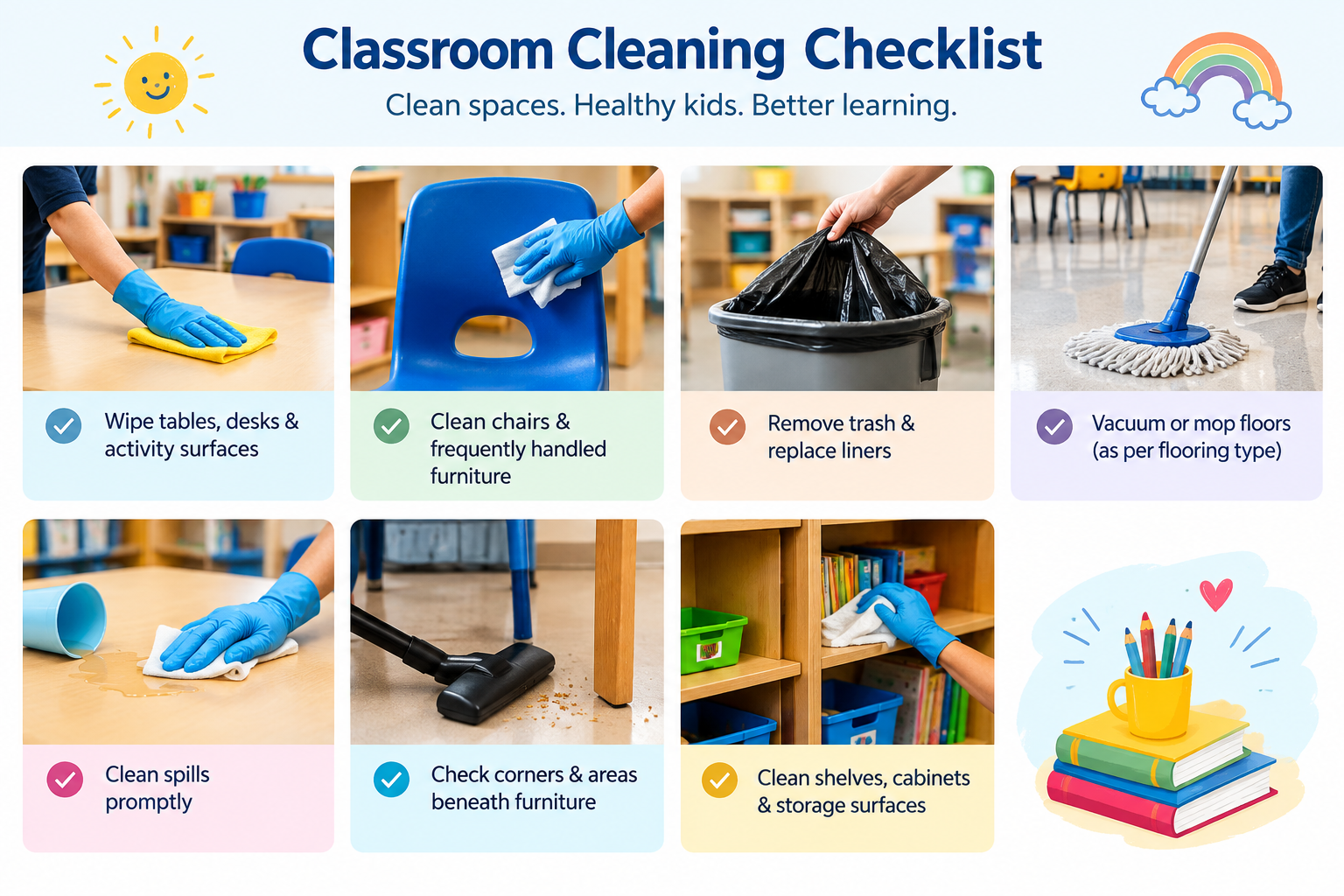
A practical classroom cleaning checklist should cover:
Wiping of tables, desks, and activity surfaces.
Cleaning of chairs and other frequently handled furniture.
Removing trash and replacing liners when needed.
Vacuuming or mopping floors based on the flooring type.
Cleaning visible spills promptly.
Checking corners and areas beneath furniture for debris.
Cleaning frequently handled shelves, cabinets, and storage surfaces.
Toys and Shared Play Equipment
Toys and play equipment can pass through many hands during a single day. Clean hard, washable toys and play surfaces according to the facility's procedures and the manufacturer's instructions.
Staff should:
Remove visibly soiled toys from use until they can be cleaned.
Clean washable toys and shared play surfaces regularly.
Launder washable fabric items according to their care instructions.
Check toys for damage that makes them difficult to clean.
Keep cleaned items separate from visibly soiled items.
Bathrooms and Changing Areas
Bathrooms and changing areas require consistent attention because they involve frequent use and higher cleaning demands.
Daily tasks should include:
Cleaning and disinfecting toilets and bathroom fixtures as needed.
Cleaning sinks, faucets, and surrounding surfaces.
Cleaning changing tables according to facility procedures.
Mopping floors and addressing visible spills.
Emptying waste containers.
Cleaning door handles and other frequently touched fixtures.
High-Touch Surfaces
High-touch surface cleaning should focus on objects and areas that many children or staff members handle throughout the day.
Common examples include:
Door handles
Light switches
Faucet handles
Railings
Cabinet handles
Tables
Shared equipment
Drinking fountain surfaces
Frequently handled electronic devices
Food and Dining Areas
Food and snacks create another set of daily cleaning needs. Clean tables and eating surfaces according to the facility's procedures before and after meals.
Daily tasks include:
Cleaning dining tables and chairs.
Removing food residue from surfaces.
Cleaning food preparation or serving surfaces where applicable.
Sweeping or mopping floors.
Emptying food-related waste.
Cleaning frequently touched handles and fixtures.
Weekly Daycare Cleaning Tasks
Daily cleaning keeps frequently used spaces under control. Weekly cleaning addresses areas that accumulate dust, dirt, and buildup but may not need attention after every activity.
The exact weekly daycare cleaning tasks will depend on the size of the facility, traffic levels, flooring, and the activities taking place inside each room.
Floors, Carpets, and Mats
Floor care should go beyond routine sweeping or mopping where needed.
Weekly tasks can include:
Vacuuming carpets thoroughly.
Cleaning areas beneath movable furniture.
Spot-cleaning carpeted areas.
Washing or cleaning entry mats according to their material.
Mopping hard floors using the appropriate cleaning product.
Checking corners and edges for accumulated dirt.
Furniture and Hard-to-Reach Areas
Furniture can hide dust and debris in places that are easy to miss during routine cleaning.
Pay attention to:
Furniture legs
Baseboards
Shelving
Cabinet tops
Corners
Areas behind movable furniture
Lower walls and doors
Play Areas and Equipment
Weekly cleaning can also include cleaning beneath and around larger play structures. It can also address storage areas where staff keep toys and equipment.
Check for:
Dust and debris beneath equipment
Dirt around storage containers
Frequently handled play surfaces
Items that need laundering
Damaged equipment or toys that cannot be cleaned properly
Doors, Windows, and Interior Glass
Doors and interior glass can collect fingerprints, dust, and smudges.
Clean:
Interior glass
Door surfaces
Door frames
Window sills
Frequently touched handles
Monthly Daycare Cleaning Tasks
Monthly cleaning focuses on areas that don't require daily attention but can build up noticeably over time. It can also provide an opportunity to review the facility's overall cleaning condition.
Typical monthly daycare cleaning tasks include:
Deep-cleaning classroom floors and corners.
Cleaning baseboards and lower walls.
Detail cleaning of restrooms and changing areas.
Cleaning less-frequently used fixtures.
Dusting vents and appropriate high-level surfaces.
Cleaning storage areas and shelving.
Cleaning areas behind and beneath larger furniture.
Deep-cleaning carpets where required.
Reviewing cleaning equipment and replacing worn or damaged tools.
The monthly schedule should not replace daily cleaning. It fills the gaps left by routine maintenance.
Daycare Cleaning Schedule: Daily, Weekly, and Monthly Tasks
A well-planned daycare cleaning schedule helps facility managers establish who is responsible for cleaning and when. It also supports consistency across classes and common areas, such as bathrooms, play spaces, and classrooms. Cleaning frequency varies depending on the traffic, age group, and the room's use.
The table below provides a practical starting point for organizing routine daycare cleaning tasks.
Childcare Cleaning Checklist
Frequency
Area
Cleaning Tasks
Recommended Focus
Daily
Classrooms
Wipe tables and chairs.
Focus on areas children and staff use throughout the day.
Toys and Play Equipment
Clean frequently shared toys.
Pay extra attention to items shared by multiple children.
High-Touch Surfaces
Clean door handles, light switches, and other frequently touched surfaces.
Give additional attention to surfaces with heavy traffic.
Bathrooms
Clean toilets, sinks, faucets, and other bathroom fixtures.
Address visible soil and spills promptly.
Dining Areas
Clean tables, chairs, counters, and floors.
Clean around meal and snack periods.
Floors and Entryways
Sweep and mop floors.
Monitor areas with heavy foot traffic and moisture.
Waste Areas
Empty waste containers and replace liners as needed.
Prevent overflowing bins and buildup around waste areas.
Nap and Quiet Areas
Clean floors, furniture, and shared surfaces.
Adjust cleaning based on how often the space is used.
Weekly
Carpets and Mats
Vacuum carpets and mats.
Focus on high-traffic areas and spaces beneath movable furniture.
Furniture
Clean furniture surfaces.
Look for accumulated dust, dirt, and debris.
Play Areas
Clean beneath and around larger play structures.
Check areas that are difficult to reach during daily cleaning.
Doors and Interior Glass
Clean door surfaces, interior glass, and window sills.
Remove fingerprints, dust, and visible buildup.
Storage Areas
Clean shelving, storage containers, and surrounding floors.
Keep supplies and equipment organized and accessible to authorized staff.
Staff Areas
Clean tables, counters, floors, and frequently touched surfaces.
Include staff-only spaces in the regular cleaning rotation.
Monthly
Classrooms
Clean floors, corners, baseboards, furniture, and storage areas.
Address areas routine cleaning may miss.
Restrooms and Changing Areas
Detail fixtures, partitions, grout, walls, and corners.
Look for buildup and areas that need extra cleaning.
High-Level Surfaces
Dust vents, ledges, fixtures, and other reachable surfaces as needed.
Prevent dust accumulation in overlooked areas.
Storage and Utility Areas
Deep clean floors, shelving, corners, and surrounding surfaces.
Remove unnecessary buildup and identify items that need attention.
Floors and Carpets
Schedule deeper floor or carpet care based on material.
Give high-traffic areas additional attention when needed.
Facility Review
Inspect areas for recurring cleaning issues.
Use findings to adjust cleaning frequency or responsibilities.
Occasionally / As Needed
Spills and Visible Soil
Clean spills, dirt, food residue, and other visible contamination promptly.
Do not wait for the next scheduled cleaning cycle.
Body-Fluid Contamination
Restrict access to the affected area and follow appropriate cleaning procedures.
Use appropriate PPE.
Illness-Related Cleaning
Clean and disinfect affected areas.
Give particular attention to frequently touched surfaces.
High-Traffic Areas
Increase cleaning frequency.
Respond to heavier use.
The schedule should be a flexible daycare cleaning guideline, not a rigid benchmark for all centers. A larger center with multiple classrooms and a high daily census might require more cleaning than a small center.
Daycare Sanitization Procedures for High-Touch and Shared Surfaces
Cleaning, sanitizing, and disinfecting are related but different processes. Cleaning removes dirt and impurities from a surface. Sanitizing reduces germs to levels considered safe by applicable public health codes or regulations. Disinfecting uses products designed to destroy remaining germs on cleaned surfaces.
1. Identify Frequently Touched Areas
Start by identifying surfaces people touch repeatedly.
These may include:
Door handles
Tables
Toys
Faucets
Changing surfaces
Light switches
Shared equipment
Drinking fountains
2. Clean Before Sanitizing or Disinfecting
Visible dirt and residue can interfere with the effectiveness of sanitizing or disinfecting products. The CDC recommends cleaning surfaces before sanitizing or disinfecting them.
The correct sequence depends on the surface and the product being used. Staff should follow the product label and the facility's established procedures.
3. Follow Product Directions
Use disinfectants and sanitizers according to their labels. Pay attention to:
Approved surfaces
Dilution instructions, if applicable
Required contact time
Required protective equipment
Ventilation instructions
Safe storage requirements
Never mix cleaning chemicals unless the product directions specifically permit it. Store cleaning and disinfection products securely and keep them out of children's reach.
Preschool Cleaning and Disinfection: Areas That Need Extra Attention
Preschool spaces have many of the same cleaning needs as daycare facilities. Children spend considerable time touching shared objects, playing on floors, eating together, and using common activity areas.
A strong preschool cleaning and disinfection routine should consider:
Classrooms and activity areas
Nap areas
Bathrooms
Changing areas
Eating spaces
Toys and shared materials
Door handles and faucets
Floors and carpets
Entryways
Staff and preparation areas
The daycare disinfection checklist should reflect how each space is used. A nap area may need different cleaning attention than an art room. A dining space may require more frequent cleaning around meals.
How to Maintain Daycare Hygiene and Safety Standards?
A cleaning program works better when responsibilities are clear. Staff should know which tasks they are responsible for and when those tasks need to be completed.
To maintain strong daycare hygiene and safety standards, follow these steps.
Assign Cleaning Responsibilities
Create clear responsibilities for daily, weekly, and monthly tasks. This reduces confusion between teaching staff, maintenance teams, and cleaning personnel.
Document Completed Tasks
Checklists can help supervisors verify that required areas were cleaned. They can also reveal recurring issues.
Review High-Use Areas
Inspect classrooms, bathrooms, dining spaces, and play areas regularly. Look for missed surfaces, visible buildup, damaged items, and areas that may need more frequent attention.
Store Products Safely
Keep cleaning chemicals and supplies inaccessible to children. Staff responsible for cleaning should understand the product labels and required safety precautions.
Adjust the Schedule When Conditions Change
A fixed schedule may need adjustment during periods of heavier use, special events, outbreaks, or changes in room occupancy.
When Should a Daycare Hire Professional Cleaning Services?
A daycare will benefit from professional cleaning when the facility has extensive cleaning needs, multiple classrooms, heavy daily traffic, or limited staff time for routine and deep cleaning.
Professional support can be useful for:
Large daycare or preschool facilities
Multiple classrooms and activity rooms
Recurring deep-cleaning requirements
Carpet and floor care
Detailed restroom cleaning
High-traffic entrances
Facility-wide cleaning after renovations or construction
Cleaning outside normal operating hours
Understanding the difference between deep cleaning vs. regular cleaning can help daycare managers decide which tasks belong in routine maintenance and which require more detailed attention. This gives daycare staff more time to focus on their primary responsibilities.
For daycare operators and facility managers, the right approach depends on property size, daily traffic, room usage, and the level of cleaning support required.
Keep Your Daycare Cleaning Routine Consistent with Professionals
A consistent daycare cleaning checklist helps daycare teams organize routine cleaning, deeper maintenance, and unexpected cleaning needs. Daily tasks keep frequently used spaces maintained, while weekly and monthly work addresses areas that need more detailed attention.
For facilities that need additional support, Sterling Cleaning Services can develop commercial cleaning schedules around the property's requirements.
Sterling Cleaning Services provides commercial cleaning services for facilities that need structured, recurring cleaning programs. We can schedule services around a property's operating requirements to help businesses maintain consistent coverage without disrupting normal activities.
To discuss your daycare's cleaning needs and create a service plan that fits your facility, contact Sterling Cleaning Services in NYC.
FAQs
1. How often should a daycare be cleaned?
A daycare should be cleaned daily, with additional weekly and monthly tasks based on the facility's use. High-touch surfaces and visibly dirty areas may need more frequent attention.
2. What should a daily daycare cleaning checklist include?
Daily tasks should include classrooms, bathrooms, changing areas, play spaces, dining areas, floors, waste containers, and frequently touched surfaces. Address spills and visibly soiled areas promptly.
3. What are the most important surfaces to clean in a daycare?
Frequently touched surfaces such as toys, tables, door handles, faucets, light switches, floors, and shared equipment should receive regular attention.
4. How often should daycare toys be cleaned?
Clean daycare toys regularly based on how often they are used, whether they are visibly dirty, and the facility's procedures. Toys and surfaces used by infants and children may also require sanitization, depending on applicable procedures.
5. What is the difference between cleaning, sanitizing, and disinfecting?
Cleaning removes dirt and impurities. Sanitizing reduces germs on a surface to an appropriate level. Disinfecting uses a product designed to destroy remaining germs after cleaning.
6. Should daycare bathrooms be disinfected every day?
Bathrooms and diaper-changing tables are among the areas that need regular disinfection in early care and education settings. Facilities should follow applicable requirements and product instructions.
7. Can professional cleaners work around daycare operating hours?
Yes. Commercial cleaning services can often be scheduled before opening, after closing, or during other suitable periods. The schedule should account for the facility's operating hours and the need to keep children away from active cleaning areas.
8. How can a daycare keep track of cleaning tasks?
A well-structured checklist can assign daily, weekly, and monthly responsibilities and provide a simple way to document completed work. Supervisors can use the records to identify missed tasks and adjust cleaning frequency when facility needs change.
Ensuring the cleanliness and maintenance of a commercial space is essential for the success of any business. In this blog post, we will discuss the key benefits of commercial cleaning services for your business.
Whether you own an office, retail store, supermarket facility, or restaurant, this blog post will serve as your go-to guide for creating your cleaning schedule that matches the cleaning requirements of your commercial building or space.
Prepare your NYC commercial property for fall with a practical cleaning checklist covering entrances, floors, carpets, restrooms, high-touch surfaces, windows, shared spaces, and moisture-prone areas. Read more for seasonal cleaning tips and winter preparation.
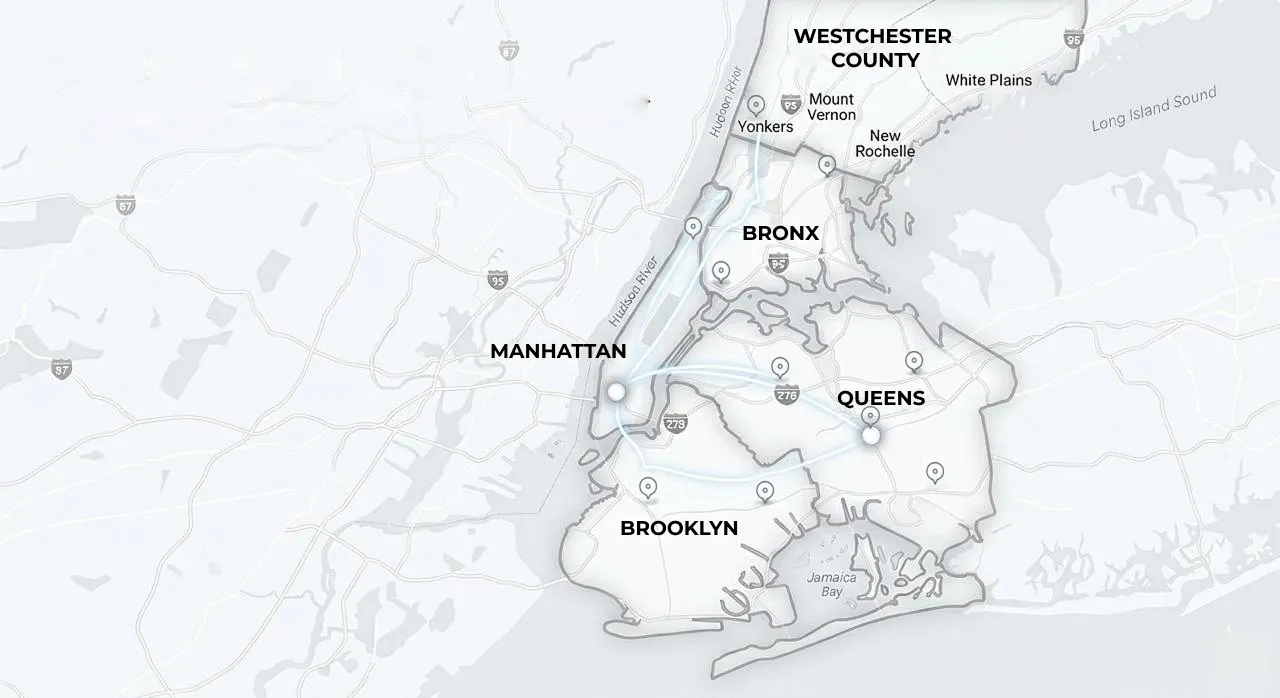
Please reach us at any time to set up an appointment to review your commercial cleaning requirements. Sterling will provide an on-site review of your janitorial needs, then create a custom proposal that fits both your specifications and budget