Having a clean workspace is a vital factor in boosting productivity and employee morale. A clean office brings a sense of organization and allows employees to work with minimal distractions. When the workspace is clean and inviting, employees focus better and complete tasks effectively.
But do you think office deep cleaning is easy? Absolutely not!
Incidents such as spilling coffee on the desk, soiling carpets, and foul smells from microwave ovens are quite common in a busy workspace. Offices often overlook the need for deep cleaning amid their hectic workdays, which eventually makes the space unhygienic and unsafe to work in.
Moreover, it’s pivotal for offices to prioritize health and safety and to clean them frequently.
Offices typically have their own janitorial services to maintain general cleanliness. Still, these are not enough to deep-clean the workspaces. Office deep cleaning requires proper planning and checklists to ensure a spotless space. A checklist can simplify the process by breaking down the tasks into manageable steps.
If you are looking for a way to get rid of your unhygienic work environment and ensure tidiness, read this guide to the end for an in-depth look at deep cleaning services.
What Is An Office Deep Clean?
Office deep cleaning is a regular cleaning service with a particular focus on high-touch areas in office spaces. It's the process of going beyond the visible workspace dirt to clean out dust, mold, grime, and bacteria that may accumulate on the edges and corners of your property.
Cleaning only the visible, frequently used areas of commercial offices might not be enough. It's very likely to ignore some less frequently used spaces in commercial offices. It ultimately increases the final cost of deep cleaning services when you need them.
A typical office deep clean service includes detailed cleaning tasks beyond regular cleaning, such as vacuuming, cleaning windowsills, blinds, and drapes, and cleaning switches, decor handles, and light fixtures. It also includes dusting of ledges, baseboards, and vents, along with carpet vacuuming, sanitizing bathroom surfaces, and disinfecting kitchen tops.
Why Is Deep Cleaning Your Office Important?
A systematic deep cleaning helps you maintain a hygienic and safe working environment. A rigorous deep cleaning helps control the spread of viruses and fungi by keeping dust and clutter under control. Also, when a workspace is clean, employees feel happier and become more productive.
Here are some crucial benefits deep cleaning can give to your office:
1. Enhanced Health and Safety of Employees
The health and safety of your employees are the primary concerns when deep cleaning and sanitizing the office. The main aim of a deep cleaning session is to eliminate hidden germs and bacteria, reducing the risk of disease outbreaks.
Clearly, deep cleaning of your office can make a big difference to your staff’s health.
2. Increase in Overall Productivity
A clean, hygienic office space leads to fewer staff sick days. Therefore, spending money on office deep cleaning services ensures your employees' health and reduces discomfort while working, thereby increasing productivity.
3. Enhanced Pride
A regularly deep-cleaned workspace is a source of pride for employees. They feel safer at work, which increases their overall engagement. It helps to improve their work-life balance.
4. Everything Looks Clean and New
Regular deep-cleaning of the office makes it look shiny and inviting. While humans are naturally attracted to novelty, deep cleaning the same old office for more than a decade can preserve the newness. It will give employees a feeling of working in a fresh, posh environment.
5. Identifies Hidden Issues
An in-depth cleaning reveals different underlying causes of bigger health problems. For instance, some unknown stains or a foul smell from the vents are common in workplaces, but finding their root causes is not.
With regular deep cleaning services, these issues can be identified and the necessary steps taken.
6. Easier To Hire Employees
Candidates are naturally attracted to a clean, hygienic workplace. If a potential candidate coming for an interview notices a bad smell in any corner of the office or dirty stains on the walls, he/she might reject the job opportunity you are offering.
Simplify and streamline your office cleaning routine with our comprehensive office cleaning checklist.
What is the Difference Between Regular and Deep Cleaning of Offices?
Both types of office cleaning offer benefits and are essential for keeping your office premises shiny, clean, and aesthetically pleasing. Together, they help keep your office environment healthier and enhance your reputation and professional image.
Let's break it down for you: how regular office cleaning differs from deep office cleaning.
While the primary intention of regular cleaning is to maintain cleanliness, deep cleaning involves far more than the standard daily and weekly cleaning.
For this reason, deep cleaning is more time-consuming and comprehensive.
Deep cleaning at the office involves a thorough rubdown and attention to hard-to-reach spots. Above all, deep cleaning takes a meticulous approach, improving overall workspace sanitation.
Deep cleaning is done as needed. There's no hard-and-fast rule for deep cleaning every day or every week. However, doing it twice a month is advisable to keep your office in pristine condition.
On the other hand, regular cleaning includes basic tasks such as sweeping and mopping floors, vacuuming carpets, emptying trash cans, scrubbing toilets and sinks, and dusting major furniture. This type of cleaning is needed daily at the office.
The primary objective of regular cleaning is to maintain basic cleaning tasks and ensure hygiene. Thus, regular office cleaning doesn’t involve the use of advanced cleaning tools, but just a few basic pieces of equipment, and that’s it.
Deep cleaning requires expert cleaners and advanced cleaning methods and tools to methodically clean and sanitize all the critical areas, common surfaces, and hard-to-reach areas.
Is It Time For An Office Deep Clean?
While regular janitorial services can maintain a standard level of cleanliness in your office, they don't cover hard-to-reach areas. It means areas behind computer devices and appliances, such as under desks, in air ducts and vents, in ceilings, in wall fixtures, and in less-frequented areas like storerooms and staircases.
Neglecting these hard-to-reach or less-frequented places can lead to the accumulation of dirt, dust, pests, and even mold.
If you notice those spaces are unusually dirty, it’s probably time to conduct a deep cleaning session at your office.
While janitorial cleaning services will take care of the basic cleaning duties every day, you need to hire a professional team for deep cleaning tasks to make your office look brand new once again.
What You’ll Need for an Office Deep Clean?
During a deep clean, the professionals focus on a cluster of hidden surfaces, light fixtures, and ceilings. A typical deep cleaning activity includes dusting, disinfection, and vacuuming.
The deep cleaners generally start with the ceilings and light fixtures in your workspace, then move down to the walls, furniture, decor, and finally the floor.
For an effective deep cleaning service at offices, you will need tools such as
- Sponges and scrub brushes
You can use all these tools to thoroughly clean your work area, kitchen, living room, bedrooms, washrooms, and other spaces.
All these pieces of equipment are essential for improving air quality, eliminating pests, removing harmful pathogens, and reducing clutter. Regular deep cleaning of office spaces keeps your office in top shape.
How Often Should You Deep Clean An Office?
If you want to know how often an office should be cleaned, the answer depends on the office!
There is no specific time or frequency for deep cleaning your office. It depends on the foot traffic, use of the space, or the amount of air and dust it is exposed to.
The frequency will also depend on your business's type. A critical environment, such as a healthcare center or fitness center, requires more frequent deep cleaning than a retail shop.
Sometimes, deep cleaning an office space is required before and after office parties, annual day, or grand events like client visits. It ensures your office looks fresh and welcoming before an event and is also clean enough for a new start to work after the event.
Deep cleaning your office monthly is recommended to keep it germ-free.
Every time you book an office deep clean service, you will see the difference it makes to your workspaces.
Creating an Office Deep Cleaning Plan
Creating a deep cleaning plan for your office involves organizing tasks and setting clear expectations to ensure a thorough job. Here's how to get started:
- Assess Your Needs: Start your office deep-cleaning checklist with a clear plan. Figure out the areas of the office that require deep cleaning. Consider the number of employees, office size, and high-traffic areas.
- Set a Schedule: Determine the frequency of deep cleaning services you need. You can also choose a flexible time when office activity is minimal for cleaning.
- Choosing the Right Services: Once you know your needs, select the right professional cleaning services. It is the best way to get a spotless workspace within your budget. You can also check their online reviews, feedback, and references from a trustworthy person.
- Track Progress: Remember to monitor the completion of each cleaning task. Make sure no area is overlooked. Additionally, collect employee feedback to improve future deep cleaning plans.
Office Deep Cleaning Checklist
Office deep cleaning services involve a more detailed process than basic maintenance.
Carrying out office deep cleaning services requires more time and effort. Professionals implement advanced procedures and disinfecting methods to ensure top-notch cleaning. Having a deep-cleaning checklist for the office ensures you don't overlook anything during cleaning.
Below is the checklist for conducting deep cleaning sessions at your office space:
1. Office Desk and Cubicles
Start by cleaning the areas where people sit and work for hours, such as cubicles, desks, and shared work tables.
- Dust keyboards and clean computer screens.
- Empty trash cans and recycle papers.
- Vacuum floors under the tables and desks.
- Dust shelves, cupboards, and desks.
- Disinfect surfaces or areas that people frequently touch, including lamps, keyboards, phones, copiers, and staplers.
2. Office Kitchens and Break Rooms
While kitchens and break rooms are used frequently, they are breeding grounds for dangerous germs. Follow these steps to deep clean these areas:
- Clean dishware and utensils, and store the clean ones separately.
- Dispose of unwanted foods, food wrappers, expired food items, and other perishables.
- Empty the garbage inside the trash cans and consider recycling.
- Clean the refrigerator by discarding old food and disinfecting the interior.
- Deep clean the electronic appliances.
- Disinfect the surfaces where people prepare and eat food.
3. Office Reception and Waiting Areas
If you have a reception/waiting area at your office welcoming guests, you have to make sure it creates a positive first impression.
Therefore, follow the cleaning steps below:
- Dust and organize the welcome desk, hard surfaces, tables, and other areas.
- Empty the recycle bins and trash cans.
- Organize the books and magazines on the bookshelf.
- Dust the windows, the company logo, and other items that come to the guests' notice at first instance.
- Clean the carpet or replace it in the waiting area every 2-3 months.
- Refill the water cups/glasses/bottles and make sure the water cooler is cleaned and has fresh water.
4. Office Washrooms
Washrooms need regular disinfecting and cleaning, as they're also hubs of germs. Here is how to keep washrooms clean, safe, and sanitized:
- Disinfect and clean the toilets and sinks.
- Sweep the washroom floor thoroughly to remove debris, then mop it with a powerful alcohol-based disinfectant.
- Discard the paper towels, clean off hard surfaces, and then empty the trash cans.
- Replace the old toilet paper rolls with new paper rolls.
- Clean the mirror in the washroom with glass cleaner to remove dirt, marks, and spots.
- Make sure the hand dryers are working.
- Clean the dirt accumulated on the exhaust fans.
5. Areas Outside The Office
If your office has an exterior space, prioritize cleaning that as well. Your office’s exterior also helps develop the first impression. Follow the steps below to keep it clean and tidy:
- Sweep any branches, leaves, or debris from the front door and the sidewalk.
- Clean off the welcome mats and put them in the right place.
- Wipe and clean the glass door to ensure it is shiny and free of external dirt.
- Remove the snow piles, twigs, and branches to prevent people from parking or walking.
Key Aspects of Office Deep Cleaning
Hiring monthly deep-cleaning services for the office can keep the workspace supremely tidy.
If you hire a good professional service provider, they assure to offer office deep cleaning covering these aspects:
1. Nooks and Corners
The deep cleaning experts identify and address hard-to-reach spots. These include spaces hidden by cabinets, drawers, vents, and even the ceiling. Unbelievably, insects and germs breed in these locations.
To clean every minute area in an office, the cleaning team needs tools such as microfiber cloths, dusters, vacuum cleaners, disinfectant sprays, all-purpose cleaners, and furniture polish.
2. Dusty Areas
There are certain areas inside an office where dust easily accumulates, such as vents, cupboards, edges, and drawers.
These are the favorite breeding grounds for mites, allergens, and insects, which negatively impact employees' health. Use vacuums, wipes, and dusters to thoroughly clean these areas.
3. Walls
Use a damp cloth with an all-purpose cleaner to wipe down the walls, removing any accumulated insect eggs or dust.
Wall cleaning is a major part of office deep cleaning, significantly improving the office's overall appearance.
4. Office Décor
Carefully rub or wipe a piece of cleaning cloth with a multi-purpose cleaner through the crevices and nooks. It removes dust particles that have accumulated here and there over the past few days.
5. Baseboards
Baseboards are cleaned with vacuum cleaners to remove stinky or stubborn spots that don't give a good impression when clients or investors visit your office.
Use a wipe soaked in an all-purpose cleaner to clean the baseboards.
6. Furniture
Scrubbing chairs, tables, sofas, and mantelpieces is necessary for office deep cleaning. Removing spilled drinks, food crumbs, molds, or dirt is an important step.
Dusting and cleaning the upper surfaces of taller furniture is also important to remove unwanted accumulations of microorganisms.
7. Floors
You won't get the job done by just sweeping and cleaning regularly. On top of that, you must move around to perform a deep clean.
To reach and clean the entire floor, you might need to move the furniture. Then it must be vacuumed and mopped to complete the floor's deep cleaning.
8. Electronics
It's important to clean the electronics to prevent the outbreak of allergens and airborne diseases.
Dusting with a microfiber cloth, using an ammonia-free cleaning agent, and a damp cloth are more common when cleaning electronics like air conditioners, refrigerators, and microwave ovens.
9. Window Ledges
Window ledges, which are hard-to-reach places, are often overlooked during regular cleaning. But during the office deep cleaning, these areas are considered.
Use a crevice tool to clean loose soil, dead insects, and dust bunnies. In this way, prepare the area for cleaning before implementing the main step.
Use a disposable wipe to remove the accumulated soil from the center of the window track. Then again, wrap a disposable wipe around a putty knife to deep-clean the crevices and corners.
Office Deep Cleaning: Step-by-Step Guide
Maintaining a sanitized place matters for offices. Several office deep cleaning checklists play a critical role.
Here, we have laid out the necessary steps of an office deep-cleaning checklist you need to tick off to get a flawless workspace.
1. General Office Areas
The general office area is the first area to address in your office's deep cleaning checklist. These workspaces are often overlooked. Employees spend most of their time here, so keeping it neat and sanitary is essential.
- Dust Surfaces: Ensure all surfaces, including desks, shelves, cabinets, and light fixtures, are dusted. Cleaning dust surfaces helps reduce allergens and maintains a polished appearance.
- Clean Floors: If your office has carpet or hard floors, a deep clean is essential. Thoroughly vacuuming carpets to remove surface debris and dust is important. Vacuuming is an effective way to remove dust and debris. For hard floors, sweep, mop, and sanitize the surface properly.
- Windows and Windowsills: Cleaning windows and windowsills requires eliminating dirt, streaks, and fingerprints. Deep cleaning of window glass ensures natural light gets through, brightening the workspace.
- Sanitize High-Touch Surfaces: High-touch areas like doorknobs, light switches, and phones are breeding grounds for germs. Disinfect these surfaces to prevent the spread of illness.
Focusing on the general office areas first creates a foundation for a spotless workspace. Deep cleaning is the ultimate way to ensure your surface is clean and ready for further use.
2. Workstations
Workstations are the personal spaces where employees spend most of their time. Cleaning workstations should be the priority to ensure the environment remains hygienic and organized.
- Clean Desks and Chairs: Initiate by clearing off desks and wiping down all surfaces with an appropriate disinfectant. Don't forget to clean the backs and arms of the chairs, as these are prone to accumulating dust and germs.
- Sanitize Computer Equipment: Clean the keyboards, mice, and monitors with electronics-safe wipes or a microfiber cloth. These surfaces are frequently touched and require disinfection to prevent the spread of bacteria.
- Organize Supplies: Take this opportunity to de-clutter your desks. Organize your office supplies and remove the items that are no longer needed. Ultimately, this will contribute to a cleaner workspace.
- Empty Wastebaskets: Always remember to empty the trash bins and replace them with liners. It ensures that trash is disposed of promptly and also prevents unpleasant smells from lingering in the workspace.
Taking care of individual workstations will help to create a more pleasant and productive environment.
3. Kitchen / Break Room
The kitchen or the break room is the most used area in the office. They often need more attention. Ensuring cleanliness in these spaces promotes hygiene and a comfortable work environment.
- Clean Countertops and Tables: Wipe down countertops and tables with disinfectant. It can remove spills, crumbs, and bacteria.
- Sanitize Appliances: Check whether you've wiped down the surfaces of microwaves, refrigerators, and coffee machines. Remove crumbs and food particles that may have accumulated. A deep clean of the fridge should not have any expired food.
- Sweep and Mop the Floors: Sweep up any crumbs or debris from the floors and mop them to thoroughly clean the area.
- Empty the Trash: The clean kitchen or break room encourages employees to stay connected. Having a tidy, hygienic space is crucial to fostering connections among employees.
A clean kitchen or break room encourages employees to keep the space tidy and is essential for office hygiene.
4. Restrooms
Restrooms need special attention as they are high-traffic areas that quickly become dirty. Regular cleaning of restrooms maintains hygiene standards.
- Sanitize Toilets and Sinks: These are the most heavily used surfaces. It is important to scrub them with disinfectant to ensure they are sanitary. Pay attention to handles and faucets that are overlooked but touched frequently.
- Clean Mirrors: Wipe down the mirrors to remove any water spots or streaks. Clean mirrors give the restroom a more polished look.
- Mop the Floors: Use a germicidal mop solution to clean the restroom floors. Make sure to get into the corners and edges.
- Restock Supplies: The restroom should be regularly checked to ensure enough toilet paper, paper towels, and soap are available. An empty restroom supply would negatively impact employee and visitor experiences.
- Empty Trash Bin: Frequently empty the just-emptied restrooms and replace their liners. It will help maintain cleanliness and prevent bad odors.
Focusing on restrooms ensures that employees and visitors feel comfortable and confident.
5. Reception & Common Areas
The reception area is the first place where visitors step in. It is crucial to maintain reception areas and contribute to a positive impression. Additionally, set a positive tone for the office.
- Dust Furniture: Dust and clean furniture in the reception areas, including common areas, such as chairs, tables, and other decorative pieces. The aim is to make the area look tidy and more welcoming.
- Clean Entry Doors: The doors are high-touch areas that need your attention. They should be regularly cleaned and sanitized. Make sure to clean the glass panels and handles to remove fingerprints and smudges.
- Vacuum or Sweep Floors: Vacuum carpets are the common surfaces that need cleaning. These areas require regular cleaning to remove dirt and debris.
- Disinfect High-Touch Surfaces: To reduce the spread of germs, wipe down counters, handrails, and other high-touch areas with disinfectant.
Adhering to these regular deep cleaning schedules will keep your office clean, organized, and inviting.
For intensive cleaning, consider a deep-cleaning service in NYC to help maintain high cleaning standards.
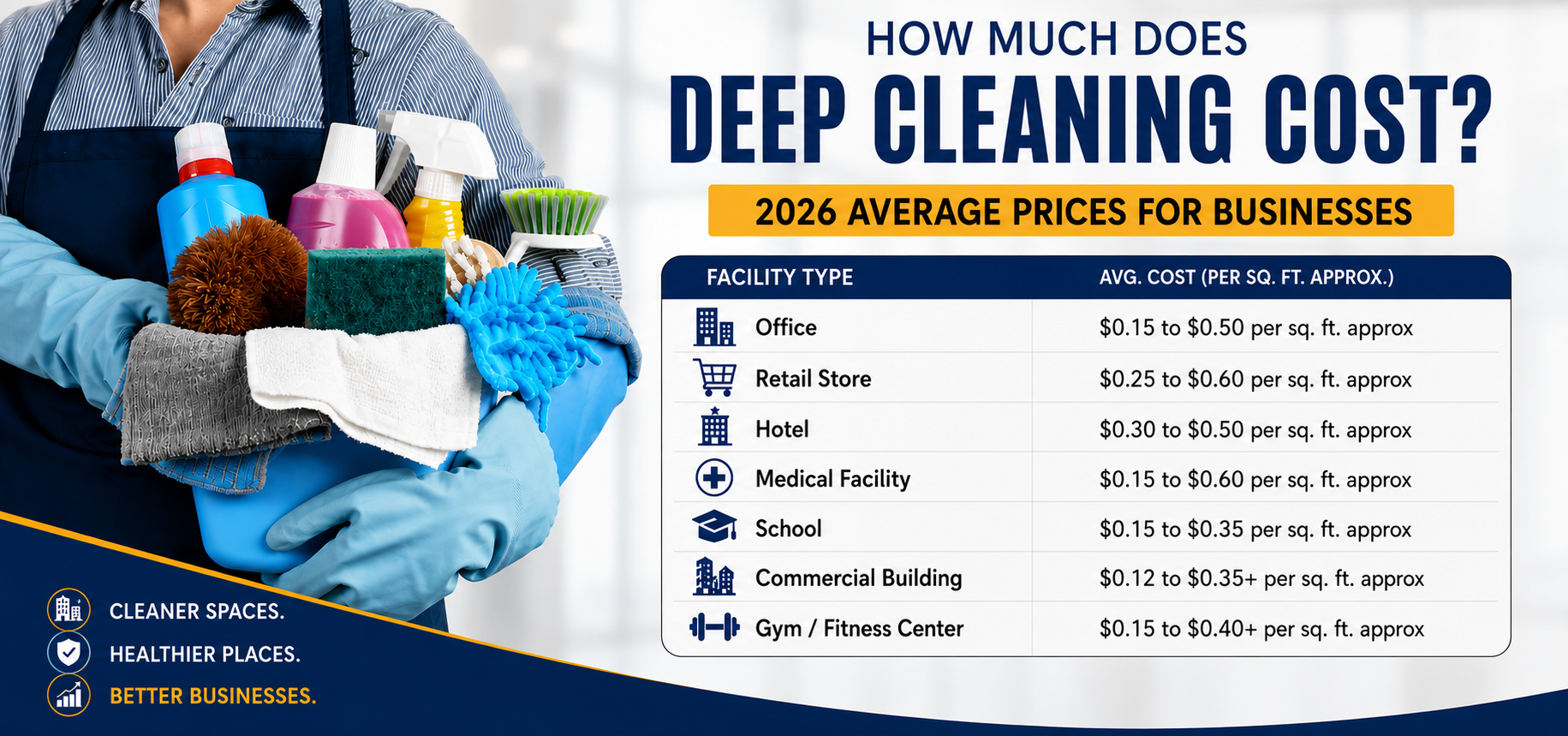
What Factors Influence the Price of an Office Deep Cleaning?
There is no fixed price for office deep cleaning. It varies from one service provider to another. However, several factors determine the price of office deep cleaning services.
- Size of the facility: A larger office will require more deep-cleaning equipment and personnel, increasing labor costs.
- Space restrictions: If the condition of the facility is challenging, like that of a hospital, or it has complex interiors, like that of a supermarket store, it will take more time to deep clean the entire space
- Cost of specific tools used: Use of higher-quality chemicals and cleaning tools will increase the overall cost of the deep cleaning service.
Under these circumstances, the resources and procedures for professional deep cleaning will change, which may increase or decrease the price.
Final Tips for Maintaining a Clean and Healthy Office Environment
Specific tips for office deep cleaning checklists and services are essential to follow. It encourages a culture of cleanliness and maintains employee morale.
Let's discuss the final tips for maintaining healthy workstations to boost productivity.
Establish Regular Cleaning Routines
When it comes to a healthy workspace, consistency is the key. Consistency is vital to keeping your office clean. Make sure to incorporate daily or weekly cleaning routines to address basic cleaning tasks, such as wiping down surfaces, emptying trash, and vacuuming common areas.
Moreover, this will help prevent the accumulation of dirt and dust, ultimately keeping your office looking tidy between deep cleanings.
Encourage Personal Responsibility
Encourage employees to take responsibility for cleanliness. Encourage them to keep their workstation clean.
Small habits can keep the office space clean and organized. For instance, cleaning up after lunch, wiping down desks at the end of the day, or organizing clutter.
Use Eco-Friendly Products
While cleaning the office, prefer eco-friendly cleaning products. These products are safer for your health and the environment.
With these products, you can reduce exposure to harmful chemicals and create a healthier workspace.
Keep Air Quality in Check
Air quality matters for maintaining a healthy workspace. Replace the HVAC system air filters regularly.
If possible, use air purifiers to remove allergens, dust, and other pollutants. Ultimately, this will enhance the office's standard of cleanliness and comfort.
De-clutter Regularly
Clutter makes the office look messy and can accumulate dust and allergens.
Set time periodically to de-clutter desks, filing cabinets, and storage areas. A minimalist workspace can reduce stress and make cleaning easier.
Set a Clean Desk Policy
For a better approach, include a clean desk policy. It can help ensure employees keep their personal workspaces neat and free of unnecessary items. The ultimate goal is to promote a more organized environment and reduce distractions.
Following these tips can ensure your office remains a clean, healthy, and productive environment.
Things to Avoid During the Office Deep Clean Procedure
Mistakes can occur during the deep cleaning process, risking your employees' health or causing workplace safety compliance issues.
Here are the common mistakes to avoid:
1. Overuse of Chemicals
The use of chemicals for deep cleaning can release toxic fumes or a bad odor, which can make employees ill. They may inhale these chemicals or come into accidental contact with them.
Some cleaning products contain corrosive components that can damage your furniture and decor. That's why we recommend you go for green cleaning services that use eco-friendly, safe cleaning agents.
2. Using Too Much Water
Using excessive water during cleaning, especially on carpets or floors, can make surfaces slippery.
This can cause accidental slips and injuries to anyone in the workspace. Also, if electrical items come into contact with water, they can cause serious health hazards. Too much water on metallic items can cause rusting.
3. Vacuuming Almost Everything
Use appropriate tools and methods for cleaning different items. Vacuuming almost everything in your office will just damage the furniture, decor, and embellishments.
While cleaners should wipe window panes, they should also vacuum the areas behind tables and wipe desks with a microfiber cloth.
4. Spraying On Furniture and Surfaces Directly
Spraying disinfectants directly on surfaces and furniture may cause erosion, corrosion, and discoloration. Instead, spray on a microfiber cloth before cleaning for better results.
5. Not Disposing of Garbage
Do not forget to dispose of the garbage after deep cleaning. It can attract pests, rodents, pathogens, and insects, leading to food- and waterborne diseases. Make sure employees don't litter anywhere, and remember to empty the office bin every day.
6. Cleaning During Work Hours
While the office deep cleaning is underway, ensure no employee is working or moving from one place to another. It can cause serious accidents and mess up the entire process. It's advisable to conduct the cleaning sessions during weekends or after office hours.
7. Rushing
Maintain your office with care since employees spend most of their hours there. Rushing through the office cleaning process can leave certain blind spots that, over time, add up to a pile of trash. Ensure office cleaning is thorough and detailed.
How to Choose a Deep Cleaning Company?
If you own an office and are looking for a deep-cleaning service provider, learn how to hire the best one here! With so many commercial cleaning service providers available, it can be challenging to hire the best office deep cleaning professionals.
Here are some tips that will help you choose the best company.
1. Check The Quality of Service
To assess the authenticity, quality, credibility, and reliability of cleaning service providers, the first step should be reviewing their past work. Read their Google Reviews or those on their Facebook page to learn about the quality of their cleaning services.
2. Consider Their Brand Image
Checking ratings and reviews is a great way to get a clear idea of a cleaning company's brand identity. To deep-dive into it, get in touch with the company's existing customers by phone, email, or social media and ask whether the service they provide is reliable and honest.
3. Affordability
When selecting an office deep-cleaning firm, cost is a key factor. Select the option that best matches your budget after removing a few possibilities. While cost-effectiveness is important, you should also be aware that lower costs may lead to poorer-quality work and insufficient services.
4. Experience
Consider the overall experience with the cleaning company. Experience will demonstrate that they have a reliable system in place and are competent to address any cleaning-related issues.
5. Eco-Friendliness
If you are also committed to environmental safety, check whether the office deep-cleaning service provider you hire follows eco-friendly cleaning practices. Talking to them directly, reviewing their brochures, or checking reviews can help you get the right information.
6. Flexibility
The cleaning service you choose must be adaptable in its operations because different firms have different operating schedules. The cleaners should be able to modify their cleaning schedule to match your timetable.
Hire Reliable Office Deep Cleaning Services for a Sparkling Clean Workspace!
A fresh, clean workspace is a must if you want your employees to work at their full potential. In other words, the success of your organization is largely dependent on how clean and hygienic your office space is.
While your in-house janitors are responsible for daily basic cleaning tasks, they often struggle to clean critical, hard-to-reach areas or high-touch surfaces. These tasks require specialized expertise and significant time.
Here is the role of the office deep cleaning professionals at Sterling Cleaning Services. We are a team of professional, experienced cleaning experts who ensure a perfectly safe, pristine work environment.
At Sterling Cleaning Services, we offer top-quality office deep cleaning services tailored to each client's unique needs. Our experts are fully equipped with the proper techniques and advanced equipment to deliver flawless outcomes. We aim to provide a clean, fresh, and comfortable environment at competitive rates.
So, if you think your office needs deep cleaning right now, contact our team today! Hire a high-quality office deep-cleaning service in NYC to enjoy a spotless, hygienic office environment.